Serving Gastonia, NC & nearby
(704) 360-0958
Gastonia, NC

What That Grinding or Squeal in Your Gastonia Garage Door Is Telling You

Gastonia homes built mostly in the 1980s and 90s make specific garage door noises as hardware ages in a cold-moderate climate. Here's what each sound actually means.

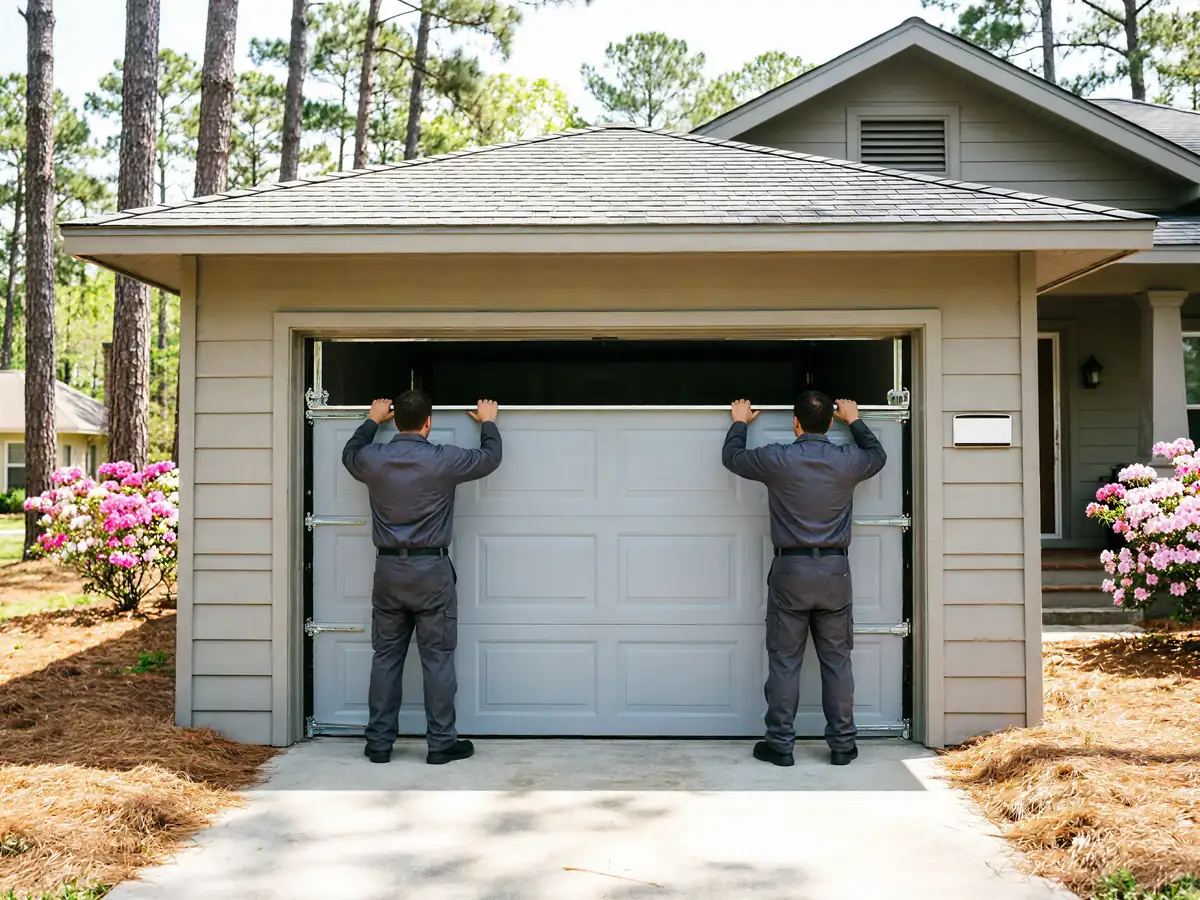
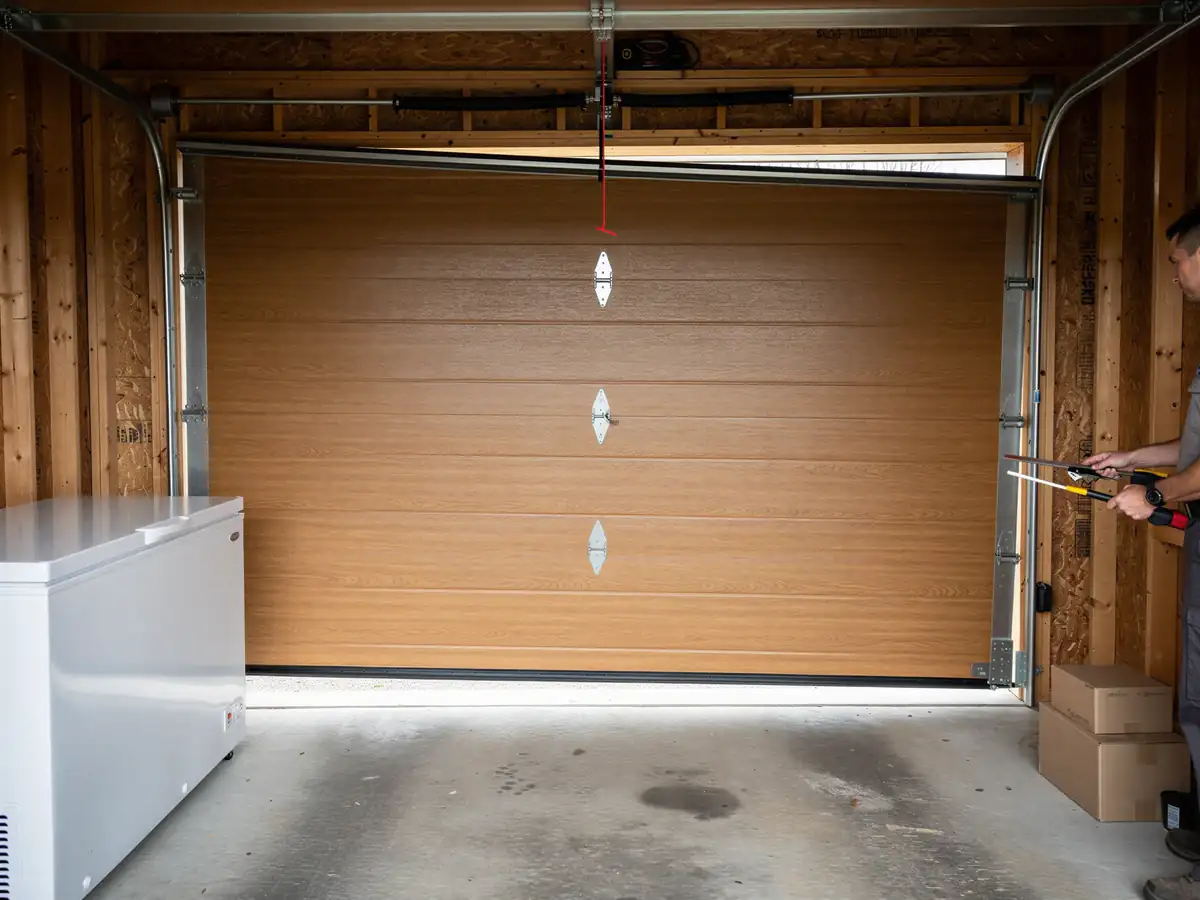
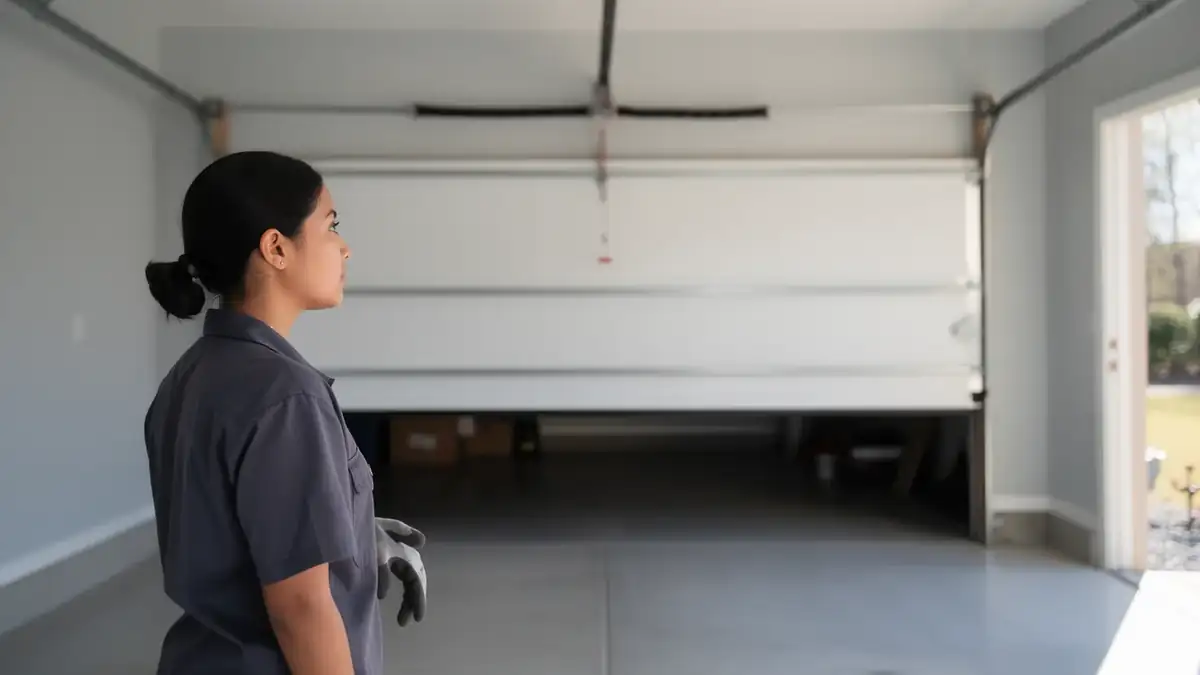
A technician stands in a garage with a partially open white garage door.

What the Weather Here Does to It

Gastonia sits in a cold-moderate climate band, not the deep freeze you'd get further north, but enough of a seasonal swing to matter. Summers bring humidity that swells wood jambs and gums up old grease. Winters bring cold snaps that stiffen lubricant and tighten steel tolerances on springs and tracks. A door that rolled quiet in August can start squealing by January, and it's not because anything broke overnight. The metal just got tighter and the grease got thicker, and whatever noise was hiding under warm-weather slack now has room to show up. This is the part that catches people off guard: nothing failed, but the clearance that used to absorb a little roughness in the hardware is gone for a few months. If your door has always squeaked a bit more in winter and gone quiet again by spring, that's the climate doing what it does here, not a sign you need a new opener. If the noise doesn't ease up once it warms up, that's a different story, and it's the one worth a call.

The Situation

Across the Gastonia service area, housing runs from 1967 up through 2011, with the median landing around 1983. The bulk of what we work on, across the 17 named communities in this market, is 1980s and 90s construction. That matters because garage door hardware doesn't last as long as the house around it. A torsion spring from a house built in 1983 is well past its expected cycle count by now, and the same goes for chain-drive openers installed in that same wave of construction. So when you hear a new noise, you're not hearing a random fluke. You're hearing hardware that's forty-ish years into a twenty-year expected life, in a climate that stresses it twice a year. We see the same failure points over and over in these neighborhoods because the houses went up in the same ten or fifteen years and the parts are wearing out together. That's not a coincidence, it's just what happens when a town builds most of its stock in one era.

When Waiting Is Fine

Not every sound is urgent, and I'll say plainly that we don't want a service call for a door that just needs a squirt of lubricant. A light rattle on an older track, a single squeak that shows up only in the coldest weeks and disappears by spring, a hinge that chirps once when the door starts moving: those are maintenance items, not emergencies. If the door still opens smooth, closes flush, and the spring isn't visibly stretched or gapped, you've got time. Where we draw the line is grinding that doesn't go away, a bang on the way up or down, or a noise that's gotten louder over a few weeks instead of staying steady. One honest limit here: if the noise is coming from a spring on a door built before the 1980s, we're not going to guess at it over the phone. Springs under tension are not a wait-and-see item once they're actually failing, and we'd rather look at it in person than tell you it's fine from a description.

What to Look At First

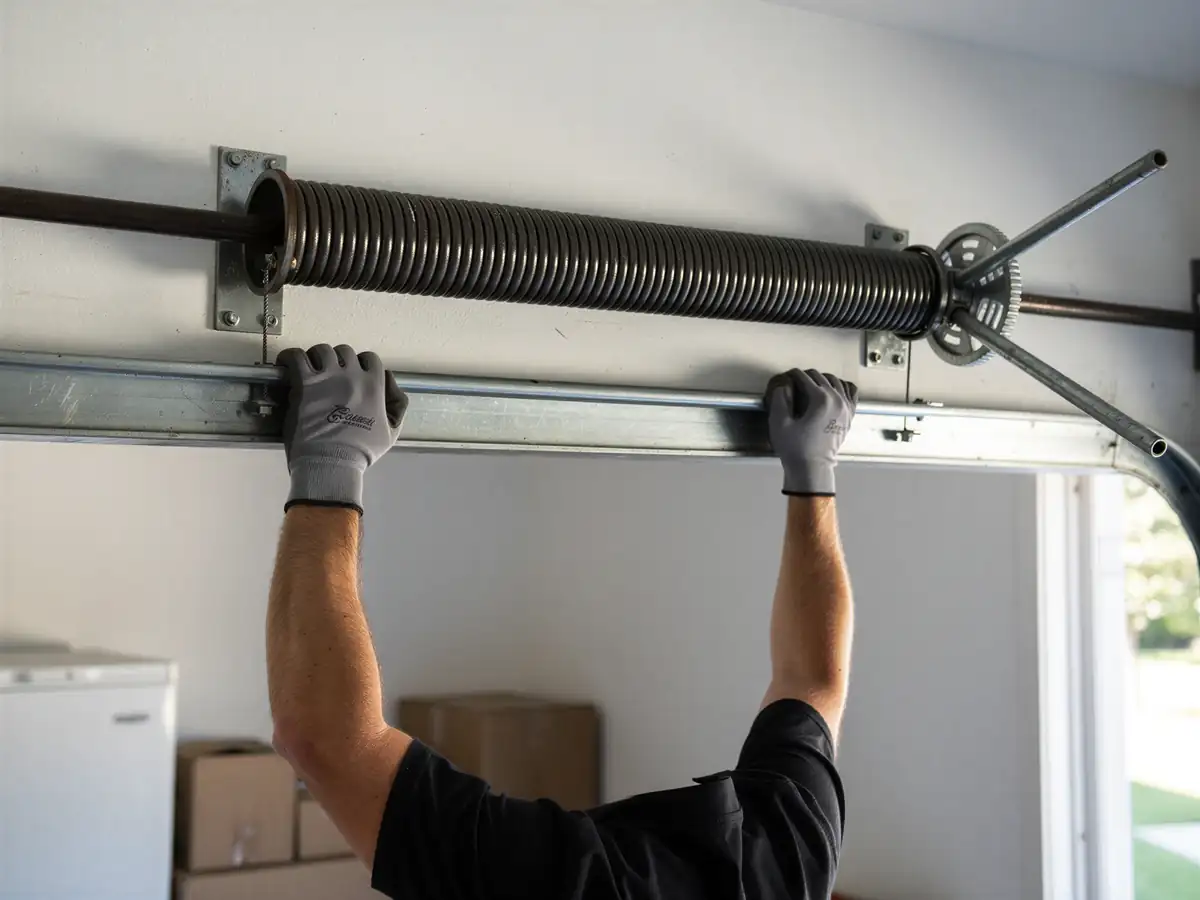
Start with the rollers. On houses from the 1980s and 90s wave, steel rollers without nylon housings are still common, and a dry, grinding roller is the single most frequent noise call we get in this market. Next, look at the hinges between panels; a metallic clack on one side usually means a hinge pin has worn oval instead of round. Check the track for a visible gap between the roller and the rail, since 1980s-era track can warp slightly over decades of seasonal temperature swings. Last, watch the spring itself while the door opens, not during, but before: look for a visible gap in the coil or one side sitting lower than the other. None of this needs a tool to check, just five minutes and a flashlight before you decide whether it's a lubrication job or a hardware job.
How it works

From “it’s stuck” to “it’s fixed”

  1. 1
    A man in a blue shirt stands in a driveway looking at his phone.

    Tell us what’s wrong

    Describe the symptom - won’t open, loud bang, opener runs but the door won’t move.

  2. 2
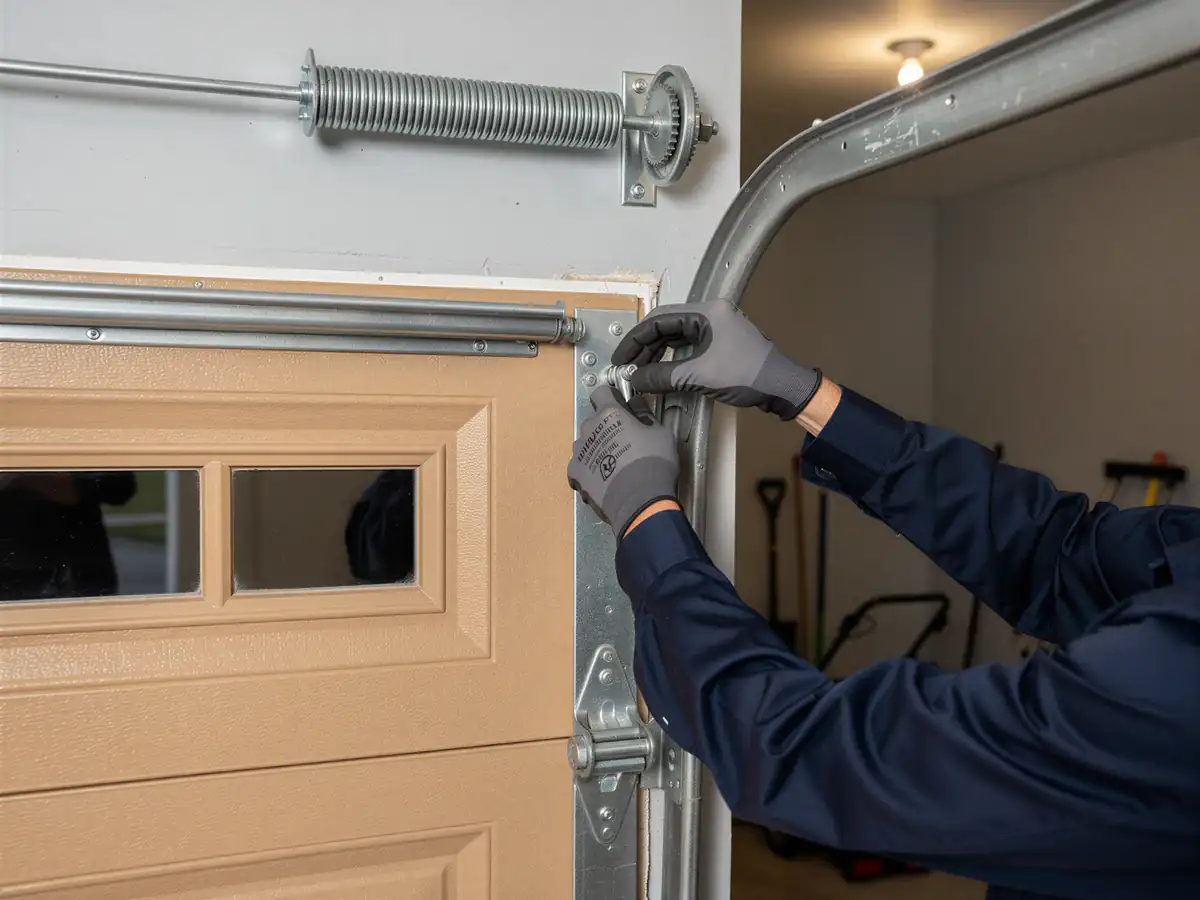
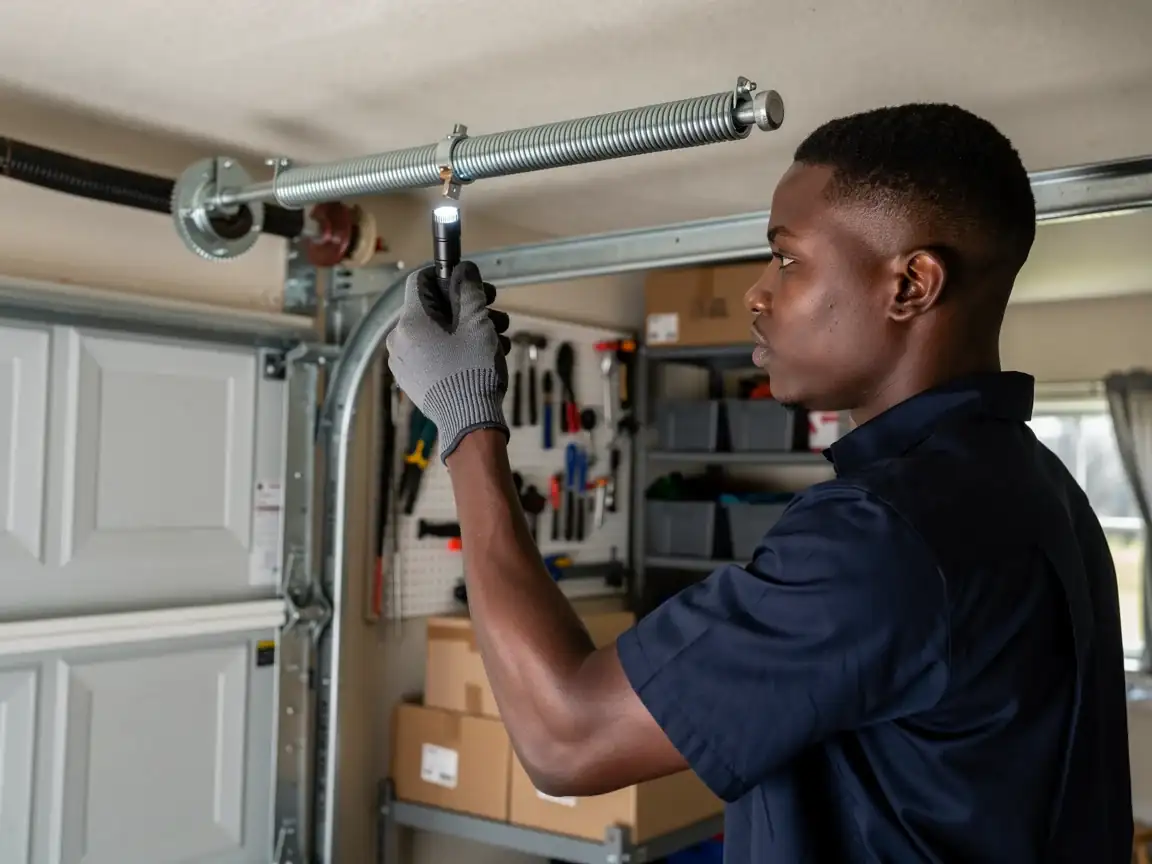
    A technician in a dark blue shirt inspects a garage door torsion spring with a flashlight.

    On-site diagnosis

    A technician tests the door under power and by hand and finds what actually failed.

  3. 3
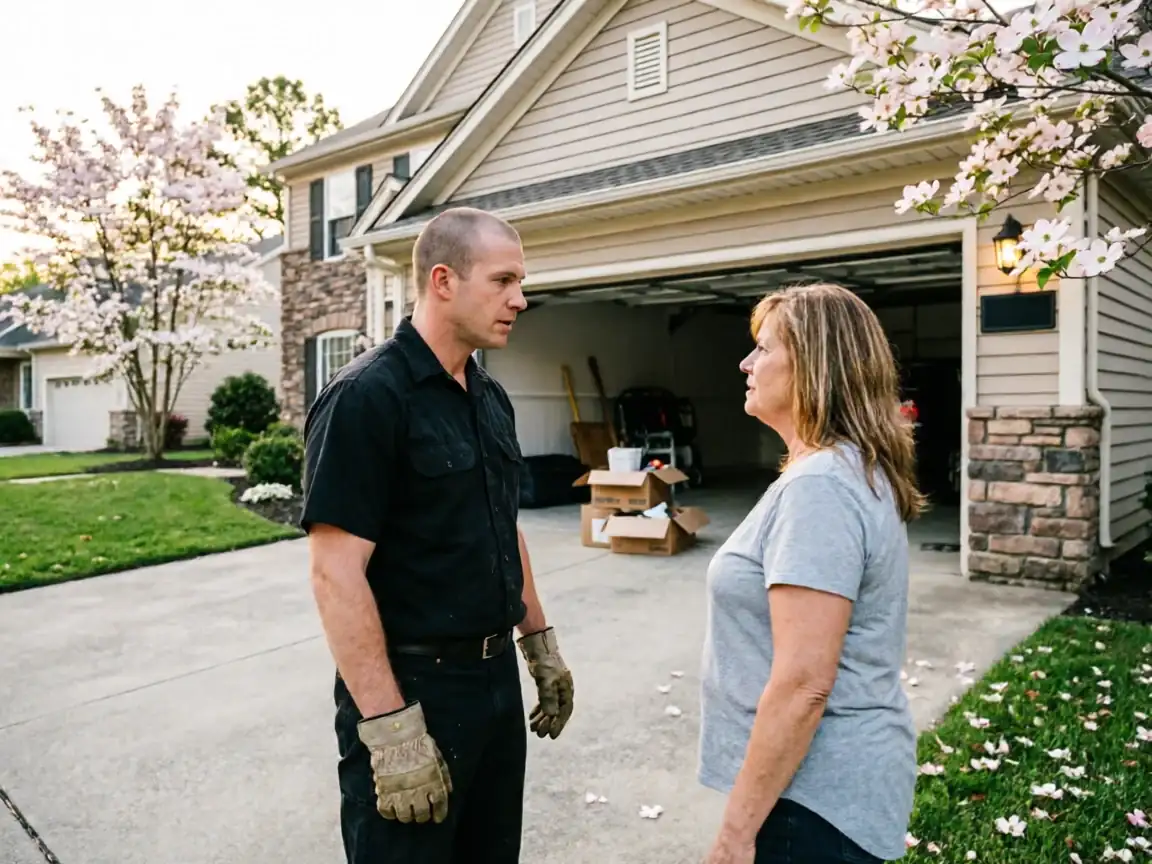
    A technician in work gloves talks to a woman in a driveway in front of a house.

    Clear, up-front plan

    You get the fix that’s needed and what drives the cost - before any work starts.

  4. 4
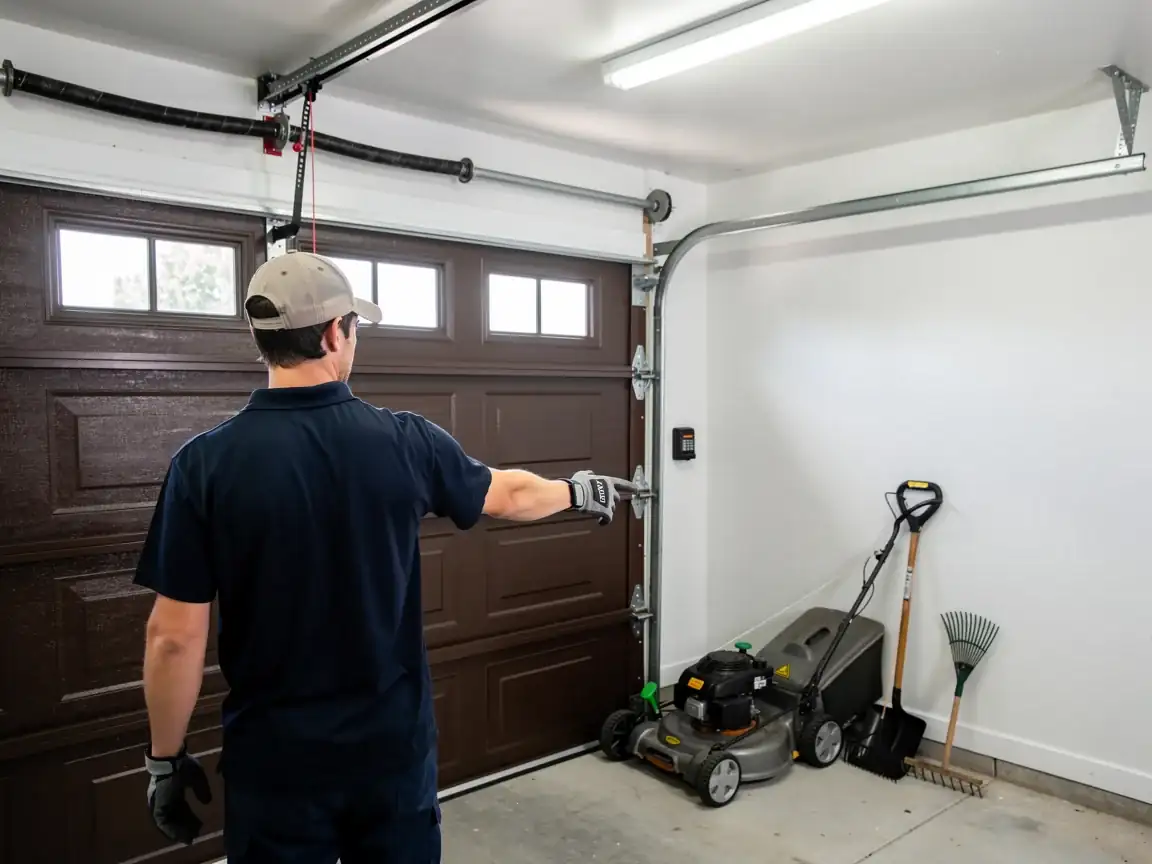
    A technician in a cap points at a brown garage door with windows.

    Repaired & tested

    The repair is done, the door is set true and tested, and the work area left clean.

Not sure which repair your door needs in Gastonia, NC? Describe what it’s doing - every job starts with a diagnosis.

How we work

What to expect

Diagnosis firstEvery visit starts by finding what actually failed - not a pre-written parts list.
The right part for the doorSprings and openers matched to the door’s weight and age, so the fix holds up.
Straight answersWhen a repair makes more sense than a replacement - or the reverse - you hear it plainly.
Clean, careful workTension released safely, hardware set true, the door tested under power before we leave.
What we do

Garage Door Services

Repair and installation work for Gastonia homes and businesses.

Questions

Frequently asked

Straight answers about garage door repair in Gastonia. Still unsure? Ask us directly.

Why does my garage door only squeal in the winter?

Cold tightens the clearance between moving parts and thickens old grease, so noise that's masked by warmer, looser metal in summer shows up once temperatures drop. If it eases back up in spring, it's seasonal. If it doesn't, the hardware underneath has likely worn past the point grease can hide.

My house was built in the early 1980s, is my spring original?

It's possible. A lot of the stock in this market dates to that same era, and torsion springs installed then are well beyond their expected cycle life now. A visible gap in the coil or uneven tension on one side of the door is worth having looked at in person.

Is a grinding noise always the spring?

No, grinding is more often a dry roller, especially on older steel rollers without nylon housings common in 1980s and 90s construction. Spring trouble usually sounds more like a bang, a pop, or a visible sag rather than a grind.

How do I know if I should just lubricate it myself?

If the door still opens and closes smoothly and the sound is light and steady rather than getting worse, a basic lubricant on rollers and hinges is a fair first step. If the noise has grown louder over weeks or the door hesitates, that's past a DIY fix.

Ready to get your garage door sorted?

Tell us what it’s doing and where you are in Gastonia - we’ll take it from there.

Request a QuoteCall