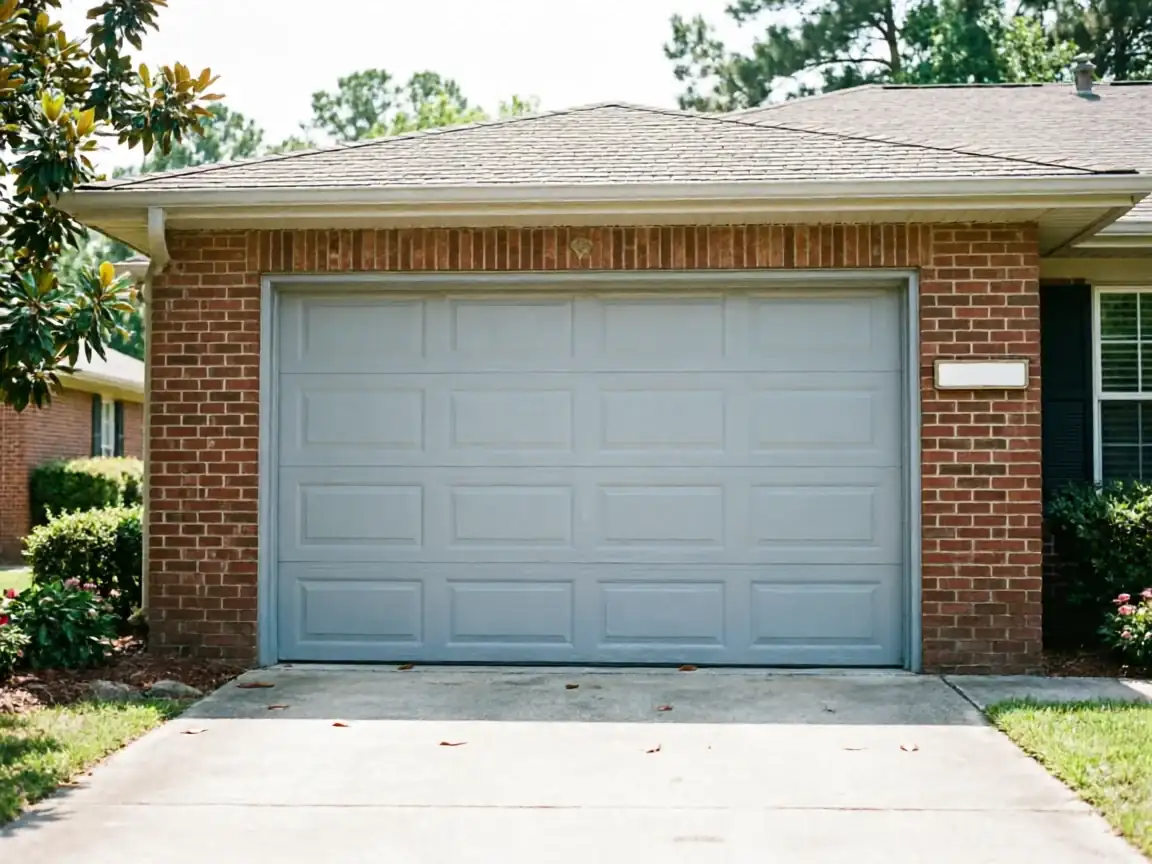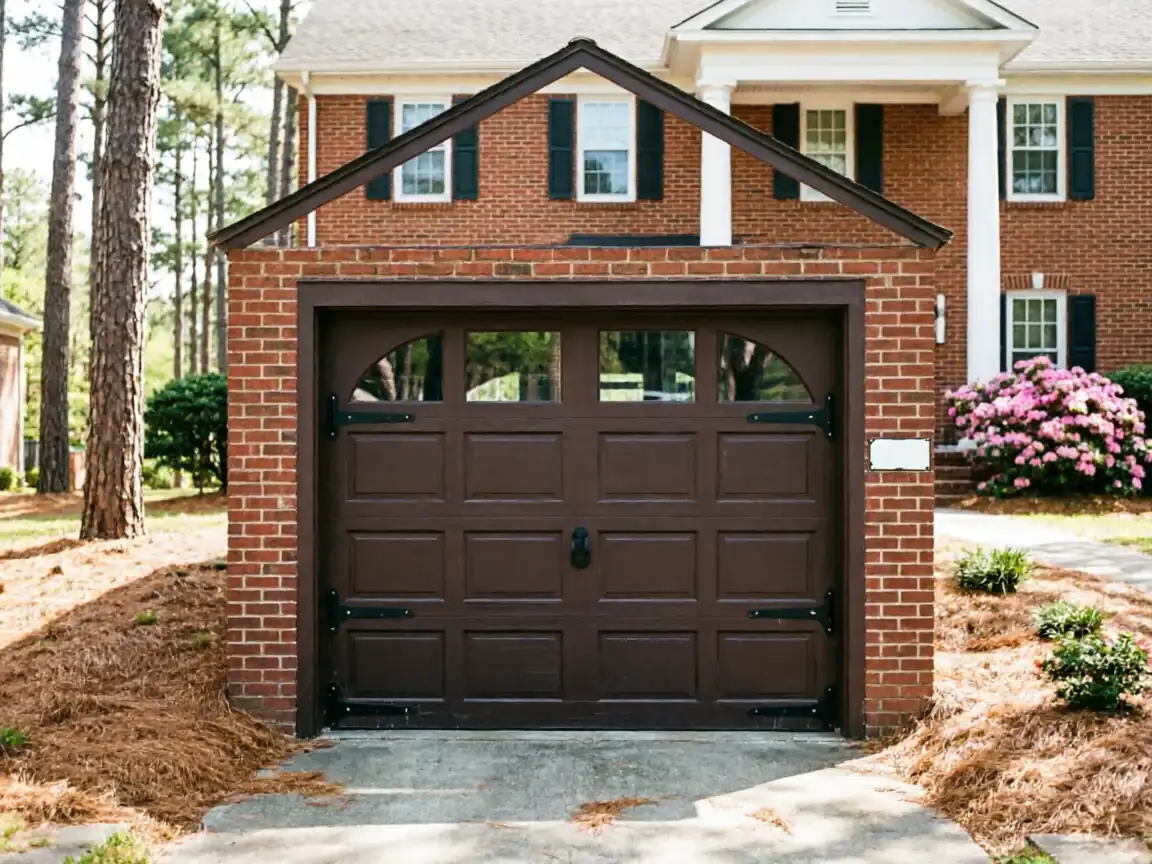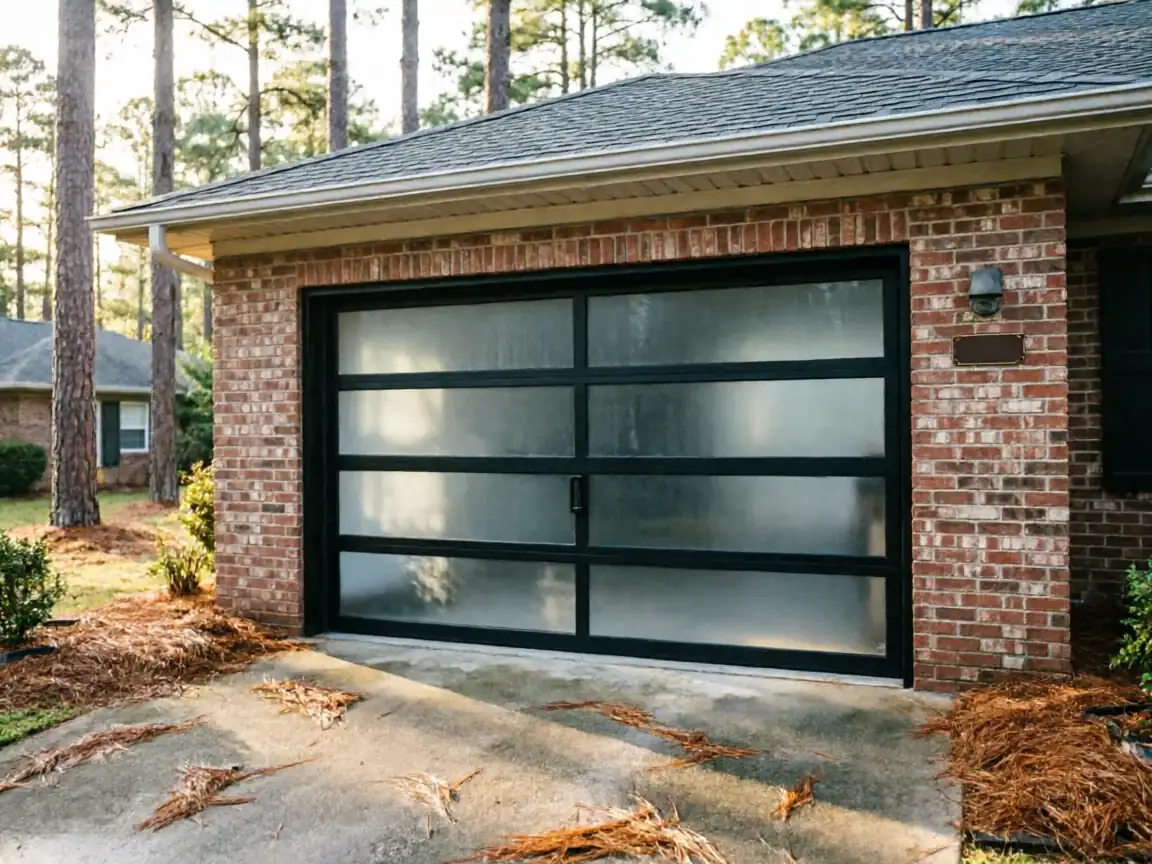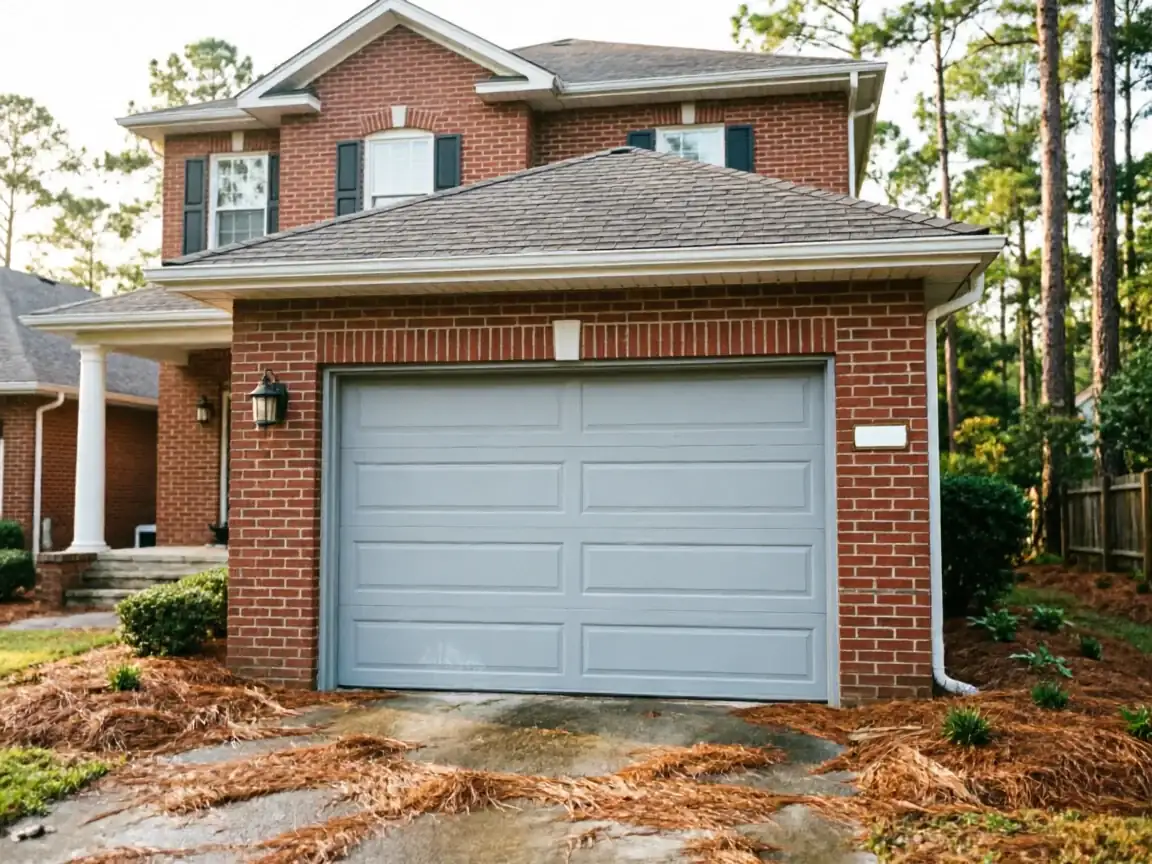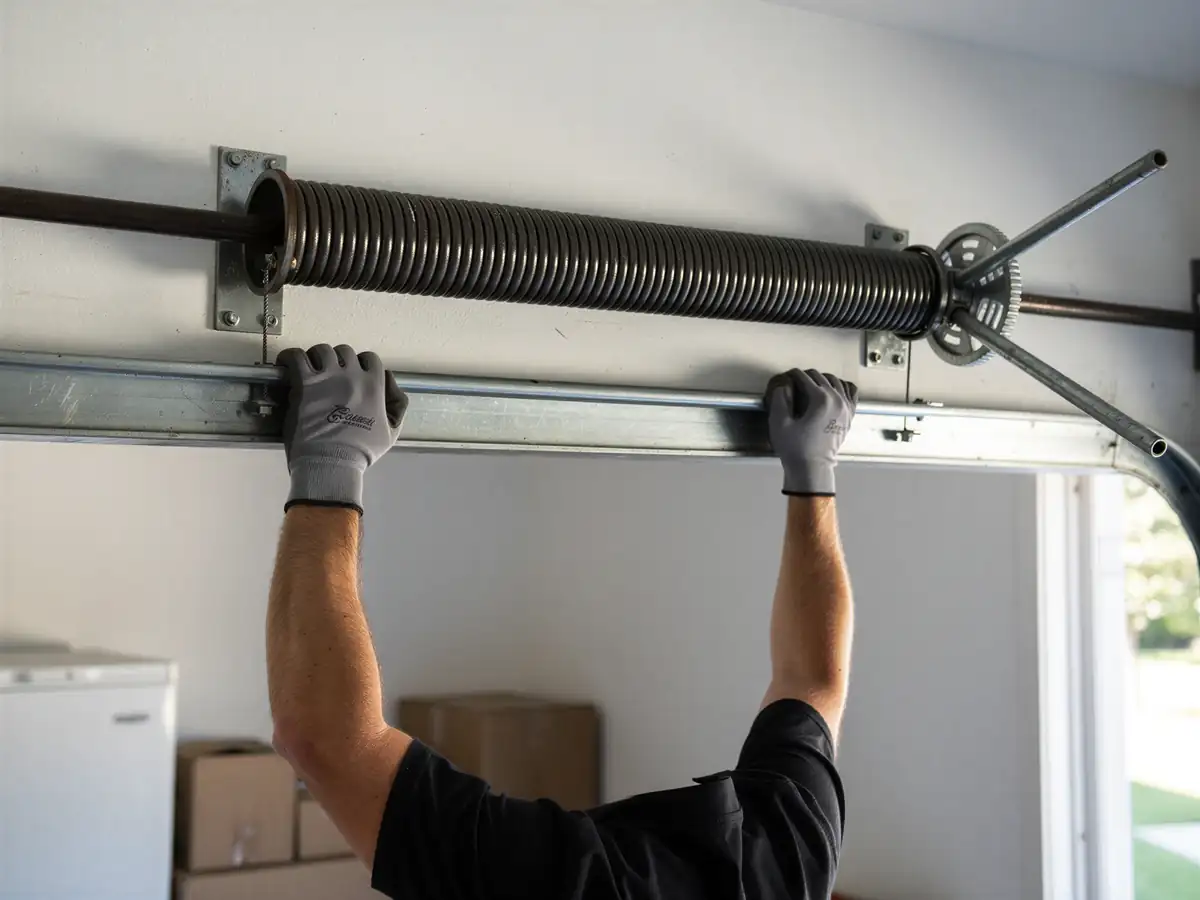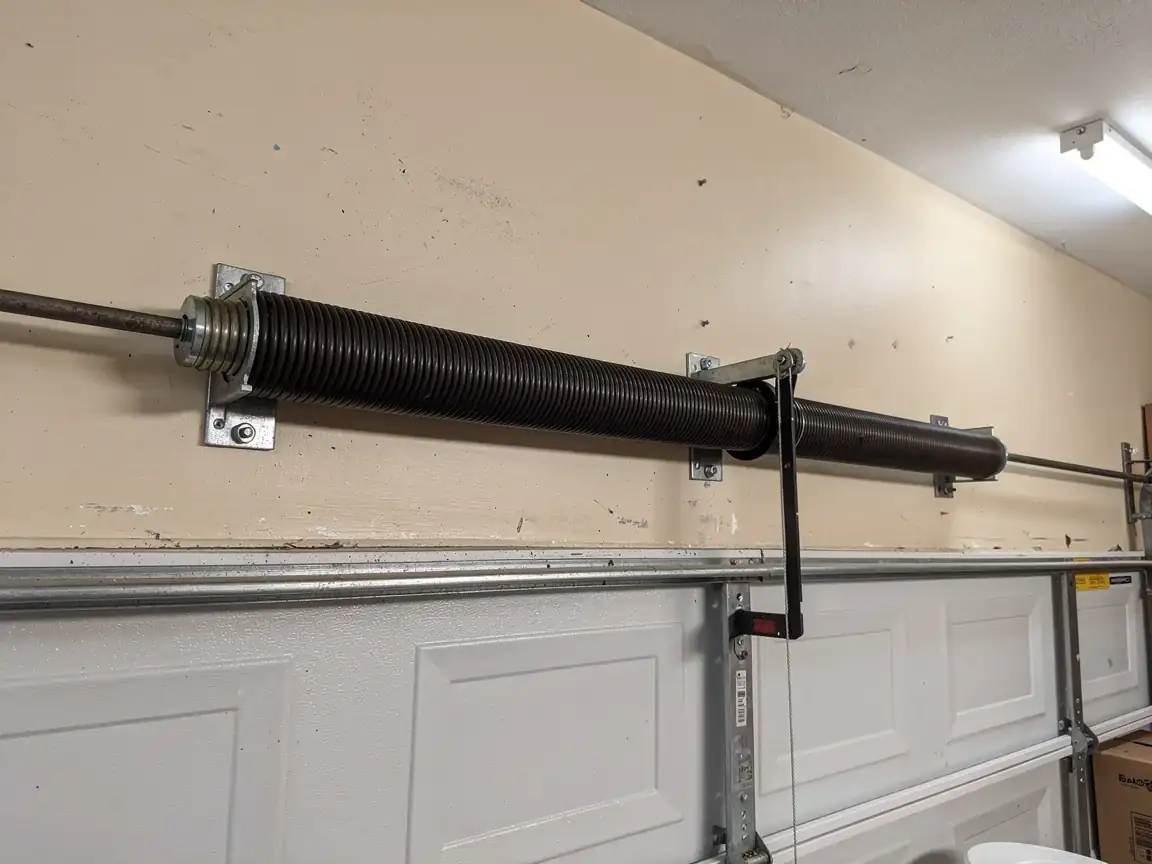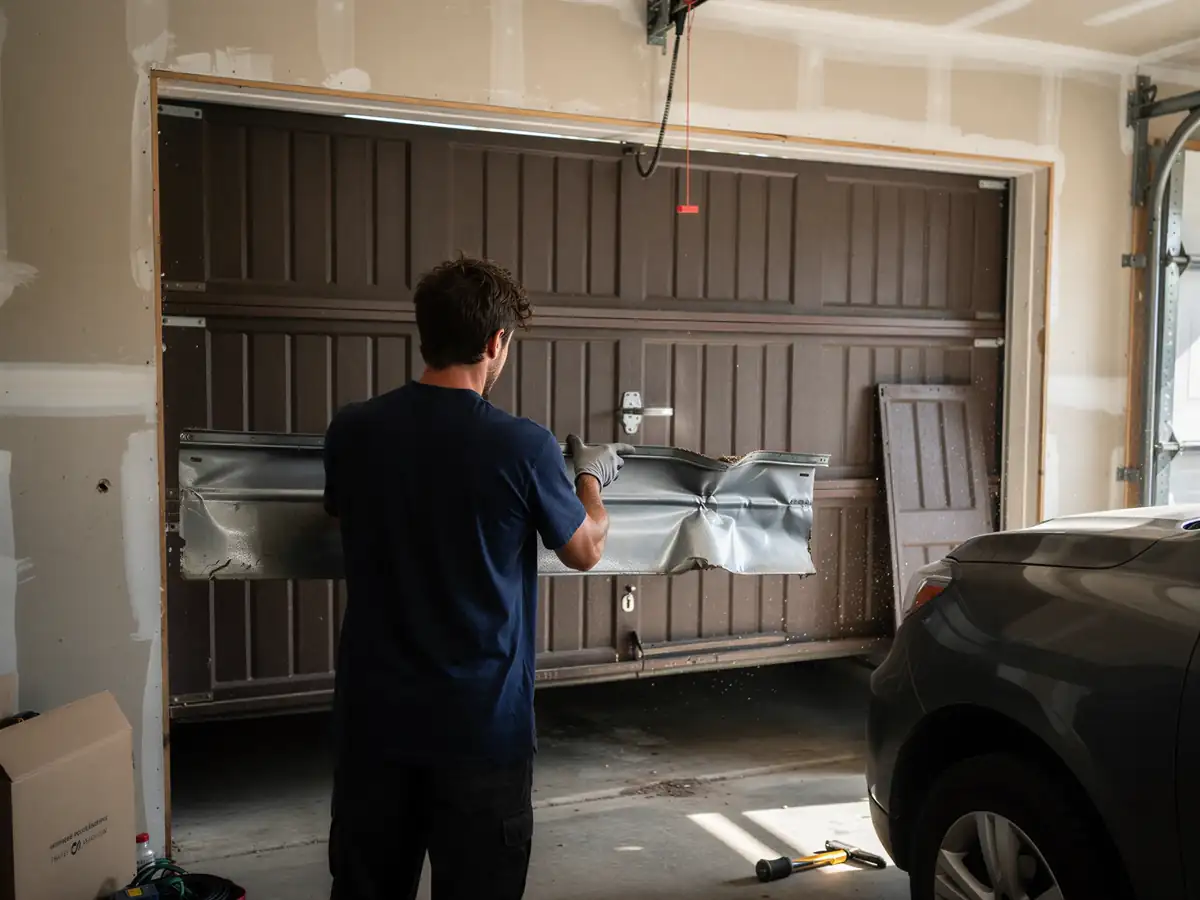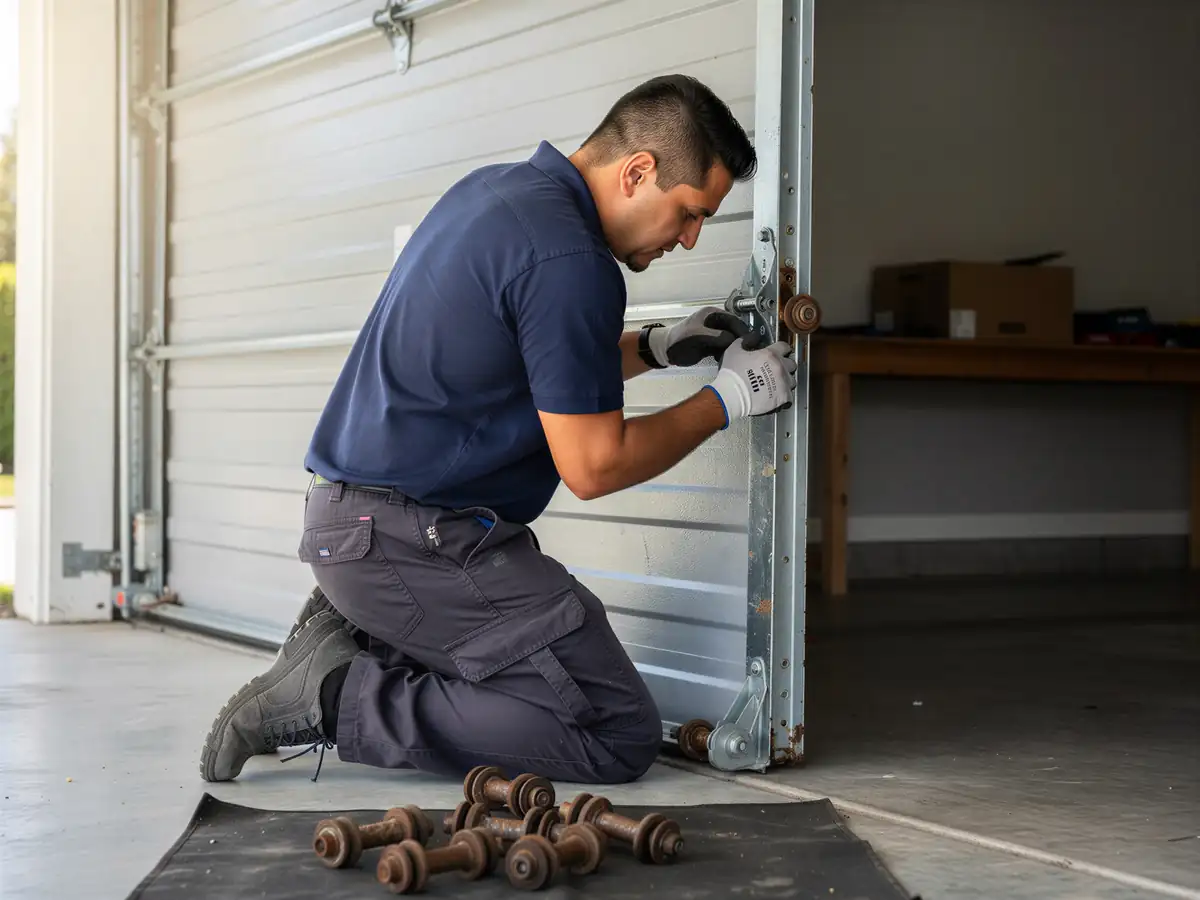
What Causes It Around Here
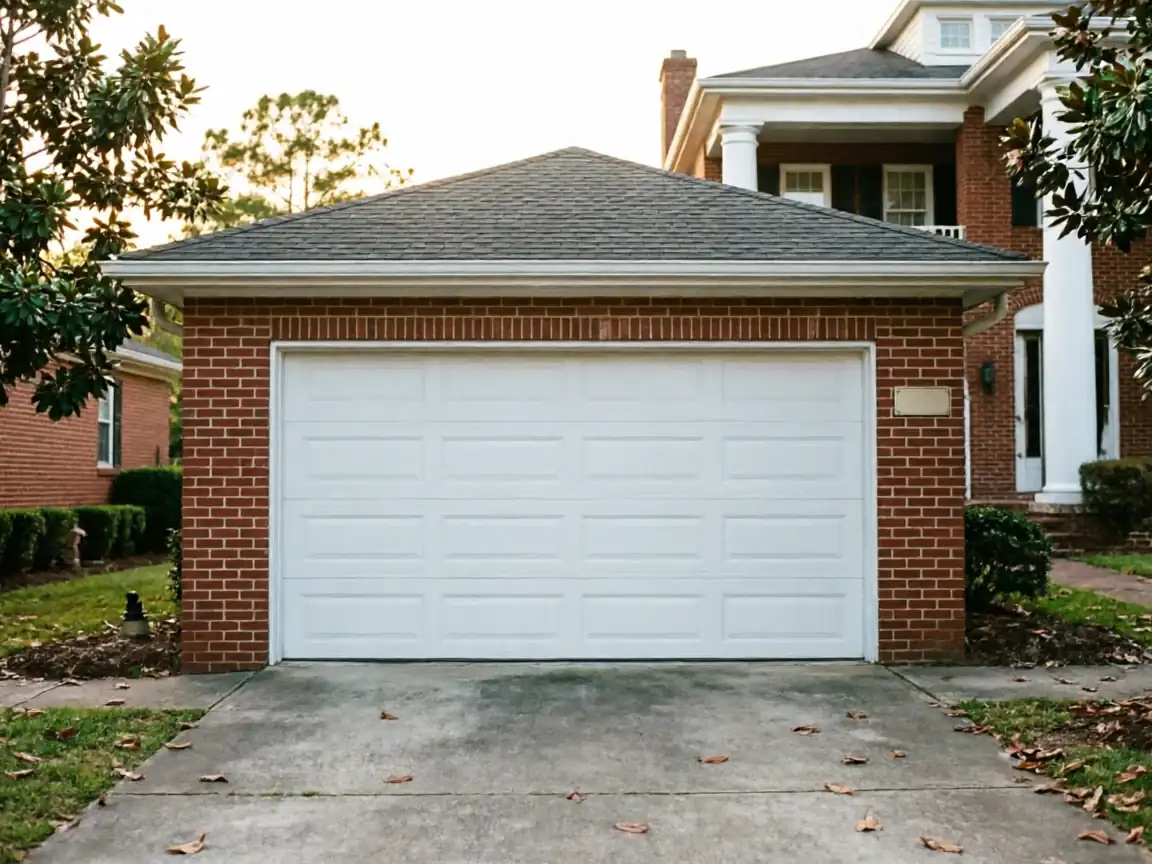
Most of the housing across this service area went up between 1967 and 2011, with the median build landing around 1983. That matters for off-track doors because track hardware from that era was bolted and shimmed to framing standards nobody uses anymore, and thirty-plus years of seasonal movement works those bolts loose. Add in the cold, moderate climate this region sits in, and you get steel track brackets that expand and contract every winter and summer, slowly walking fasteners out of old lumber. Across the 17 named communities we cover, the stock skews heavily toward that same 1980s and 90s wave of construction, so the failure pattern repeats itself call after call: a bottom roller finally gives up, the panel leans, and the next time the door runs it jumps the rail instead of riding it. It's not usually one dramatic event. It's years of minor hardware drift finally catching up with a track that was never perfectly plumb to begin with. Newer builds in the area see less of this simply because the hardware hasn't had the decades to loosen yet.
Time on the Job
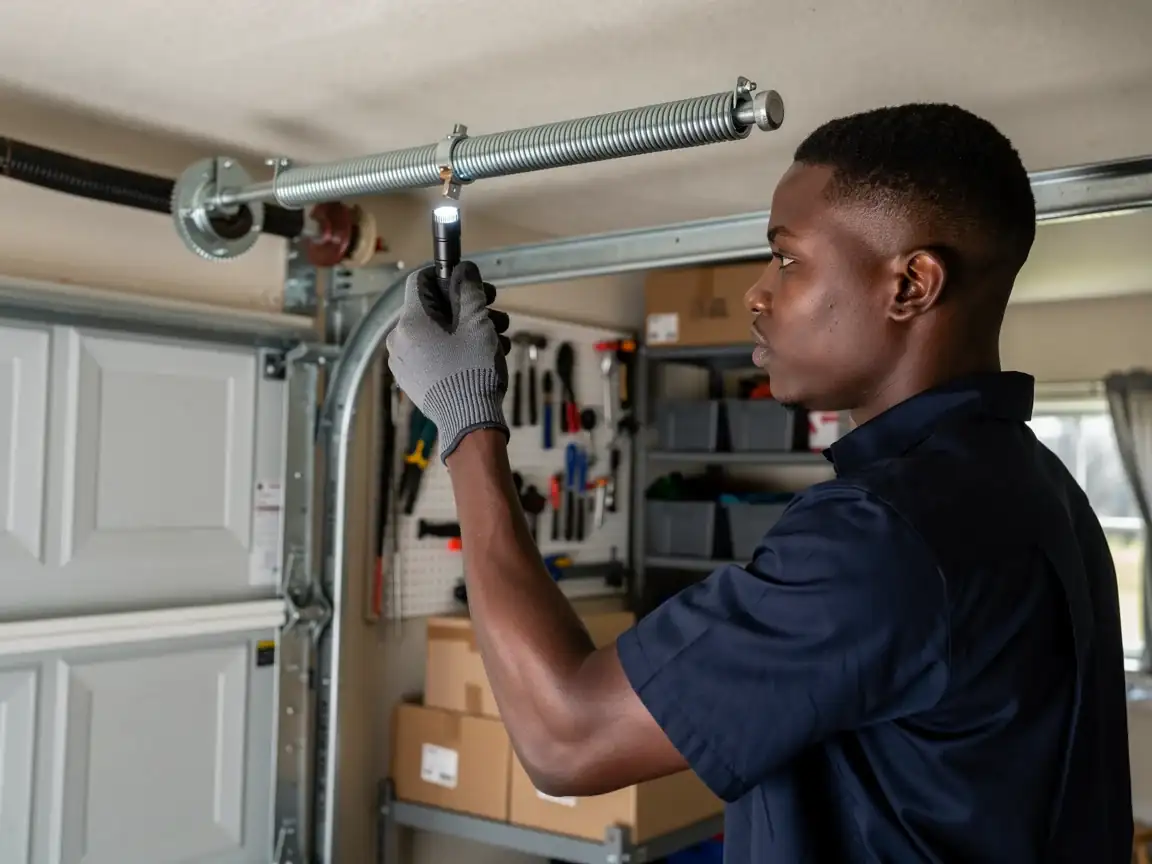
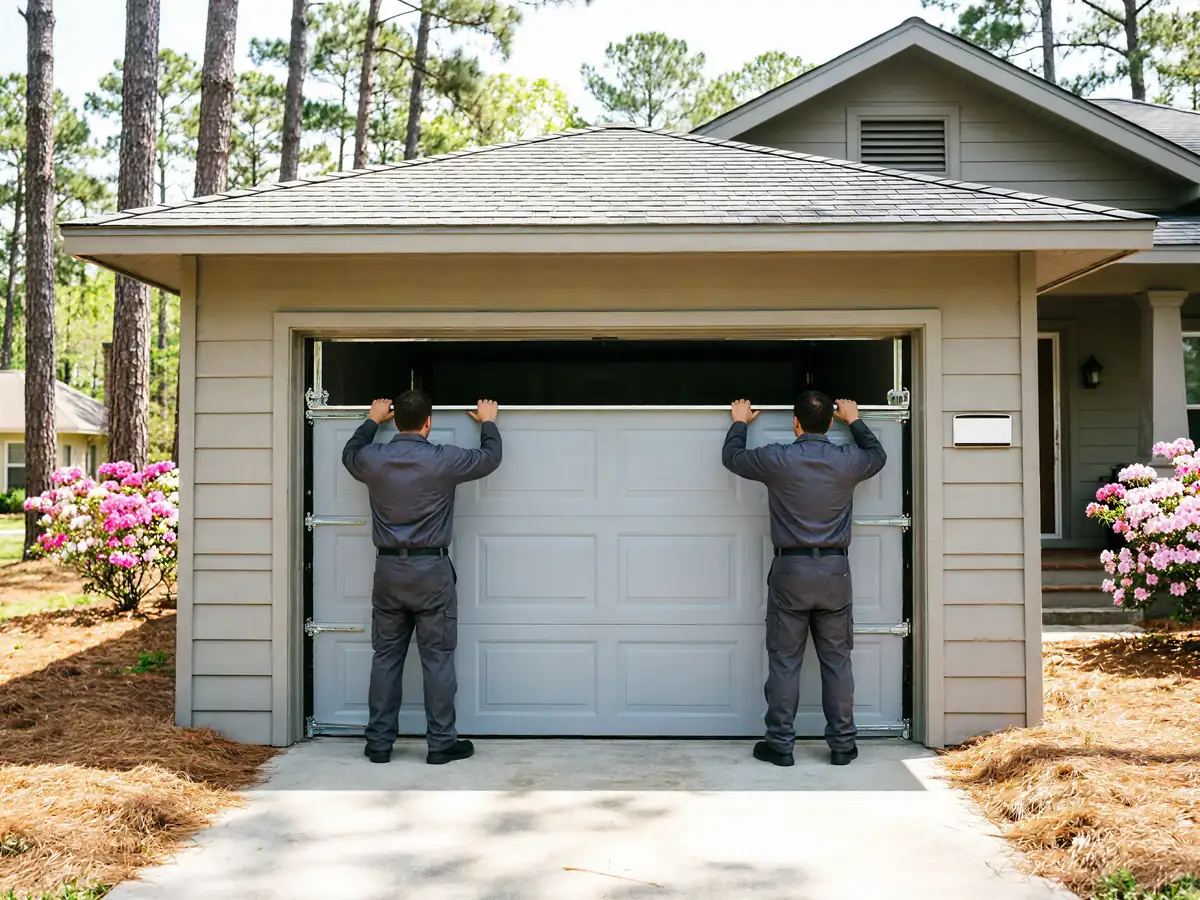
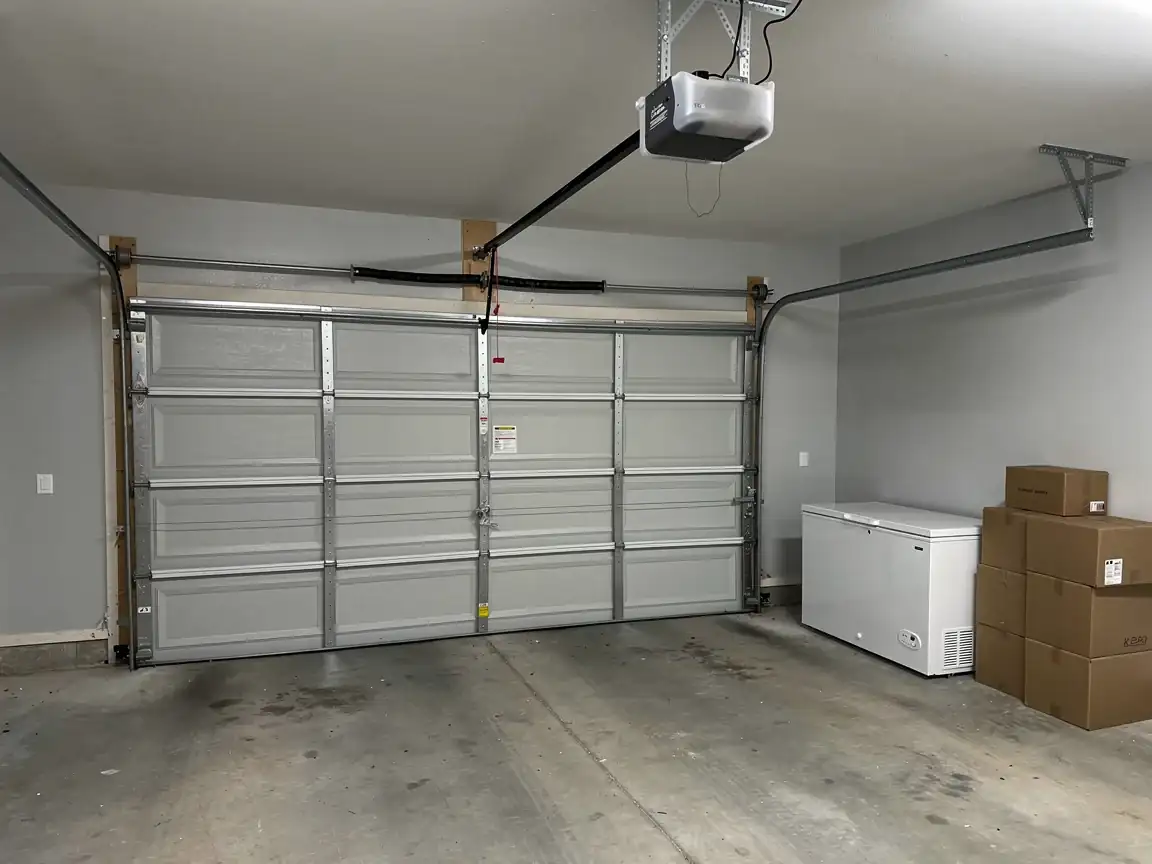
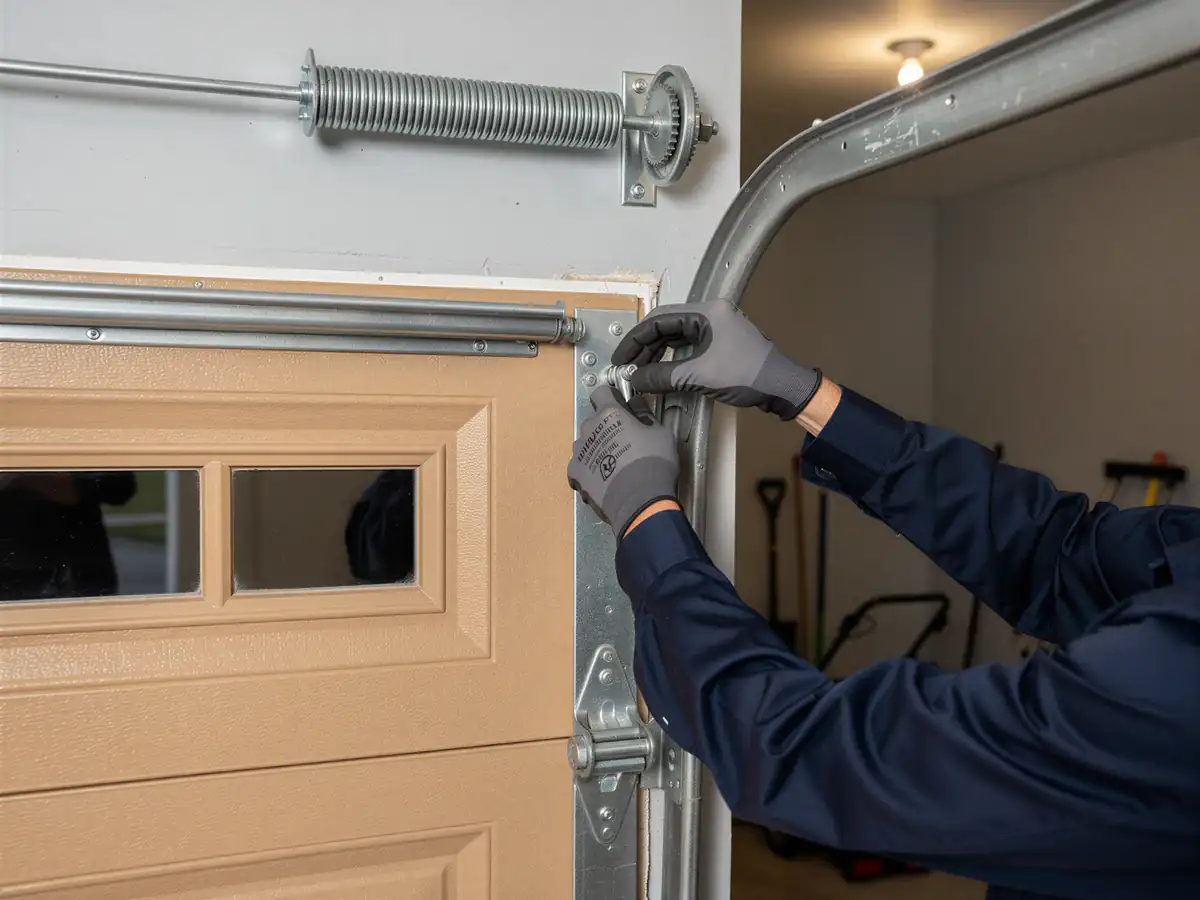
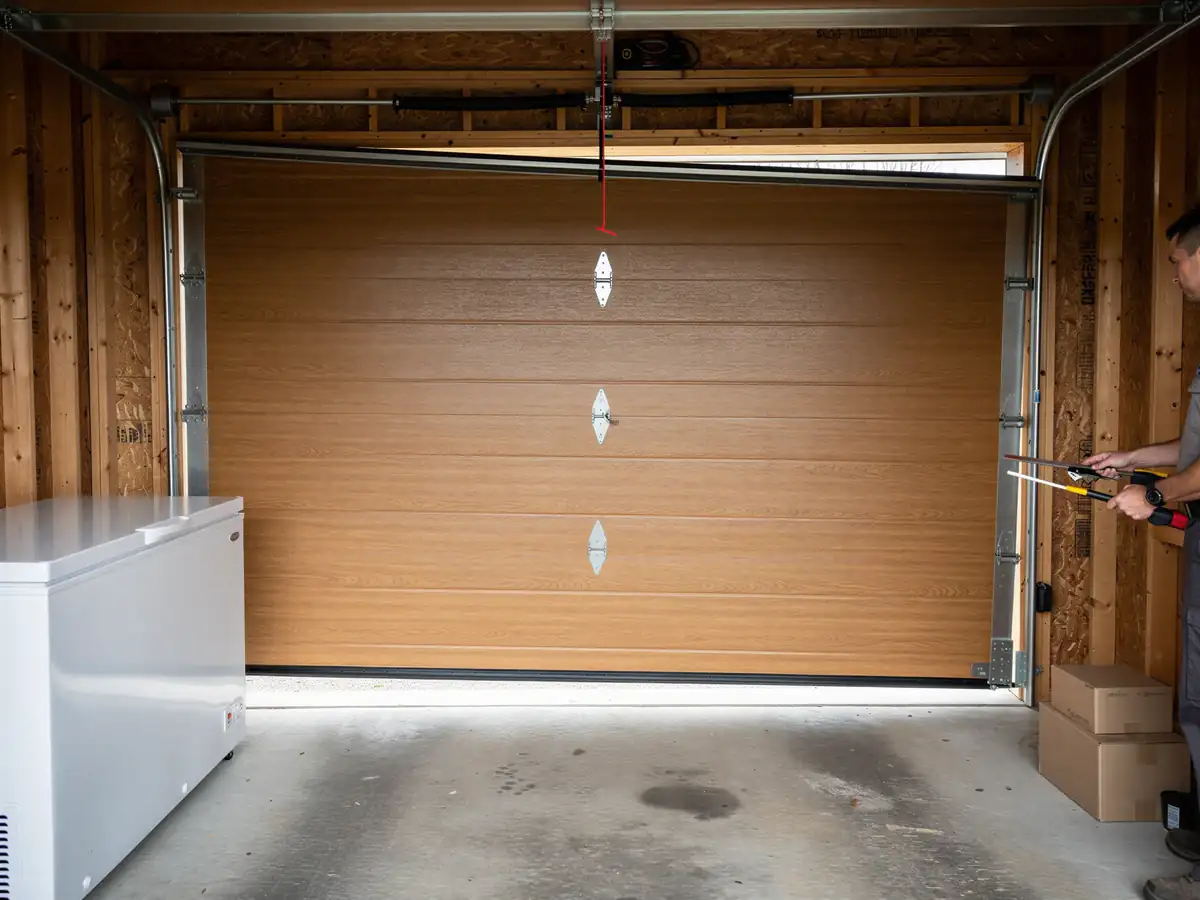
How long an off-track call takes depends on what's actually wrong, and we won't pretend otherwise. A door that's simply slipped a roller off a clean track is a different job than one where the track itself is bent or the bracket has pulled out of the jamb. We look at the rollers, the track alignment, the hinges holding the sections together, and whether the cable came off the drum at the same time the door jumped, because that often happens together. One honest limit here: if a track is badly bent, straightening it rarely holds for long, and we'll tell you when replacing that section of track is the better call instead of forcing a bend back into shape. We don't guess at what's wrong before we're standing in front of the door. Older homes in this area, built back when one era of hardware standard was common, sometimes need a bracket re-set into solid framing rather than just a re-hang, and that adds time the simple jobs don't need.
What the Repair Takes
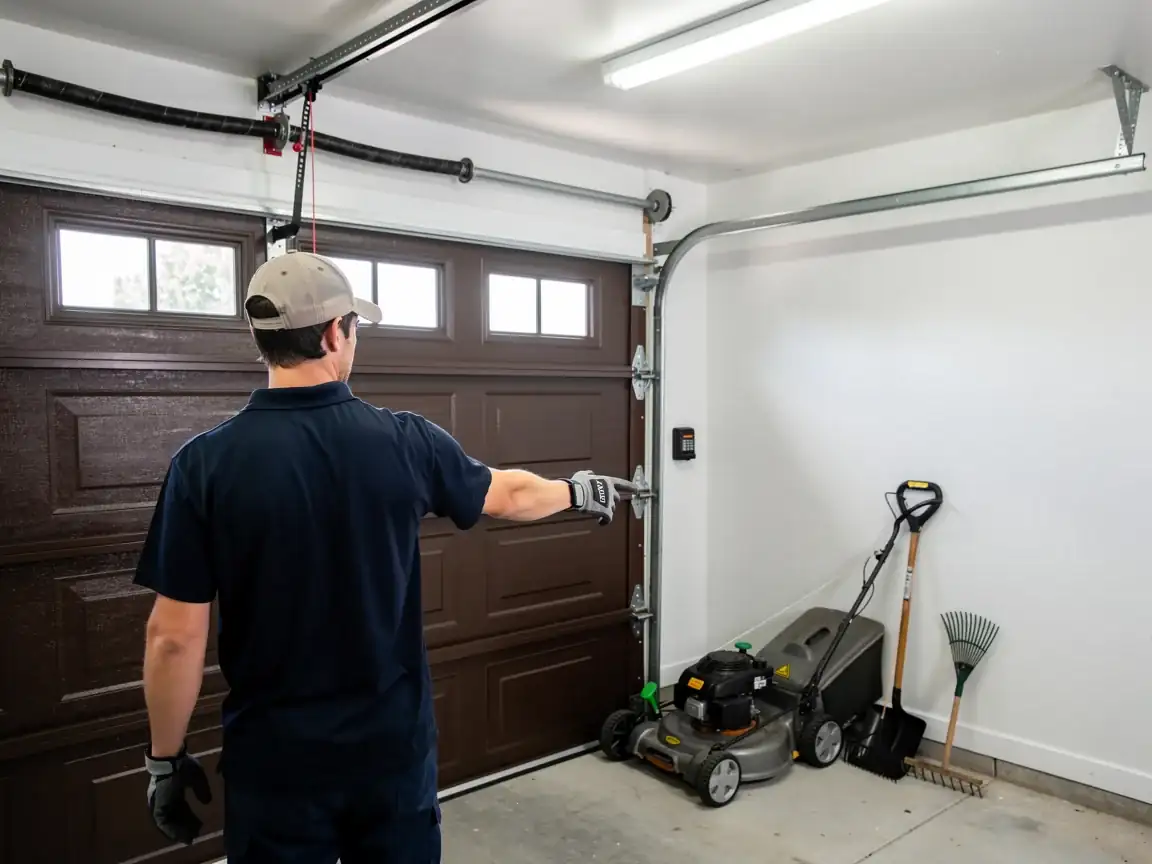
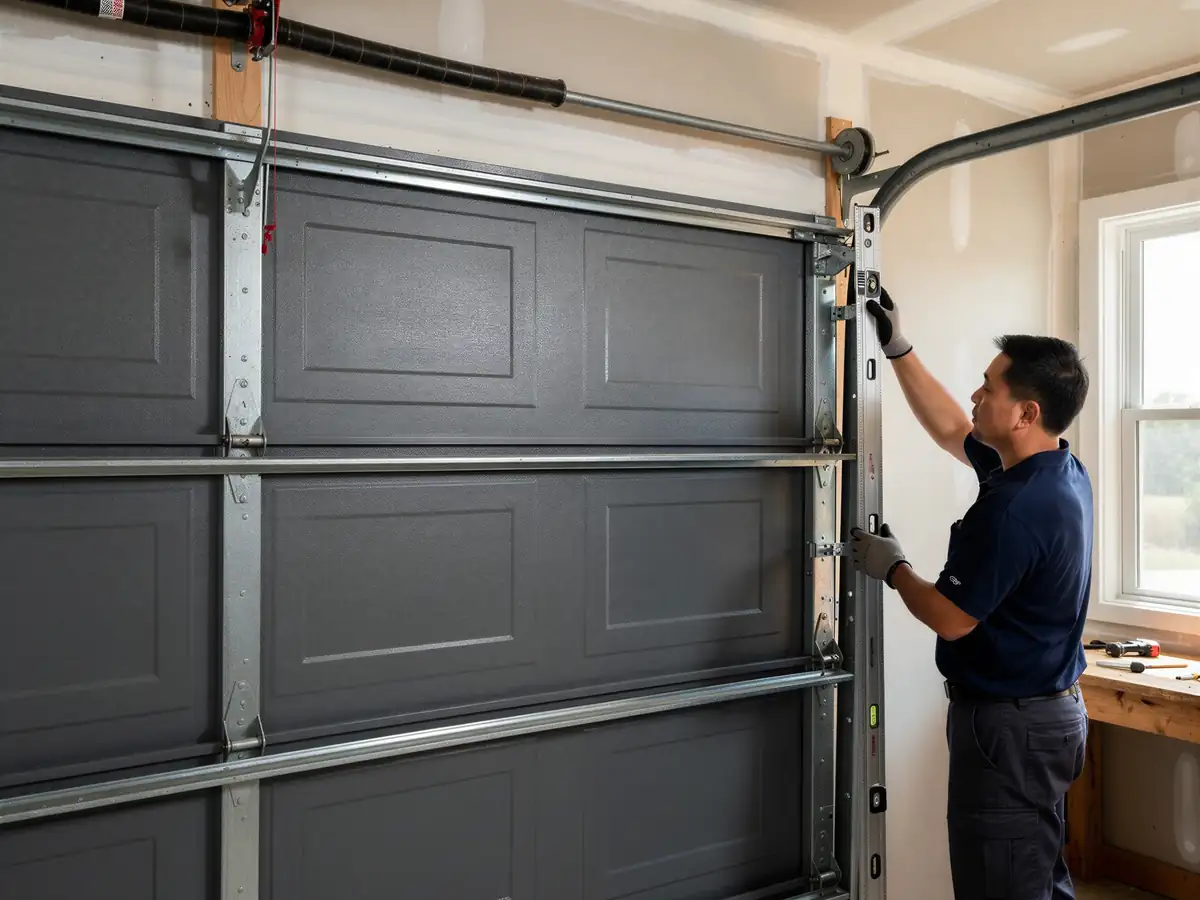
Getting a door back on track usually means re-seating the rollers, checking the track for bends or spread brackets, and confirming the cables and hinges are seated correctly before the door runs again. If the bracket has pulled loose from the framing, that gets re-anchored into solid wood, not just re-tightened into the same worn hole. With a median household income of $59,583 across this service area and most of the local housing stock dating from 1967 to 2011, repair rather than replacement is the right call for the large majority of these jobs, which is part of why we check hardware condition before recommending anything bigger. The honest limit: if the track is badly bent on both sides, or the door itself has warped from years of being run off-center, a repair is a short-term patch and we'll say so rather than charge you twice. Across the 20,806 owner-occupied houses in this area's roughly 43,773 households, most off-track calls end with the original door back in service, not a new one.