Serving Gastonia, NC & nearby
(704) 360-0958
Gastonia, NC

What Makes a Garage Door Jump Its Track in Gastonia

Gastonia's housing stock mostly dates to the 1980s and 90s, and cold snaps shift slabs enough to pull door tracks out of line - here's what to check first.

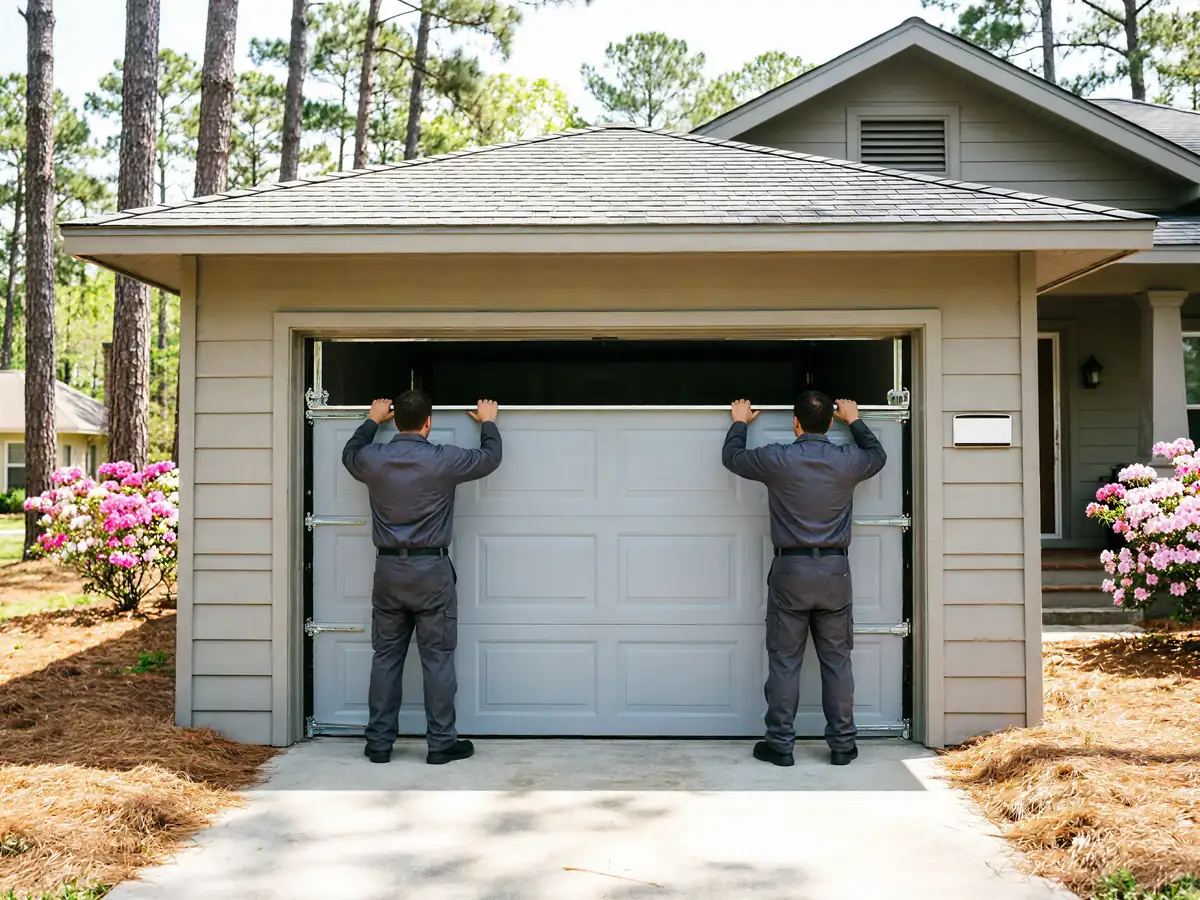
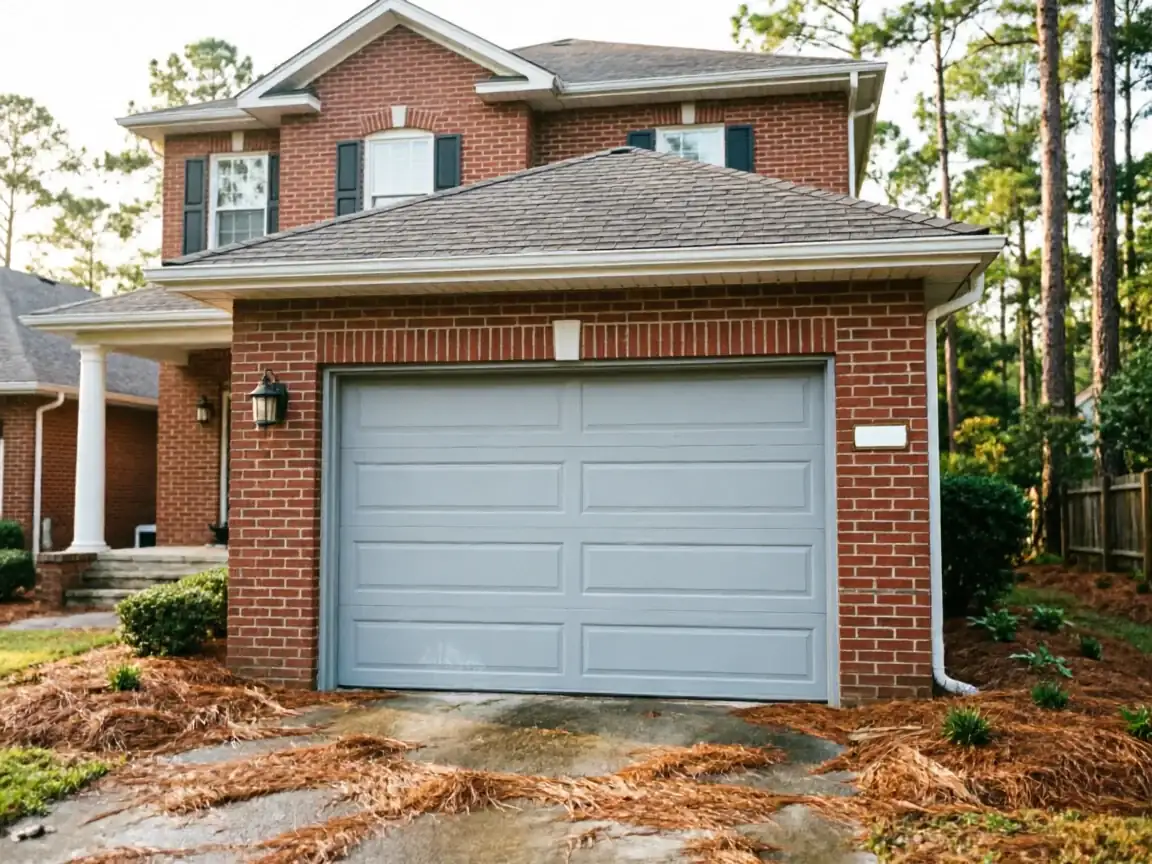
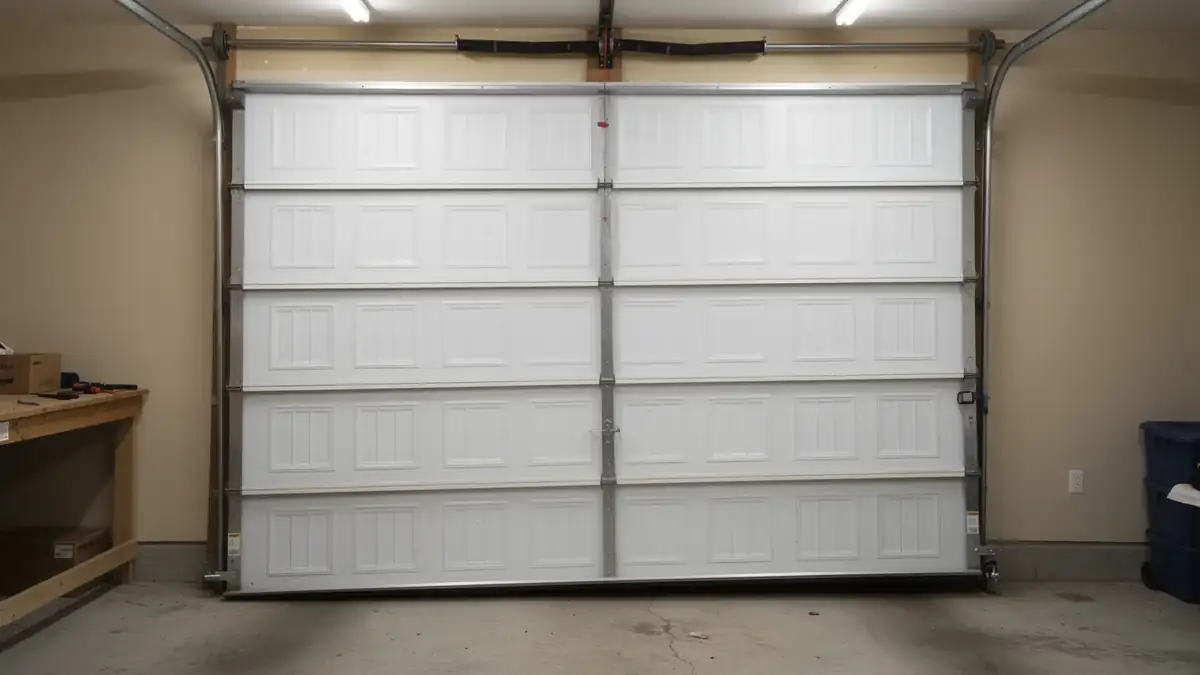
The white garage door is closed, showing a torsion spring and tracks above.

What the Weather Here Does to It

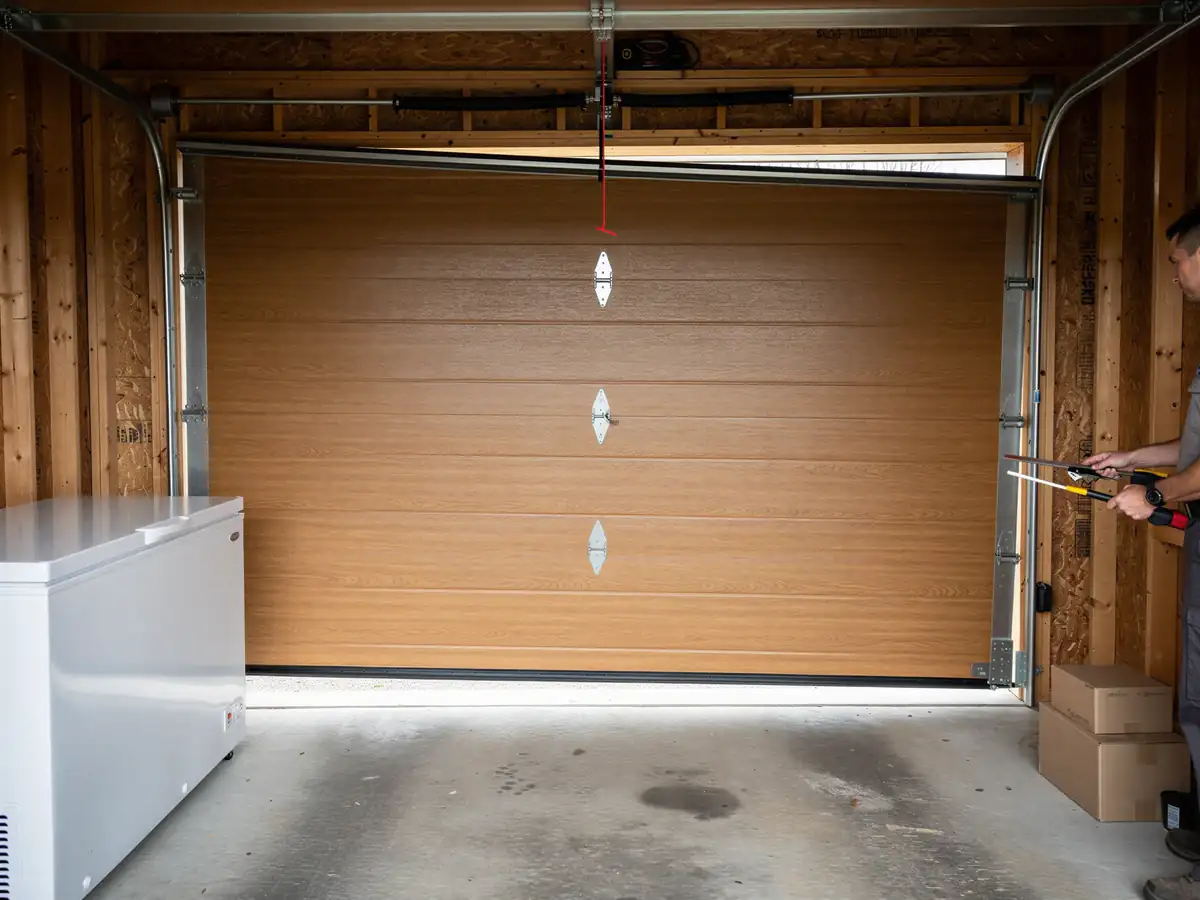
Gastonia sits in a cold-moderate climate band, which means the ground freezes and thaws more than once a season instead of staying locked one way all winter. That back-and-forth moves concrete. A garage slab that heaves even a quarter inch at one corner twists the track bolted to the framing above it, and the door starts riding the rollers against one side of the track instead of straight down the middle. You'll hear it before you see it - a grinding or a tick on the way up that wasn't there last spring. This isn't a one-time event. It's a repeating cycle tied to how many freeze-thaw swings a given winter brings, and some winters bring more than others. Houses with the garage slab poured separately from the foundation (common in this area) move independently of the house itself, which is exactly the setup that walks a track out of alignment over a few seasons. None of this is dramatic. It's slow, and that's what makes people ignore it until the door binds hard enough to stall the opener or pop a roller off the rail entirely.

The Situation

Housing across the Gastonia service area was mostly built between 1967 and 2011, with the thickest cluster going up in the 1980s and 90s, spread across the 17 named areas we work in. That matters for track problems specifically because the garage framing methods and track hardware from that build window weren't engineered for decades of slab movement - they were engineered to pass inspection once. A door track mounted to a 1980s stud wall with the fasteners of that era doesn't have the same holding power as something installed last year, and after 30-plus years of seasonal shift, the anchor points loosen before the track itself fails. With roughly 20,806 owner-occupied houses in the broader service area, most of them land in this same build window, which is why track misalignment shows up as a pattern here rather than a random one-off. It's rarely the track that's defective. It's the wall it's screwed into, and the slab under that wall, that have both moved a little more than the hardware was built to tolerate.

When Waiting Is Fine

Not every off-track door needs a same-week call. If the door still opens and closes smoothly and the only sign is a faint rattle near the top of the run, that's often just a loose roller bracket - tighten the bolts, watch it for a couple of weeks, and it may settle. We won't pretend every noise is an emergency; a lot of what gets called in as "the door's off track" is cosmetic vibration that doesn't affect function yet. Where we draw the line: if the door is visibly tilted in the opening, if a cable has come off its drum, or if the opener is straining and reversing on its own, stop using it and call. Running a door on a bound track can bend the track itself, and once it's bent rather than just loose, you're replacing hardware instead of adjusting it. One honest limit on our end - if the track is original to a house from the early part of that 1967-2011 build window, matching parts aren't always on the truck, and a repair can turn into a short wait on a section instead of a same-day fix.

What to Look At First

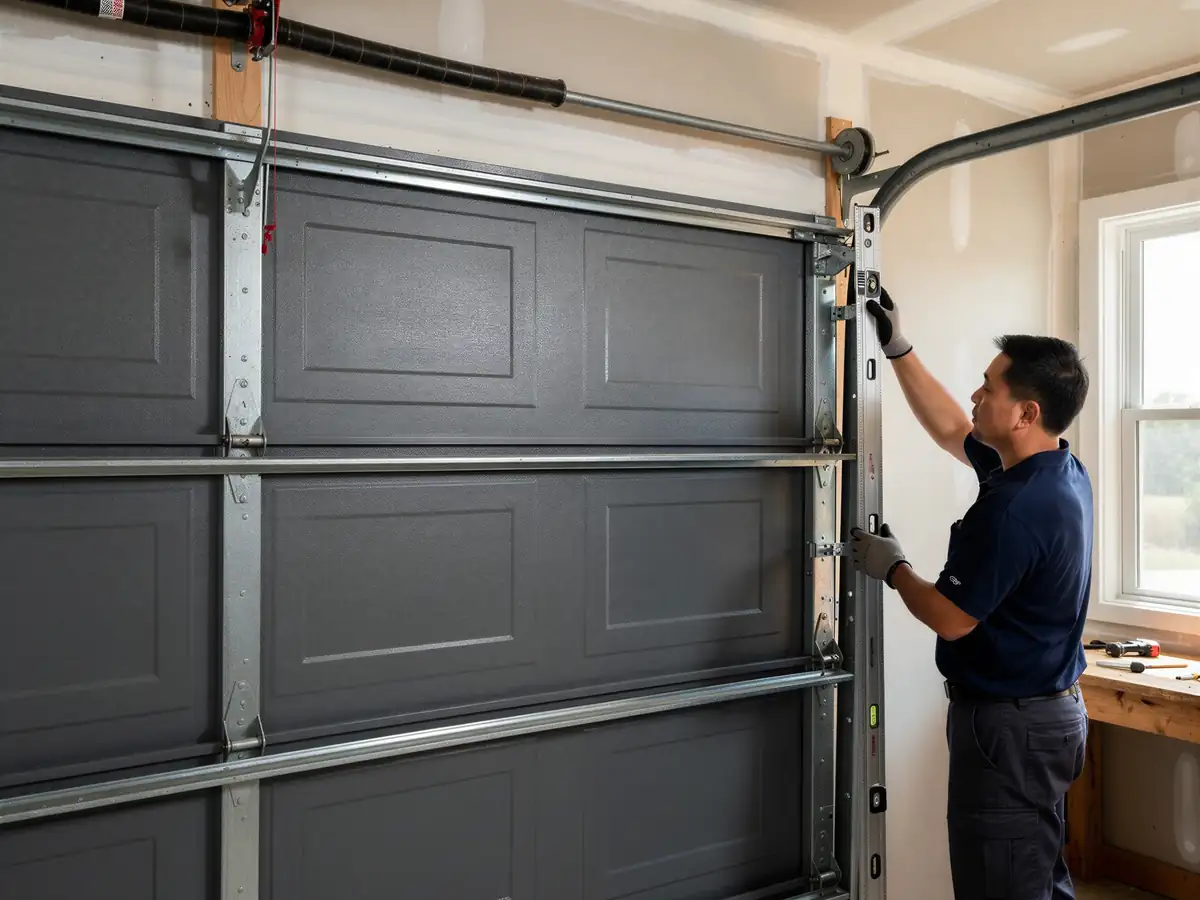
Start at the bottom corners of the slab, not at the door. If you can see a gap or a lip where the slab meets the driveway apron, that corner has likely shifted, and that's usually the side where the track binds first. Next, check whether the vertical track is still plumb against the wall - a level held against it will show a lean most people can feel with a hand before they see it. Look at the lag screws holding the track brackets to the jamb; in houses from the 1980s and 90s stock common here, those are often still the original fasteners, and they back out slightly as the wood around them compresses over the years. Finally, run the door by hand with the opener disconnected and feel for the exact point where it drags - that's your misalignment point, not the whole track. Fixing the one spot that binds is a different job, and a cheaper one, than replacing a track that's actually fine everywhere else.

How it works

From “it’s stuck” to “it’s fixed”

  1. 1
    A man in a blue shirt stands in a driveway looking at his phone.

    Tell us what’s wrong

    Describe the symptom - won’t open, loud bang, opener runs but the door won’t move.

  2. 2
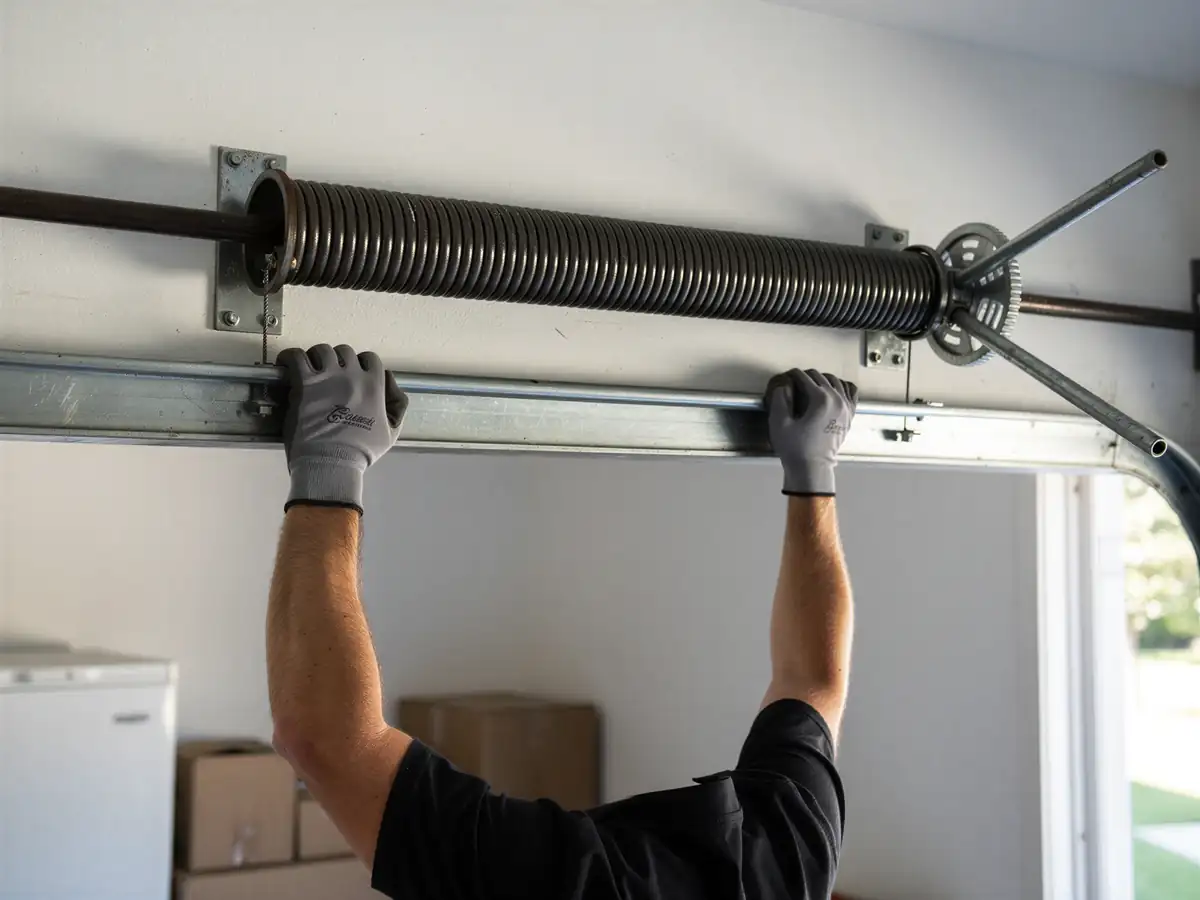
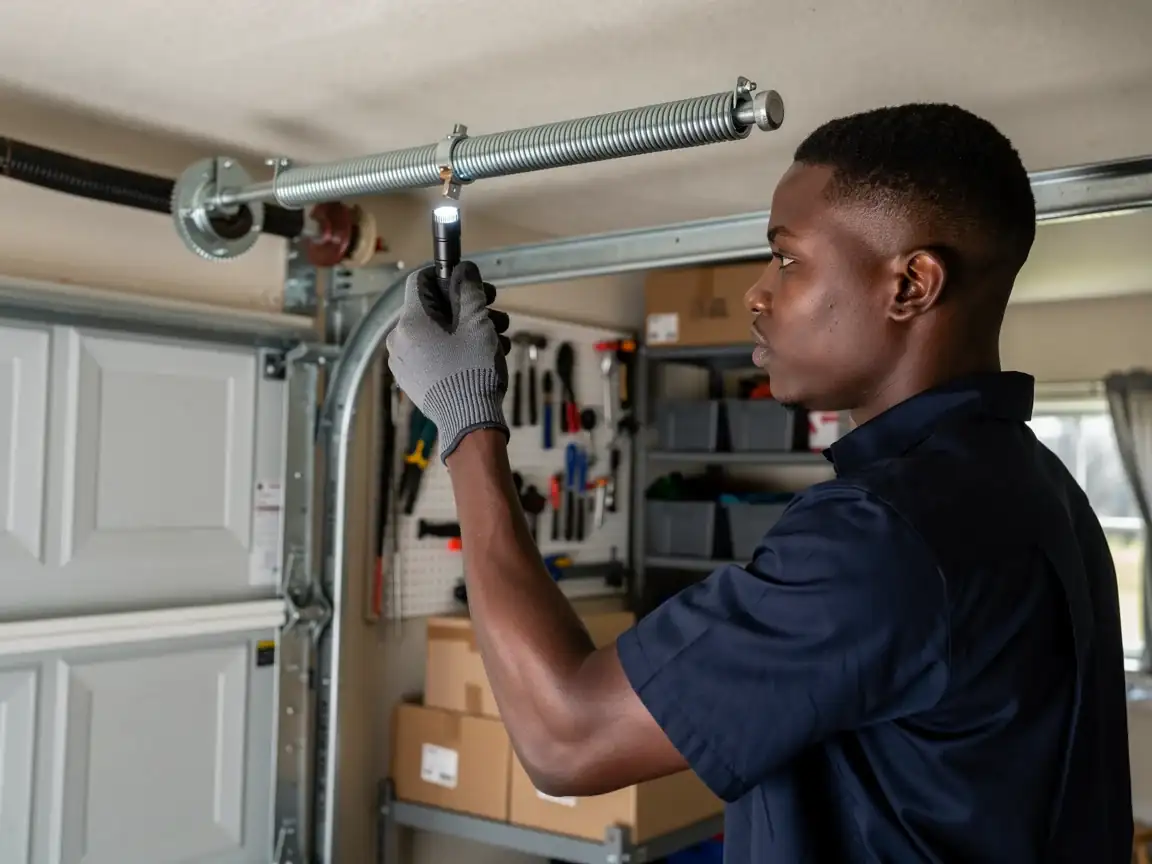
    A technician in a dark blue shirt inspects a garage door torsion spring with a flashlight.

    On-site diagnosis

    A technician tests the door under power and by hand and finds what actually failed.

  3. 3
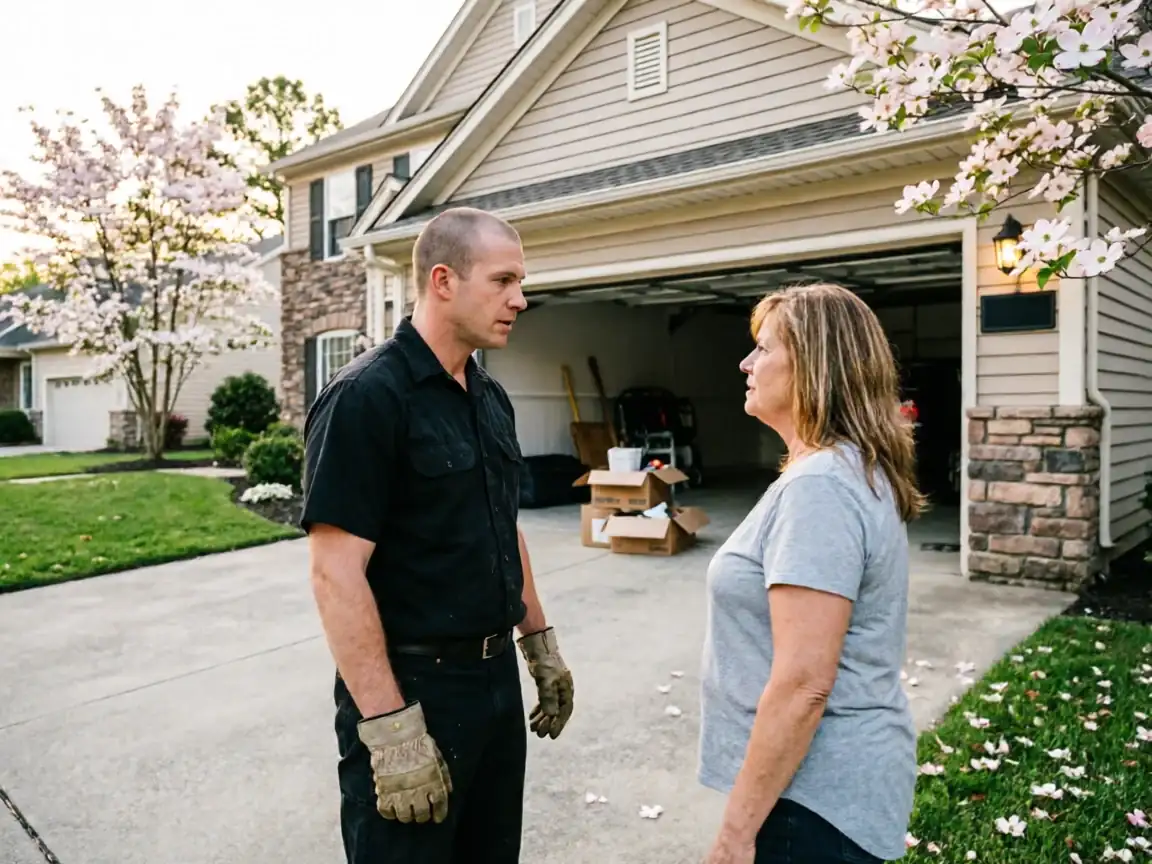
    A technician in work gloves talks to a woman in a driveway in front of a house.

    Clear, up-front plan

    You get the fix that’s needed and what drives the cost - before any work starts.

  4. 4
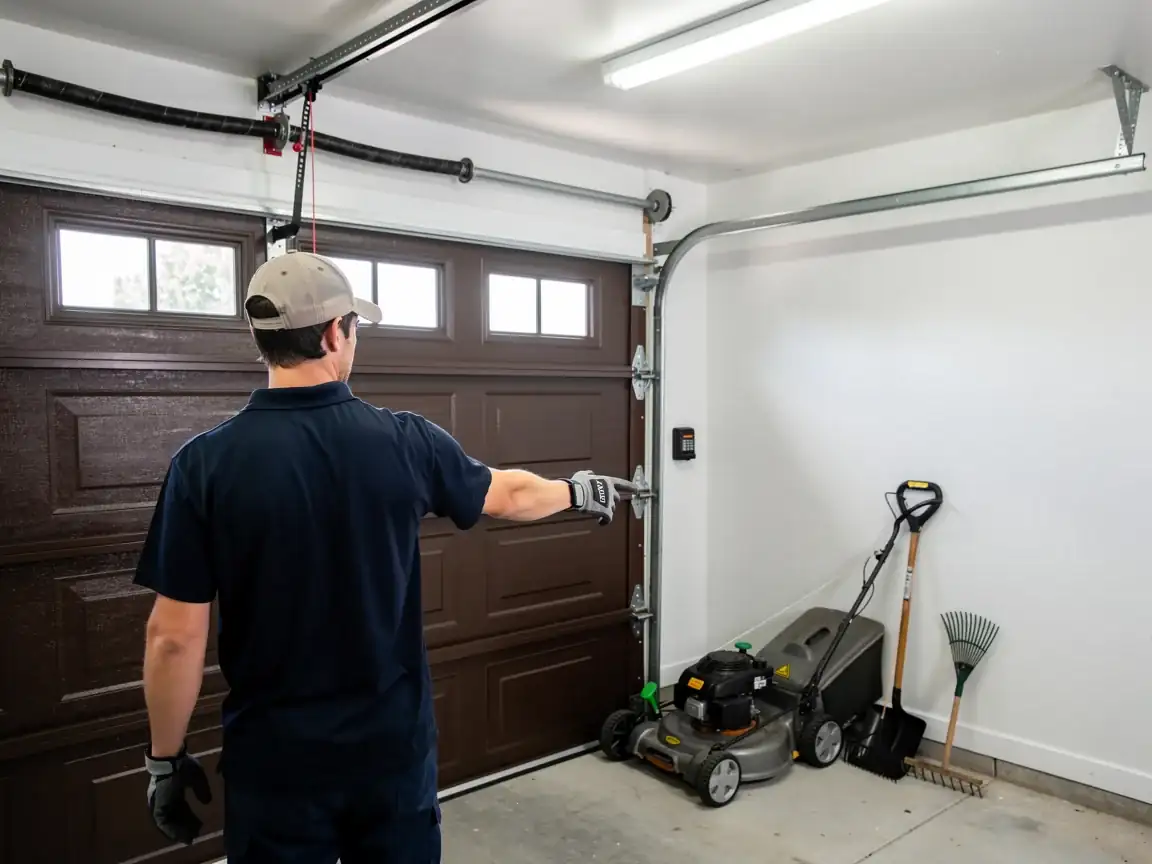
    A technician in a cap points at a brown garage door with windows.

    Repaired & tested

    The repair is done, the door is set true and tested, and the work area left clean.

Not sure which repair your door needs in Gastonia, NC? Describe what it’s doing - every job starts with a diagnosis.

How we work

What to expect

Diagnosis firstEvery visit starts by finding what actually failed - not a pre-written parts list.
The right part for the doorSprings and openers matched to the door’s weight and age, so the fix holds up.
Straight answersWhen a repair makes more sense than a replacement - or the reverse - you hear it plainly.
Clean, careful workTension released safely, hardware set true, the door tested under power before we leave.
What we do

Garage Door Services

Repair and installation work for Gastonia homes and businesses.

Questions

Frequently asked

Straight answers about garage door repair in Gastonia. Still unsure? Ask us directly.

Why does my garage door only act up in winter?

Gastonia's climate runs cold-moderate, with repeated freeze-thaw cycles rather than one hard freeze. Each cycle moves the slab slightly, and a garage door track bolted above a shifting slab gets pulled out of true gradually. Summer heat doesn't cause the same swing, which is why the noise or binding often shows up or worsens specifically in the colder months and seems to ease up by spring.

Is it the track or the opener that's failing?

Usually the track or its anchoring, not the opener. An opener straining against a bound track will throw safety-reverse errors, which people mistake for opener failure. Disconnect the opener and move the door by hand - if it drags or binds at one point, the track or the wall it's mounted to is the problem, and the opener is just reacting to it.

How old does my house have to be for this to matter?

Most houses in this area were built between 1967 and 2011, with a heavy cluster in the 1980s and 90s. That whole window used fastening methods not designed for 30-plus years of seasonal slab movement, so age alone - not a specific decade - is the bigger factor in whether original track hardware has started to loosen.

Can I just tighten the track myself?

If the issue is a loose roller bracket or a backed-out lag screw, tightening it is reasonable and low-risk. If the track itself is bent or the slab underneath has visibly shifted, tightening won't hold and can mask a bigger problem. When in doubt, check plumb with a level before you touch a wrench.

Ready to get your garage door sorted?

Tell us what it’s doing and where you are in Gastonia - we’ll take it from there.

Request a QuoteCall