Serving Gastonia, NC & nearby
(704) 360-0958
Gastonia, NC

What's Worth Fixing on an Older Gastonia Garage Door

Gastonia homes built mostly between 1967 and 2011 face specific wear from cold winters and humid summers - here's what's worth repairing and what isn't.

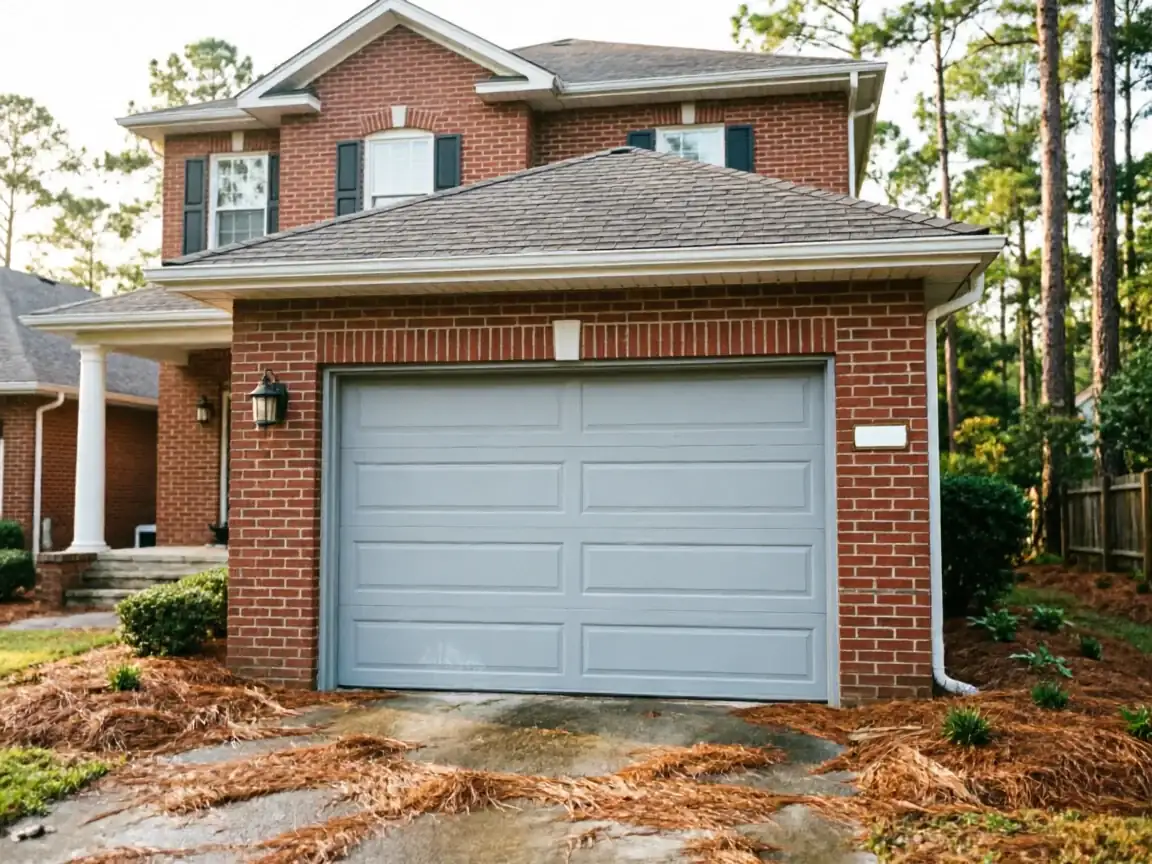
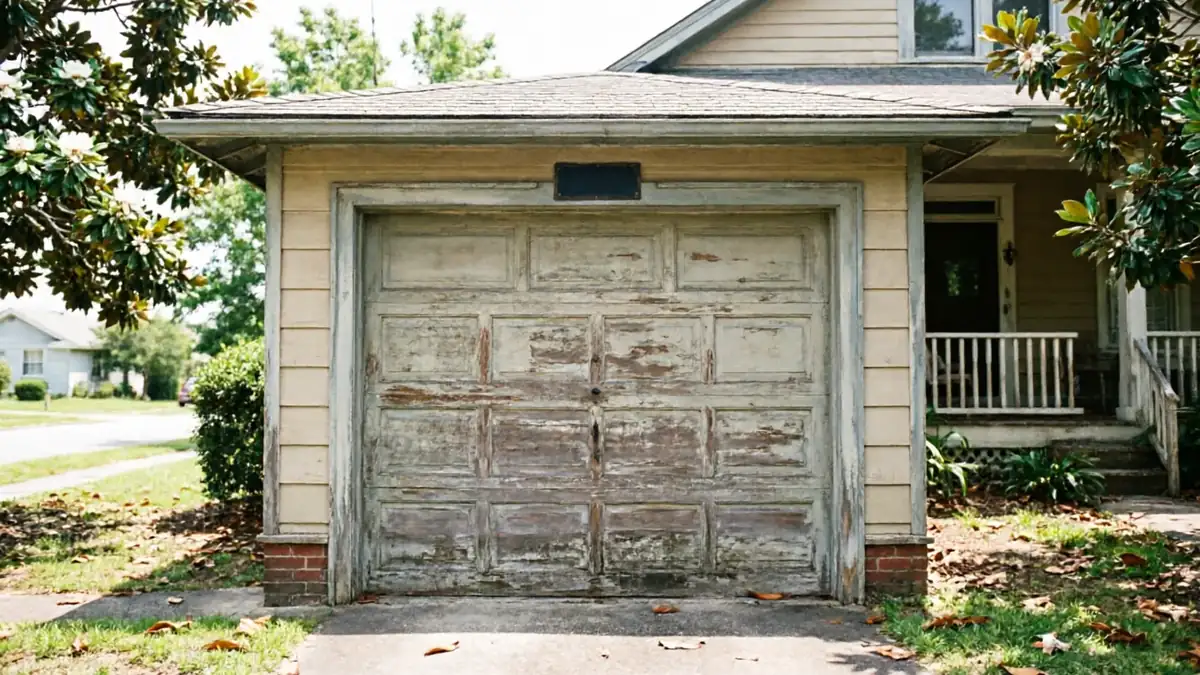
The old garage door has peeling paint and is attached to a house.

What the Weather Here Does to It

Gastonia sits in a cold-moderate climate band, which means the door on your house goes through real freeze-thaw cycling every winter and sticky, humid stretches every summer. That swing is harder on a garage door than people expect. Steel sections expand in the heat and contract in the cold, and over a few decades that movement works screws loose, pulls track brackets out of plumb, and dries out the lubricant in the roller bearings. Torsion springs lose a little tension every cold snap, so a spring that was fine five winters ago can be noticeably weaker now even with no dramatic failure. Humidity does its own damage from the other direction - it's what rusts out the bottom corners of a steel panel first, right where the door meets the slab and holds moisture longest. None of this is a Gastonia-specific design flaw. It's just what a cold-moderate climate does to the same hardware, year after year, on a door that was never built to be maintenance-free. If your door is original to a house from this area's typical build era, this cycling is likely the root of whatever noise, drag, or misalignment you're noticing, not a one-time accident.

The Situation

Housing across the Gastonia service area was mostly built between 1967 and 2011, with the median landing around 1983, and the bulk of it falls into 1980s and 90s stock spread across the 17 named communities in this area - Ranlo, Dallas, Lowell, McAdenville, Bessemer City, Cramerton, Belmont, Stanley, Kings Mountain, High Shoals, Mount Holly, Cherryville, Lowesville, Lincolnton, Grover, Light Oak, and Pineville, ranging from four miles out to twenty. That means a huge share of the doors we see are the same basic generation: steel sectional doors on torsion springs, often with the lighter-gauge steel and simpler roller hardware that was standard in that era, before heavier insulated panels and nylon rollers became common. With roughly 20,806 owner-occupied houses across a service area of 43,773 households, there's a lot of this same hardware still running on its original springs and tracks. It's not failing because it was installed badly. It's reaching the age where springs, rollers, and cables from that build era are simply due, and the fix is usually a hardware swap, not a whole new door.

When Waiting Is Fine

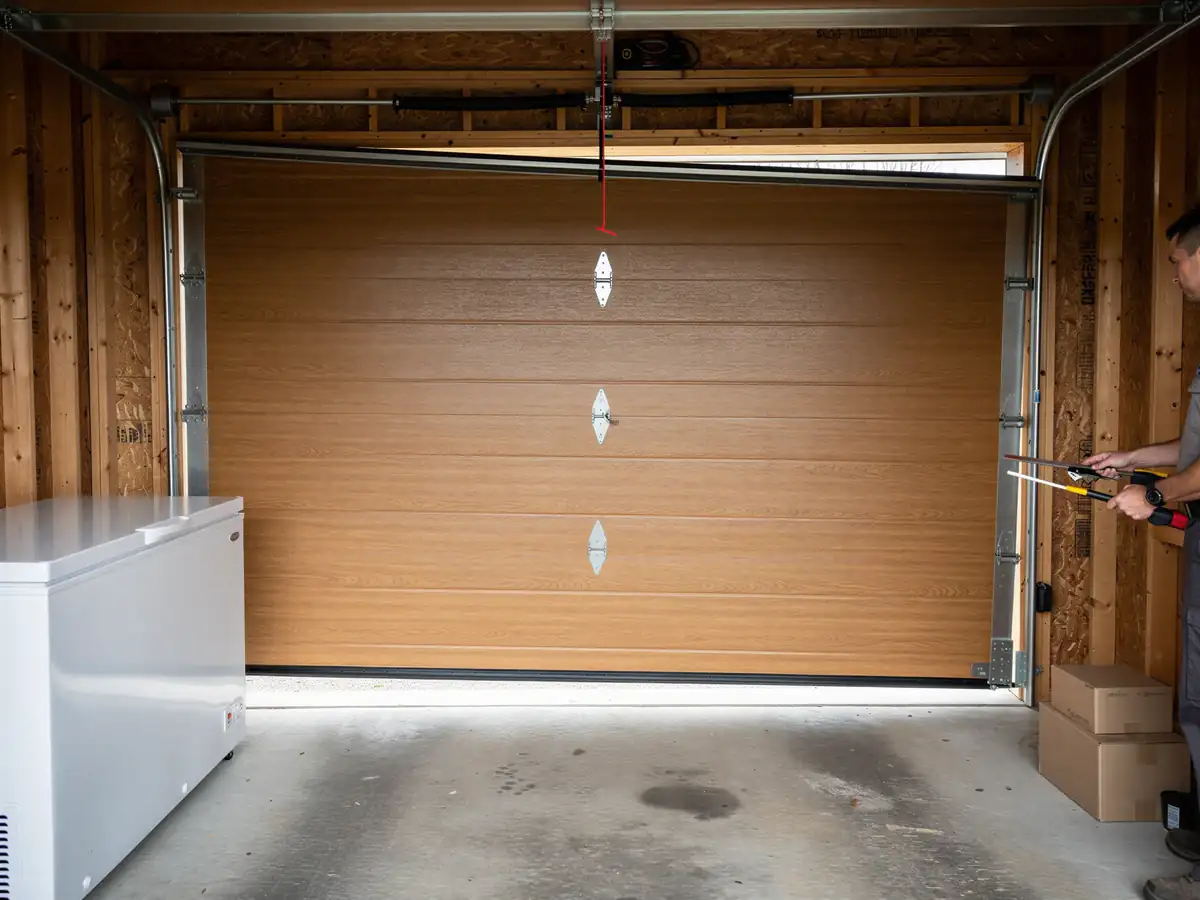
Not everything needs a call right away. If your door is from that 1980s-90s stock and it's just noisy - a squeak on the way up, a rattle in the track - and it still opens, closes, and reverses on the sensor the way it should, you can usually wait and get it lubricated and adjusted on a normal schedule rather than treating it as urgent. Cosmetic rust on the bottom panel, the kind humidity causes here over the years, doesn't need immediate replacement either if the panel is still structurally sound and the door still seats flat on the slab. Worn weatherstripping at the bottom is a minor fix, not a reason to touch the opener or the springs. The one honest limit here: once a torsion spring shows visible gapping in its coils or the door has started sagging unevenly on one side, that's not a wait-and-see situation - a spring under tension that fails can do real damage to whatever's underneath it, and in some cases to a person standing nearby. Noise and cosmetics can wait. Tension and alignment problems can't.

What to Look At First

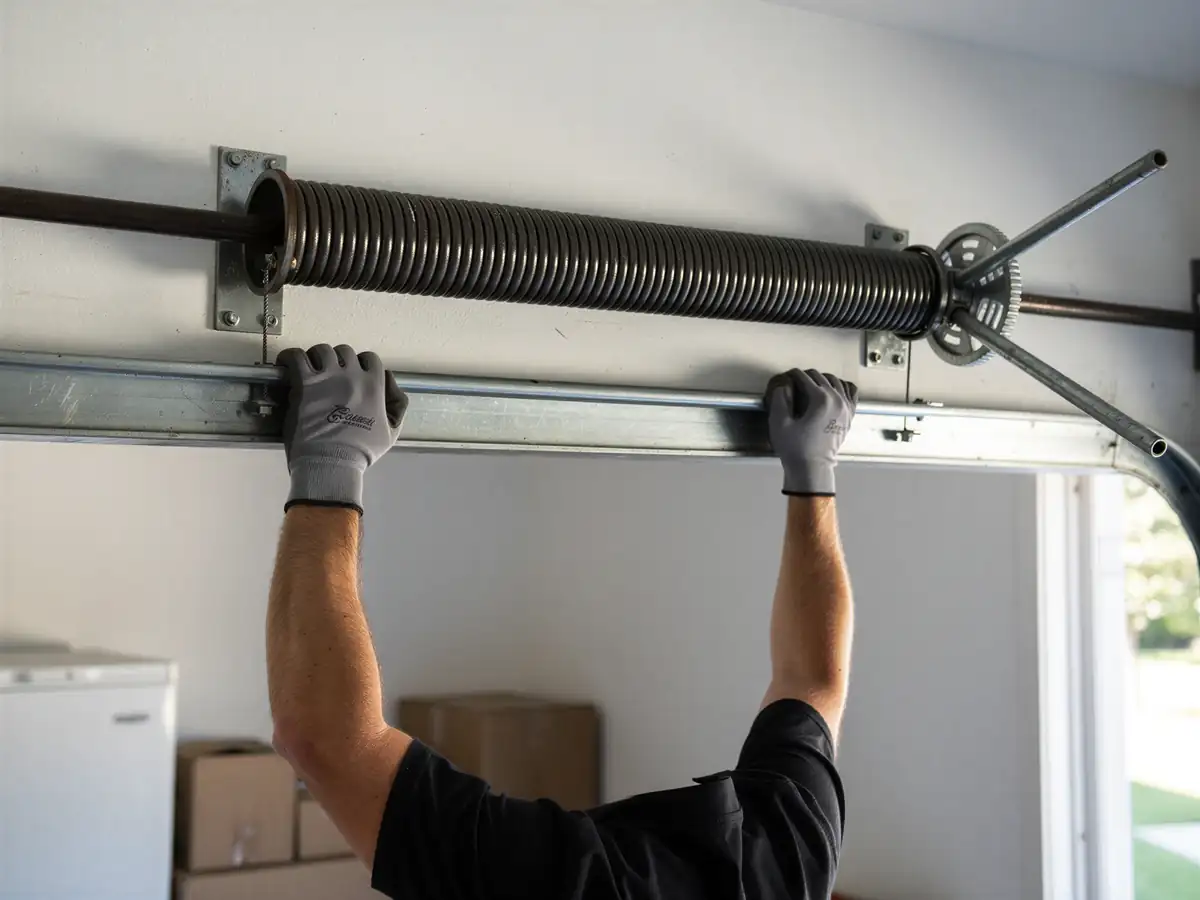
Start with the springs, since that's the part this area's housing stock is most likely to be due on. Look for uneven gaps between coils or a door that drifts open or closed on its own, which points to one spring carrying more load than it should. Next, check the rollers and track for play - on doors from the 1980s-90s era, steel rollers were common and they wear out harder than the nylon ones used later, so grinding or a door that binds partway through its travel often traces back there. Check the bottom corners of the panels for rust bloom, the spot where humidity sits longest against the slab. Check the cables for fraying where they wrap the drum. And check the hardware gauge itself - thinner steel from older stock dents and bends more easily at the hinges, which throws the whole panel alignment off even when the opener and springs are fine. We don't do inspections over the phone and we won't guess at a spring's condition from a description - some of this you really do need eyes on in person before deciding repair versus replace.
How it works

From “it’s stuck” to “it’s fixed”

  1. 1
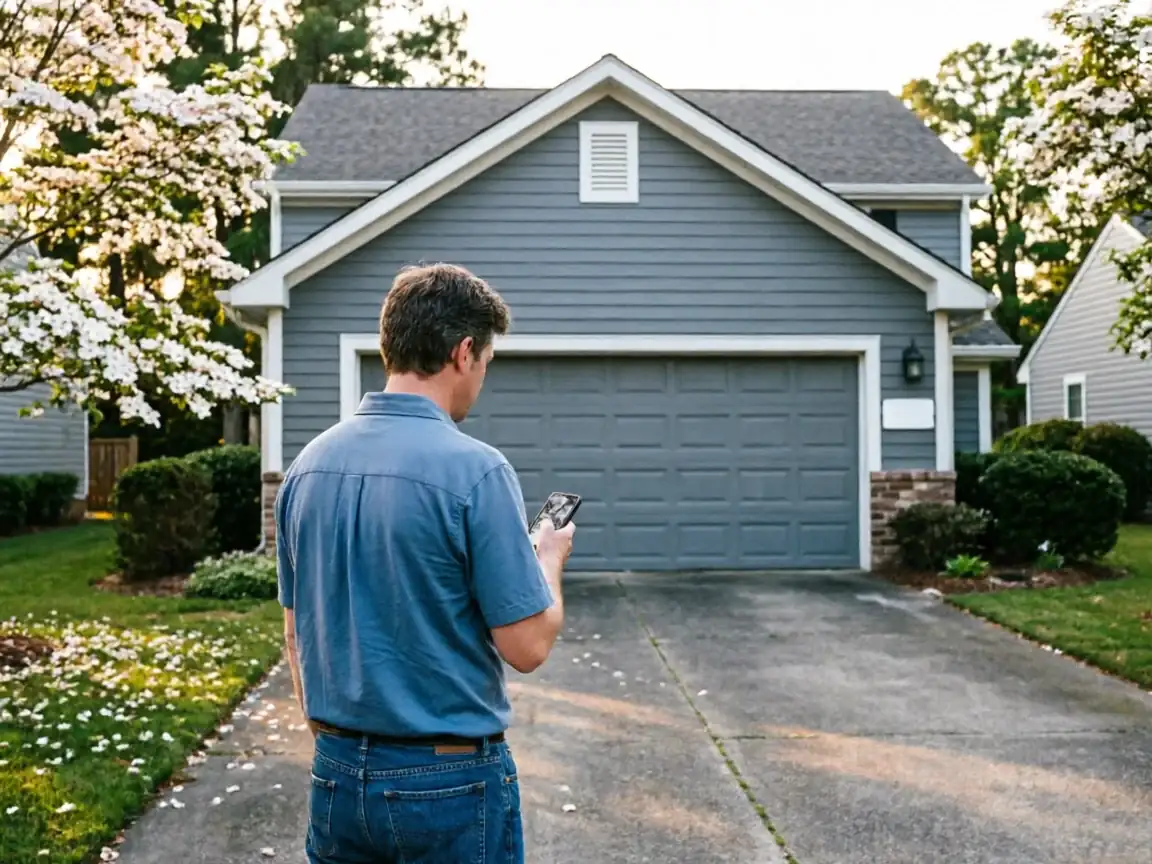
    A man in a blue shirt stands in a driveway looking at his phone.

    Tell us what’s wrong

    Describe the symptom - won’t open, loud bang, opener runs but the door won’t move.

  2. 2
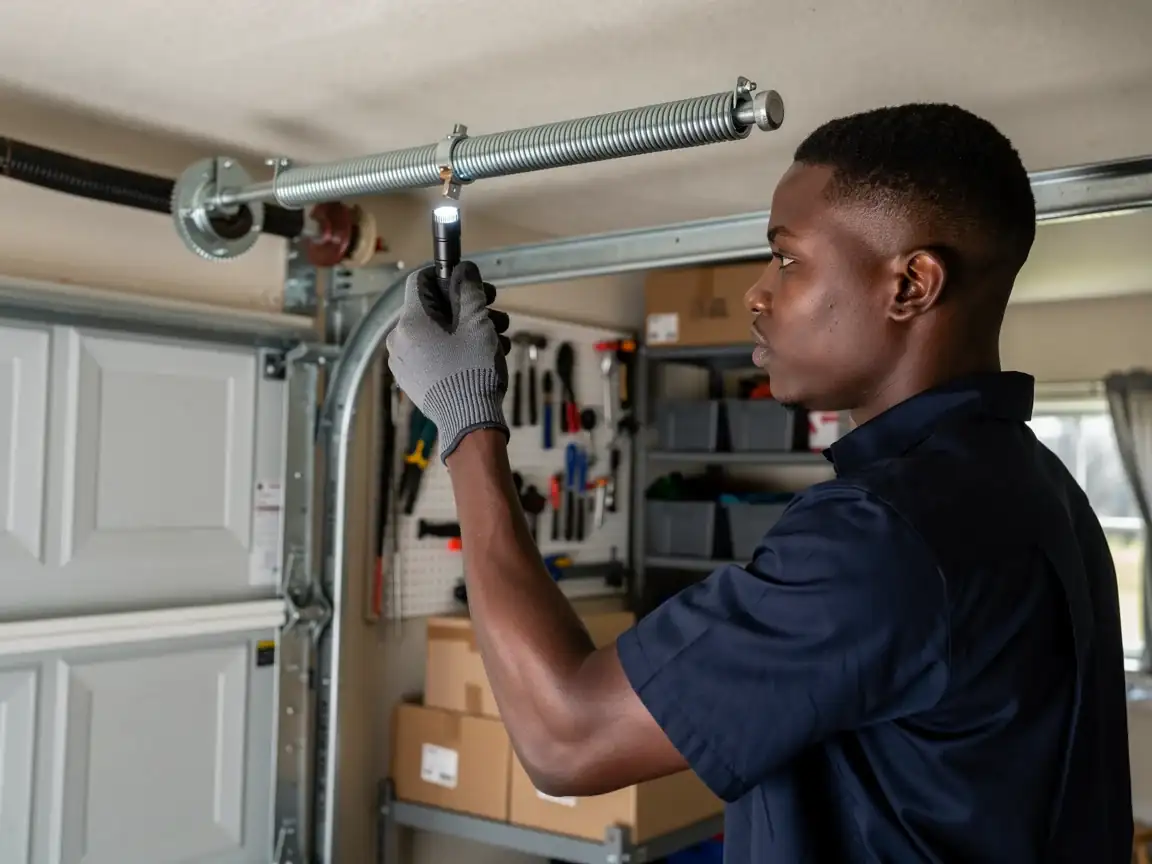
    A technician in a dark blue shirt inspects a garage door torsion spring with a flashlight.

    On-site diagnosis

    A technician tests the door under power and by hand and finds what actually failed.

  3. 3
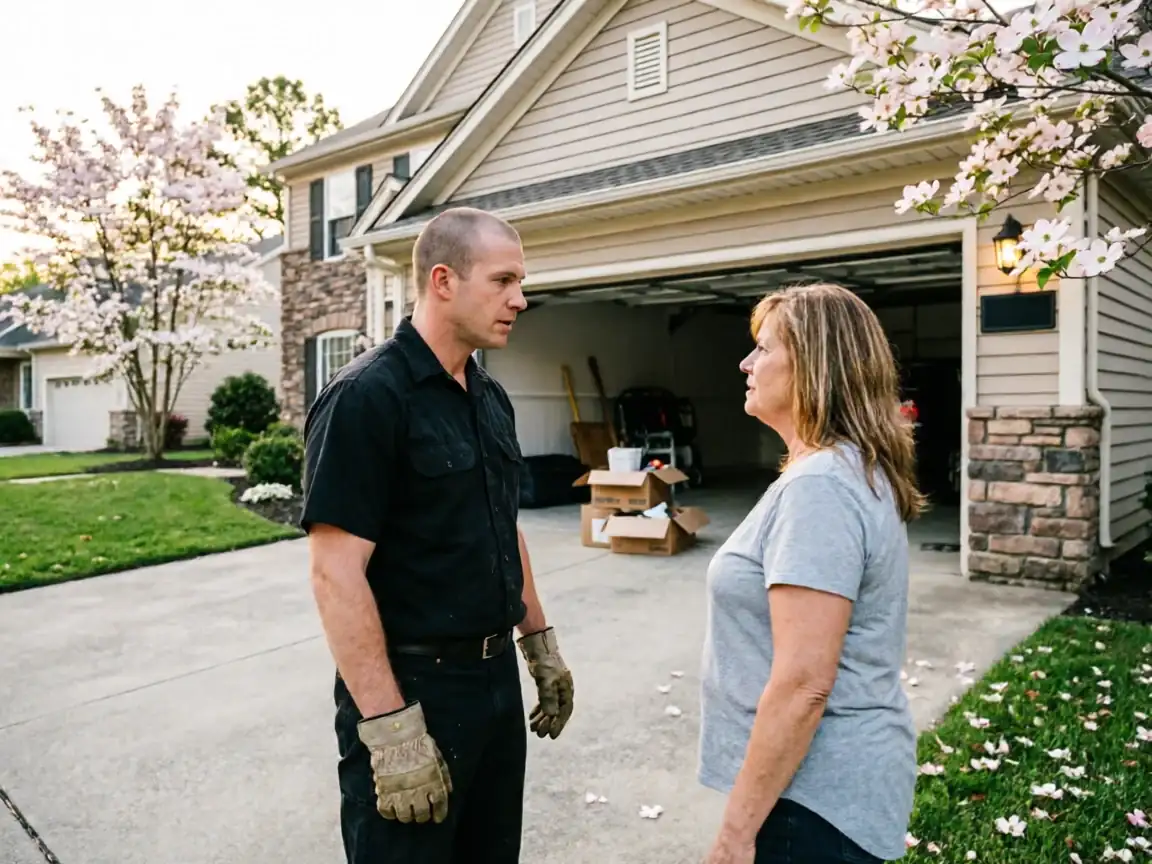
    A technician in work gloves talks to a woman in a driveway in front of a house.

    Clear, up-front plan

    You get the fix that’s needed and what drives the cost - before any work starts.

  4. 4
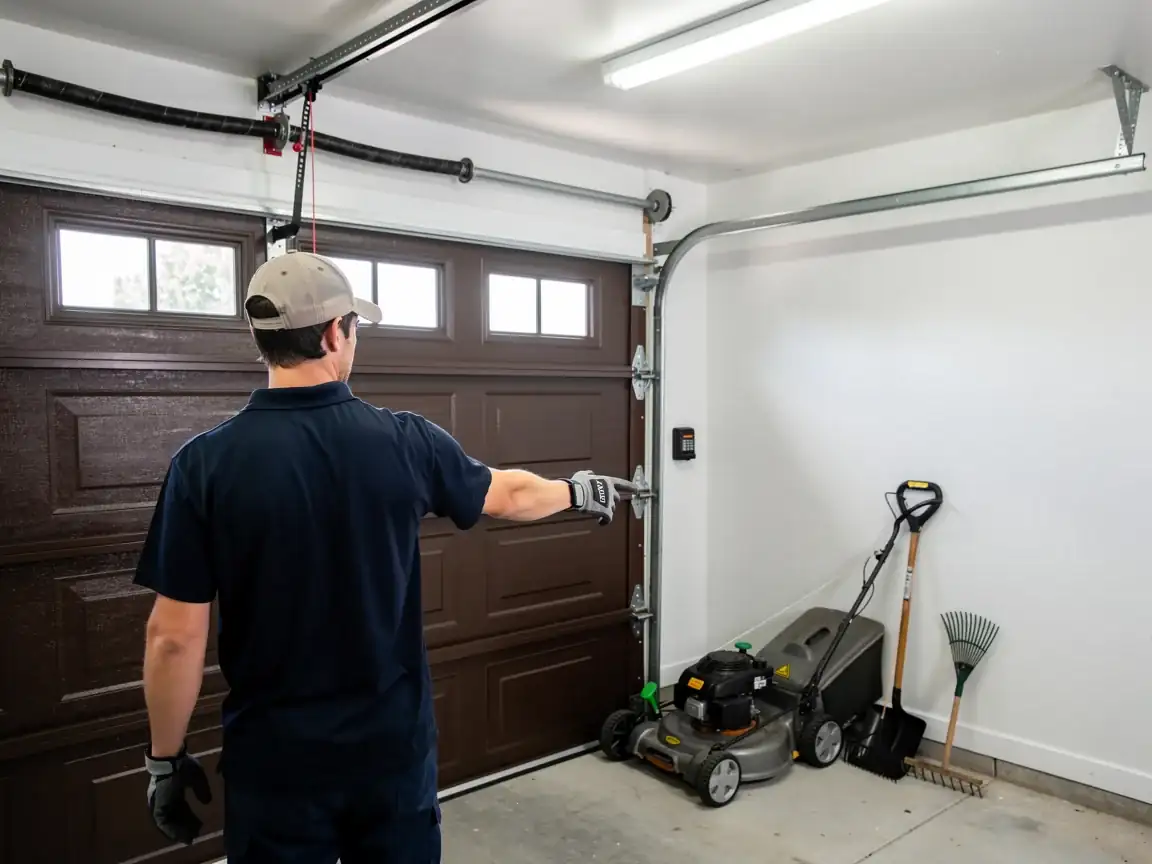
    A technician in a cap points at a brown garage door with windows.

    Repaired & tested

    The repair is done, the door is set true and tested, and the work area left clean.

Not sure which repair your door needs in Gastonia, NC? Describe what it’s doing - every job starts with a diagnosis.

How we work

What to expect

Diagnosis firstEvery visit starts by finding what actually failed - not a pre-written parts list.
The right part for the doorSprings and openers matched to the door’s weight and age, so the fix holds up.
Straight answersWhen a repair makes more sense than a replacement - or the reverse - you hear it plainly.
Clean, careful workTension released safely, hardware set true, the door tested under power before we leave.
What we do

Garage Door Services

Repair and installation work for Gastonia homes and businesses.

Questions

Frequently asked

Straight answers about garage door repair in Gastonia. Still unsure? Ask us directly.

My door is from the 1980s - should I just replace it instead of repairing it?

Not automatically. A lot of what fails on doors from that era is the springs, rollers, or cables - not the panels themselves. If the door still sits flat, seats evenly, and the panels aren't rusted through, a hardware repair usually makes more sense than full replacement.

Why does my garage door act differently in winter than summer?

Gastonia's cold-moderate climate puts real freeze-thaw cycling on steel doors. Cold tightens torsion spring tension and can make tracks contract slightly out of alignment, while summer humidity swells wood trim and promotes rust at panel bottoms. Both show up as seasonal changes in how the door runs.

Is rust on the bottom panel a sign I need a new door?

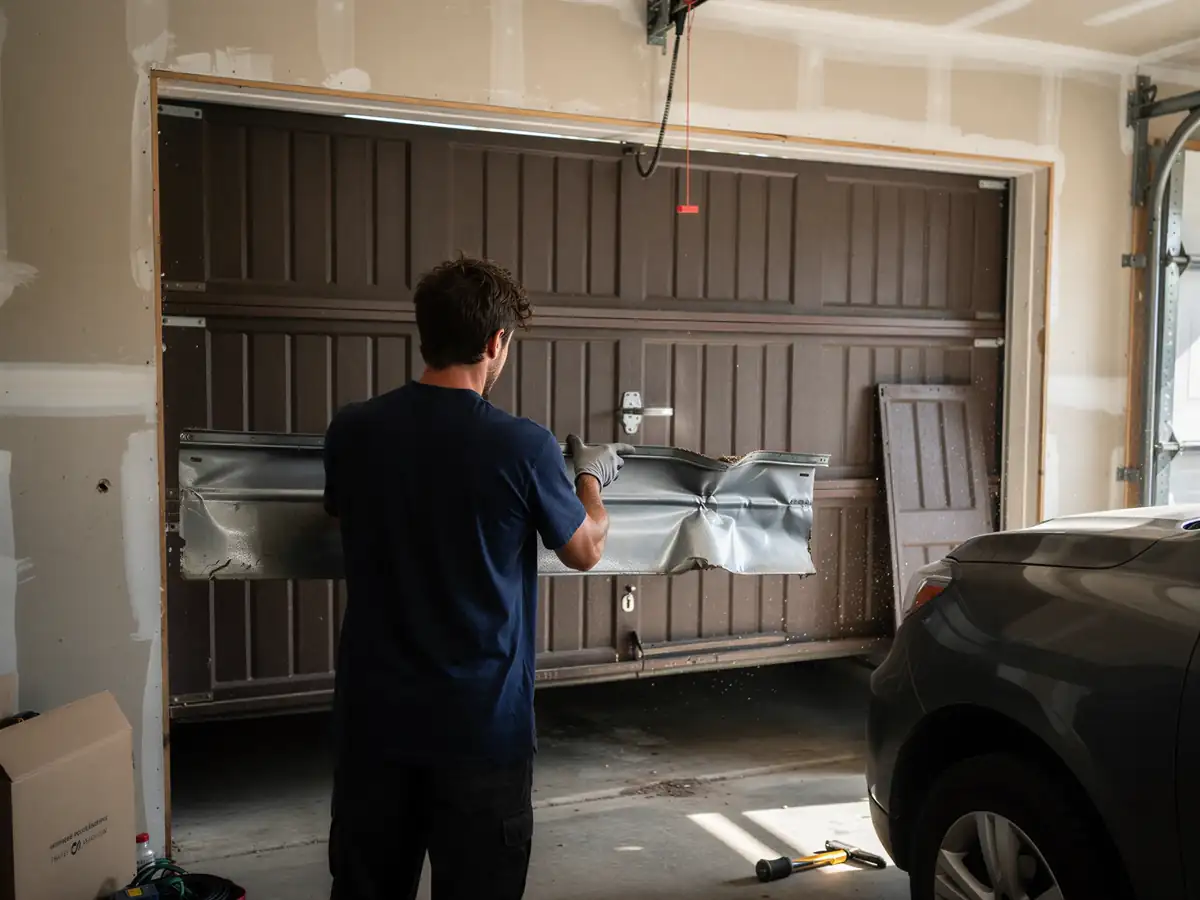
Not by itself. Surface rust where the panel meets the slab is common on older steel doors in this area given the humidity, and it's often a cosmetic issue as long as the panel is still structurally solid. It becomes a replacement issue once the steel is thin or perforated.

Ready to get your garage door sorted?

Tell us what it’s doing and where you are in Gastonia - we’ll take it from there.

Request a QuoteCall