Serving Gastonia, NC & nearby
(704) 360-0958
Gastonia, NC

What a Service Call Covers on a Gastonia Garage Door

In Gastonia, NC, homes built between 1967 and 2011 face cold-climate wear on garage doors. Here's what a service call actually inspects, adjusts, and fixes.

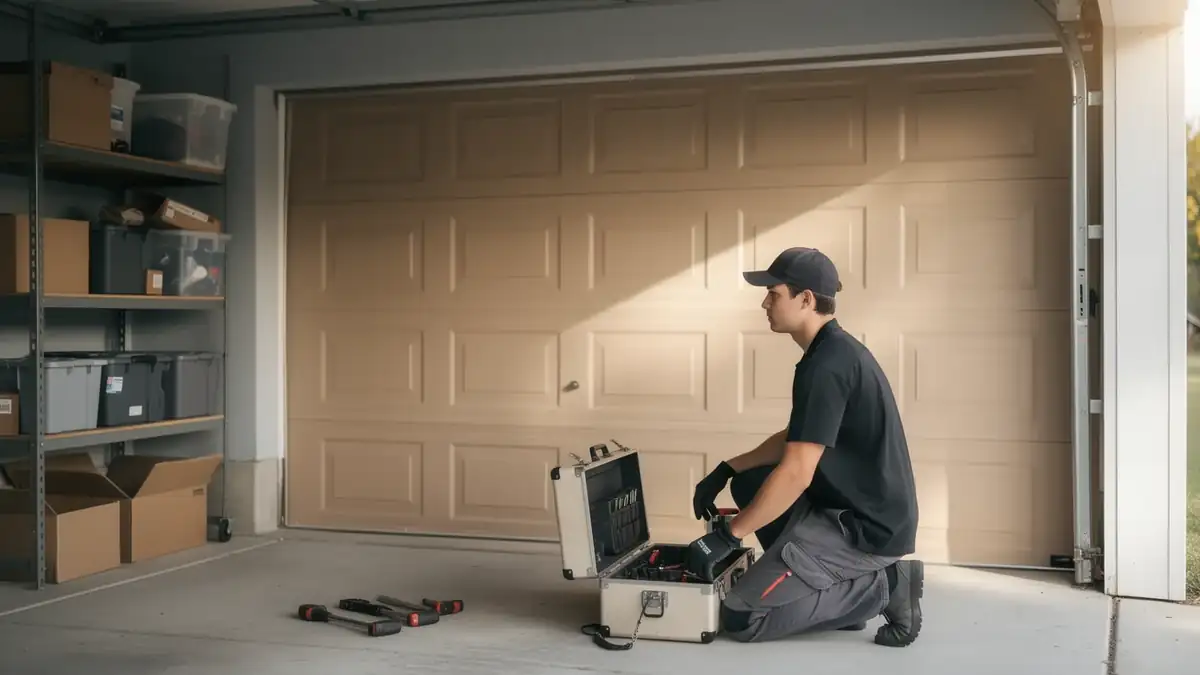
A technician kneels in a garage, looking at an open toolbox in front of a closed garage door.

What the Weather Here Does to It

Gastonia sits in a cold-moderate climate band, which doesn't sound dramatic until you think about what it does to a torsion spring over a decade of winters. Steel contracts in the cold and expands again every time the sun hits the garage face in the afternoon. That cycle, repeated for years, is what work-hardens a spring and eventually snaps it - usually on the coldest morning of the week, when you're already late. It also stiffens the grease in the rollers and the opener's drive gear, which is why a door that ran quiet in July starts grinding in January. None of this means Gastonia gets extreme freezes. It's the repeated, moderate swing that wears hardware down rather than one brutal event. On a service call, this is the first thing we check: spring tension, roller condition, and whether the lubricant on the track has gone gummy. A door that's starting to groan or hesitate on cold mornings is usually telling you the hardware is near the end of its cycle count, not that something broke overnight.

The Situation

Most of the houses we get called to went up between 1967 and 2011, with the median build year landing around 1983, spread across the roughly 17 named areas that make up this part of the county. That means a big share of the doors in service right now are original 1980s and 90s installs - steel panels on torsion hardware that's rarely been touched since the house was built. Across the service area, there are 43,773 households and 20,806 owner-occupied houses, and it's that owner-occupied group that tends to call before a small problem becomes a stuck door. Median household income here runs $59,583, which lines up with what we see on the truck: more spring and roller repairs than full door replacements, because fixing the hardware on a sound door usually makes more financial sense than swapping the whole unit. A service call on a house from this era typically means inspecting original springs that have outlived their rated cycles, not diagnosing something exotic.

When Waiting Is Fine

Not everything needs a truck this week. A door that's a little noisy but still opens and closes square, with no fraying on the cables and no visible gap in the torsion spring coil, can usually wait for a scheduled visit instead of an emergency one. Cosmetic rust on a panel face, common on the older end of the 1967-2011 stock here, is ugly but not urgent unless it's eating through the steel. Same with a slightly slow opener that still reverses properly when it hits something - annoying, not dangerous. Here's the honest limit on our side: we don't push replacement on a door that's still structurally sound just because it's old. If the springs are rated for the cycles left in them and the track is straight, a tune-up gets more life out of it than a swap would. Where we draw the line is safety hardware - frayed cables, a spring with a visible gap, or a door that won't reverse. Those don't wait, regardless of what else looks fine.

What to Look At First

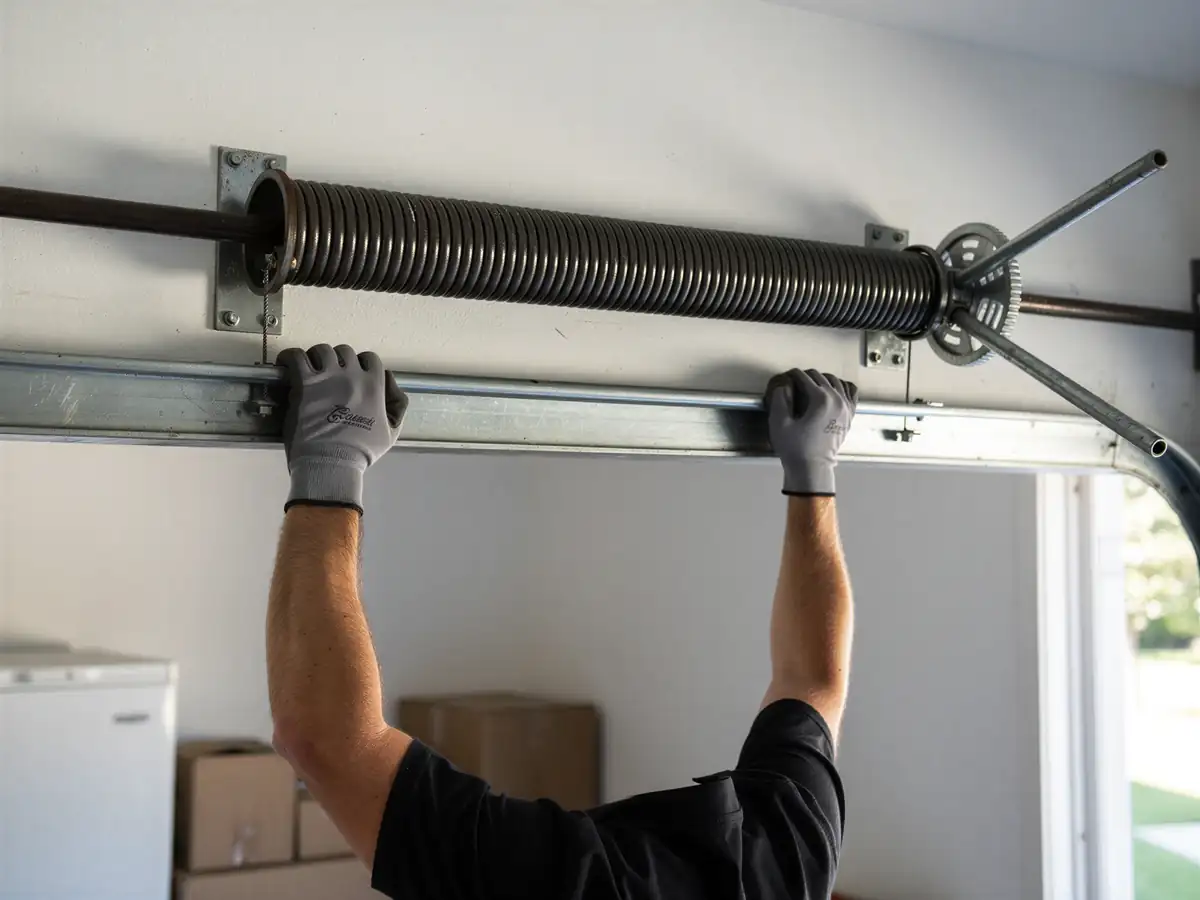
Before you call, look at three things. First, the springs above the door - on original 1980s and 90s installs that's where the stress from years of cold-moderate temperature swings shows up first, as a visible gap in the coil or a light coating of rust at the bend points. Second, the cables running down to the bottom bracket; fraying near the drum is the sign that gets missed until it snaps. Third, how the door moves on its own weight with the opener disconnected - if it drops fast or won't stay halfway, the spring tension is off and the opener's been covering for it. None of this requires tools, just a flashlight and five minutes. If you see any of it, that's the detail to mention on the phone, because it tells us what's likely worn going into the visit rather than starting from scratch once the truck's in the driveway.
How it works

From “it’s stuck” to “it’s fixed”

  1. 1
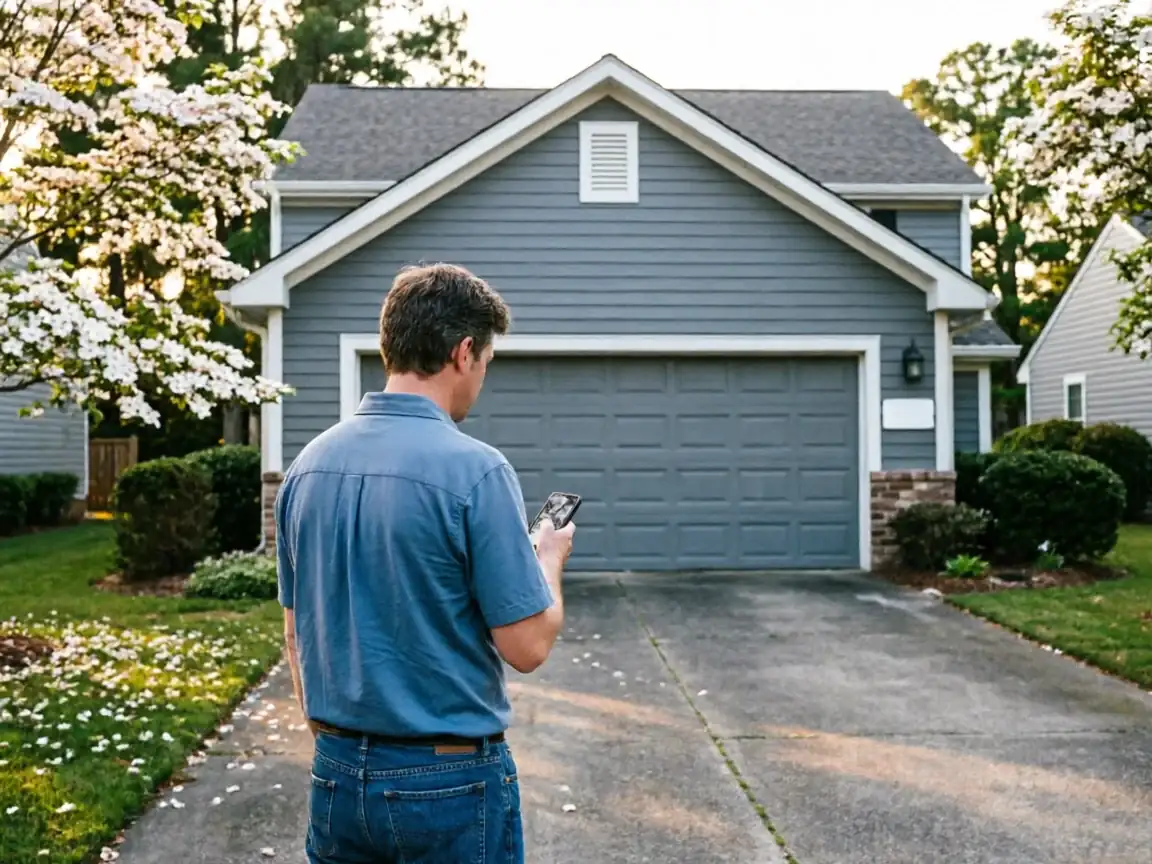
    A man in a blue shirt stands in a driveway looking at his phone.

    Tell us what’s wrong

    Describe the symptom - won’t open, loud bang, opener runs but the door won’t move.

  2. 2
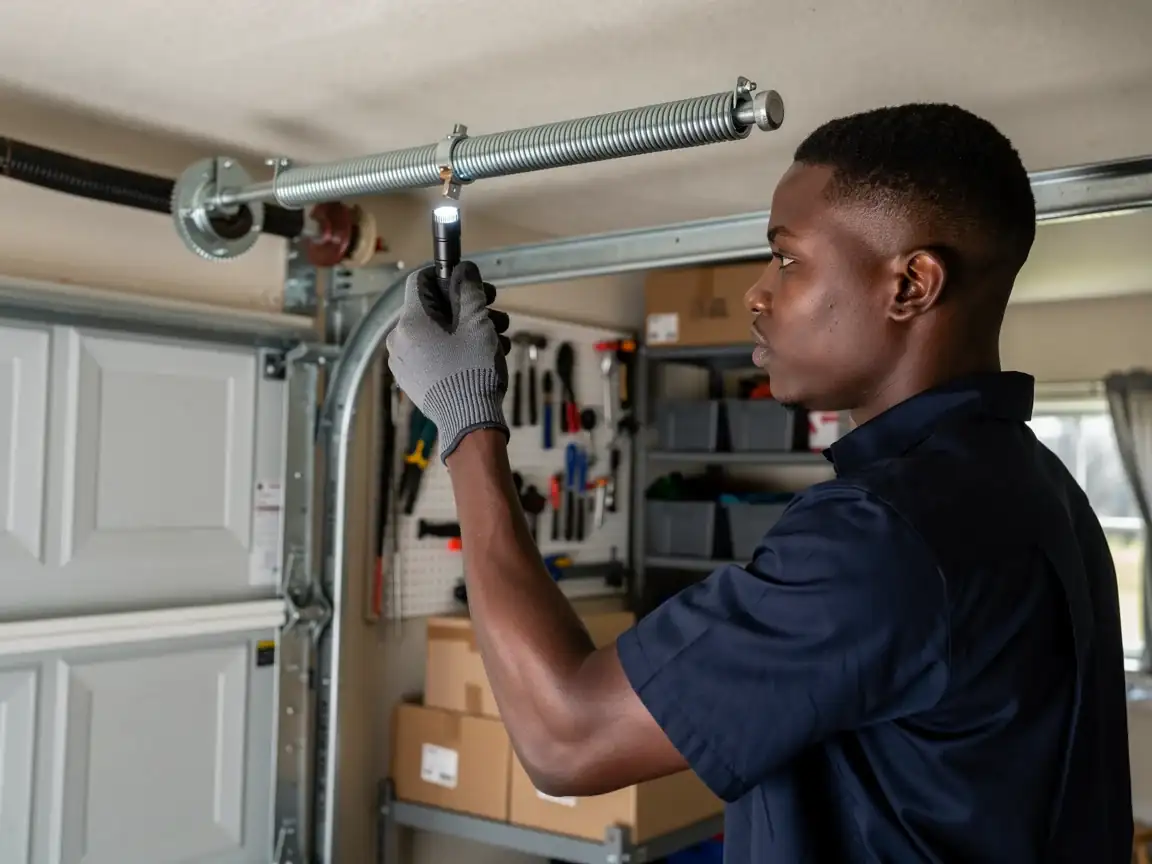
    A technician in a dark blue shirt inspects a garage door torsion spring with a flashlight.

    On-site diagnosis

    A technician tests the door under power and by hand and finds what actually failed.

  3. 3
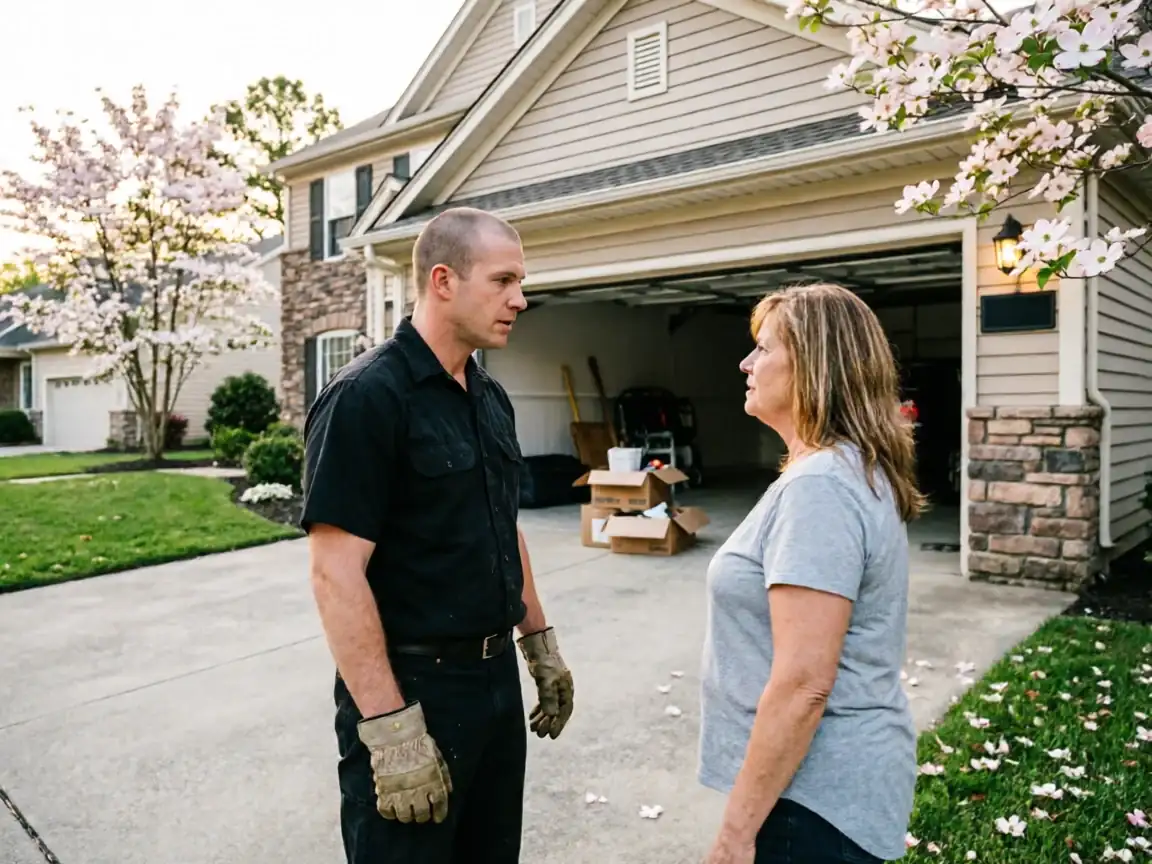
    A technician in work gloves talks to a woman in a driveway in front of a house.

    Clear, up-front plan

    You get the fix that’s needed and what drives the cost - before any work starts.

  4. 4
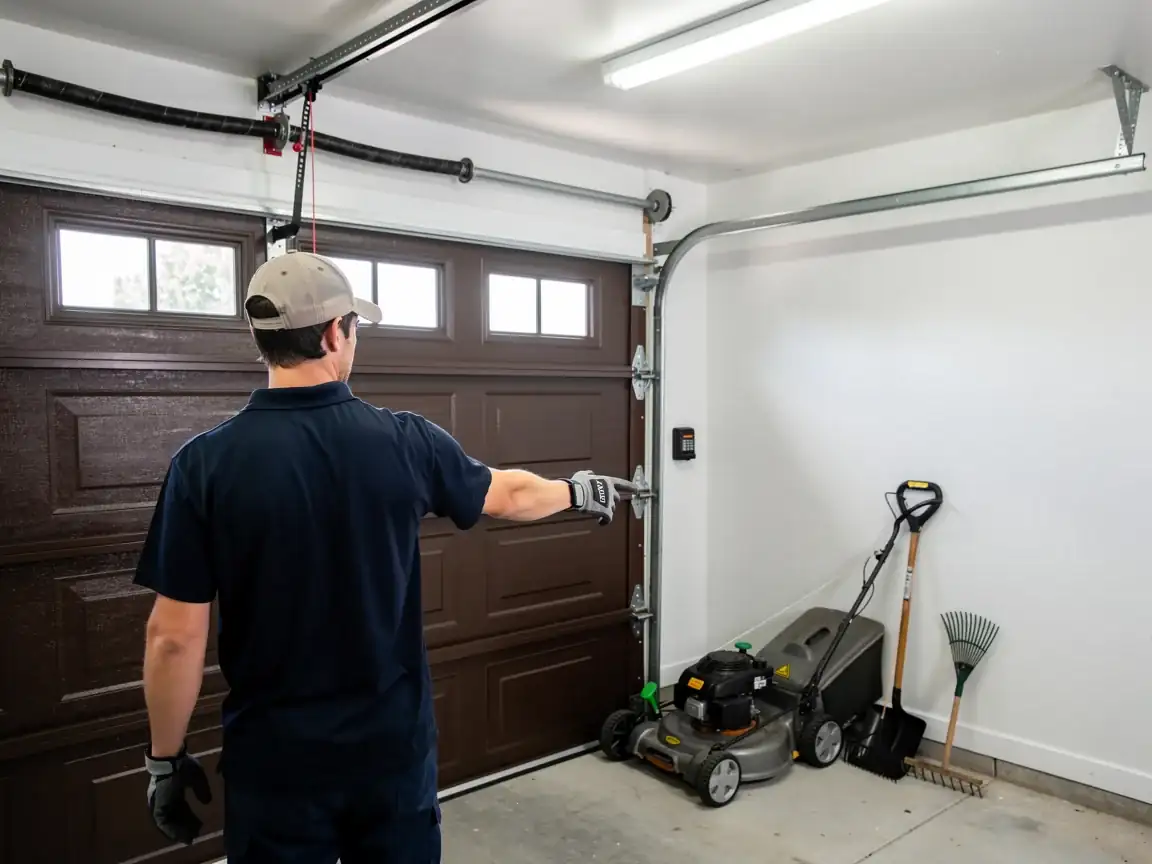
    A technician in a cap points at a brown garage door with windows.

    Repaired & tested

    The repair is done, the door is set true and tested, and the work area left clean.

Not sure which repair your door needs in Gastonia, NC? Describe what it’s doing - every job starts with a diagnosis.

How we work

What to expect

Diagnosis firstEvery visit starts by finding what actually failed - not a pre-written parts list.
The right part for the doorSprings and openers matched to the door’s weight and age, so the fix holds up.
Straight answersWhen a repair makes more sense than a replacement - or the reverse - you hear it plainly.
Clean, careful workTension released safely, hardware set true, the door tested under power before we leave.
What we do

Garage Door Services

Repair and installation work for Gastonia homes and businesses.

Questions

Frequently asked

Straight answers about garage door repair in Gastonia. Still unsure? Ask us directly.

Why do garage door springs fail more in winter here?

Gastonia's cold-moderate climate means steel torsion springs cycle through repeated temperature swings every year. That steady expansion and contraction work-hardens the metal over time, so a spring that's near the end of its rated cycles is more likely to snap on a cold morning than a warm one. It's wear built up over years, not a single cold snap causing the break.

My house was built in the 1980s - is the original door hardware a problem?

Not automatically. A lot of houses in this area were built between 1967 and 2011, with many in the 1980s and 90s, and plenty of that original torsion hardware is still fine if it's been lubricated and the spring hasn't hit its cycle limit. The call is whether the spring still has life left, which we check on the visit.

Do you recommend replacing the whole door or just fixing the spring?

For most of the owner-occupied houses we see in this area, repairing sound hardware costs less and makes more sense than a full door swap, especially when the panels and track are still in good shape. We only recommend replacement when the door itself is damaged or the repair cost starts closing in on a new unit.

Ready to get your garage door sorted?

Tell us what it’s doing and where you are in Gastonia - we’ll take it from there.

Request a QuoteCall