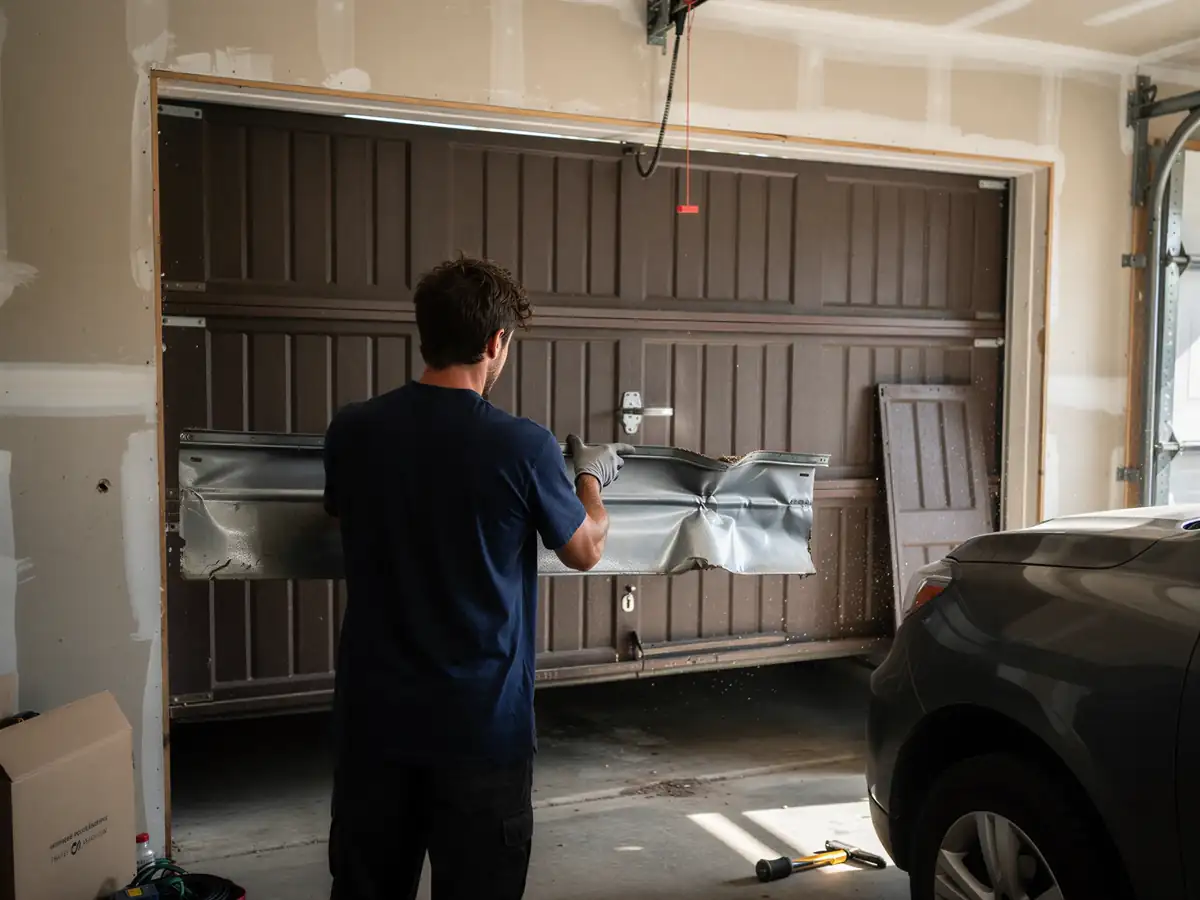
Time on the Job
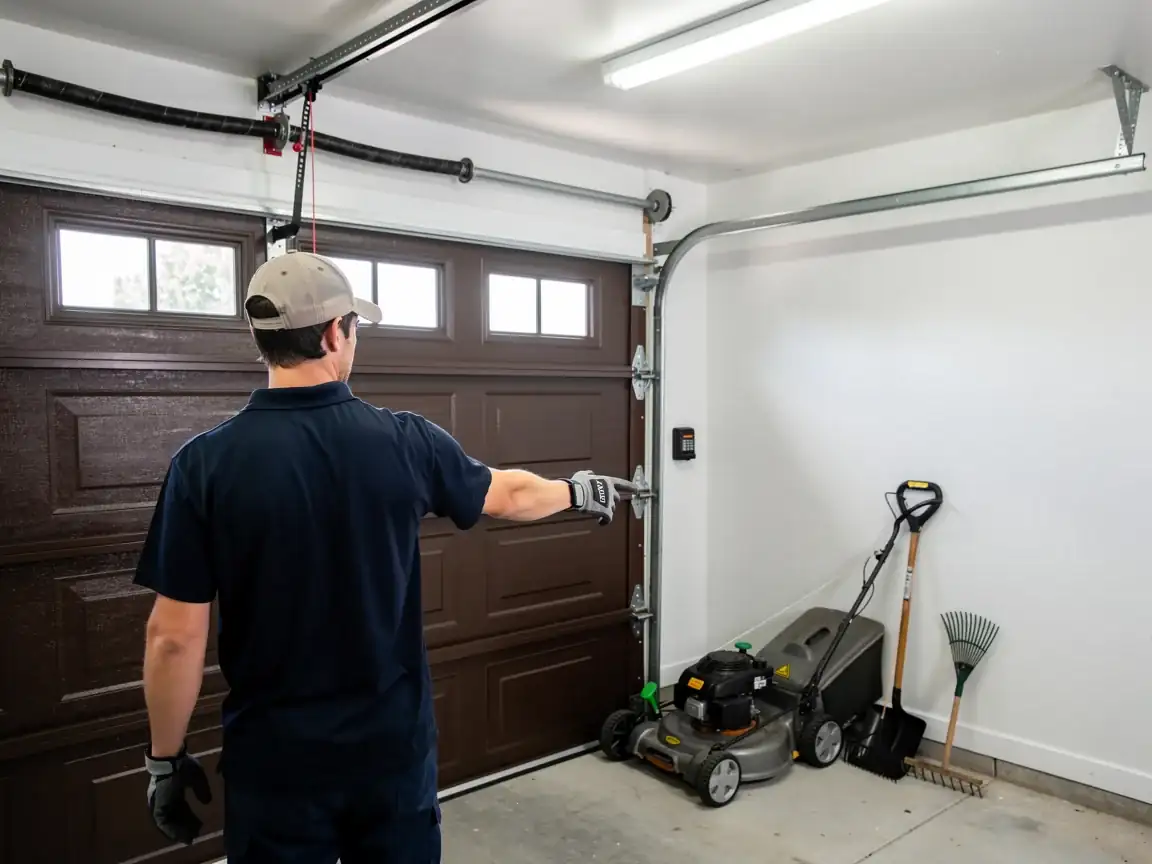
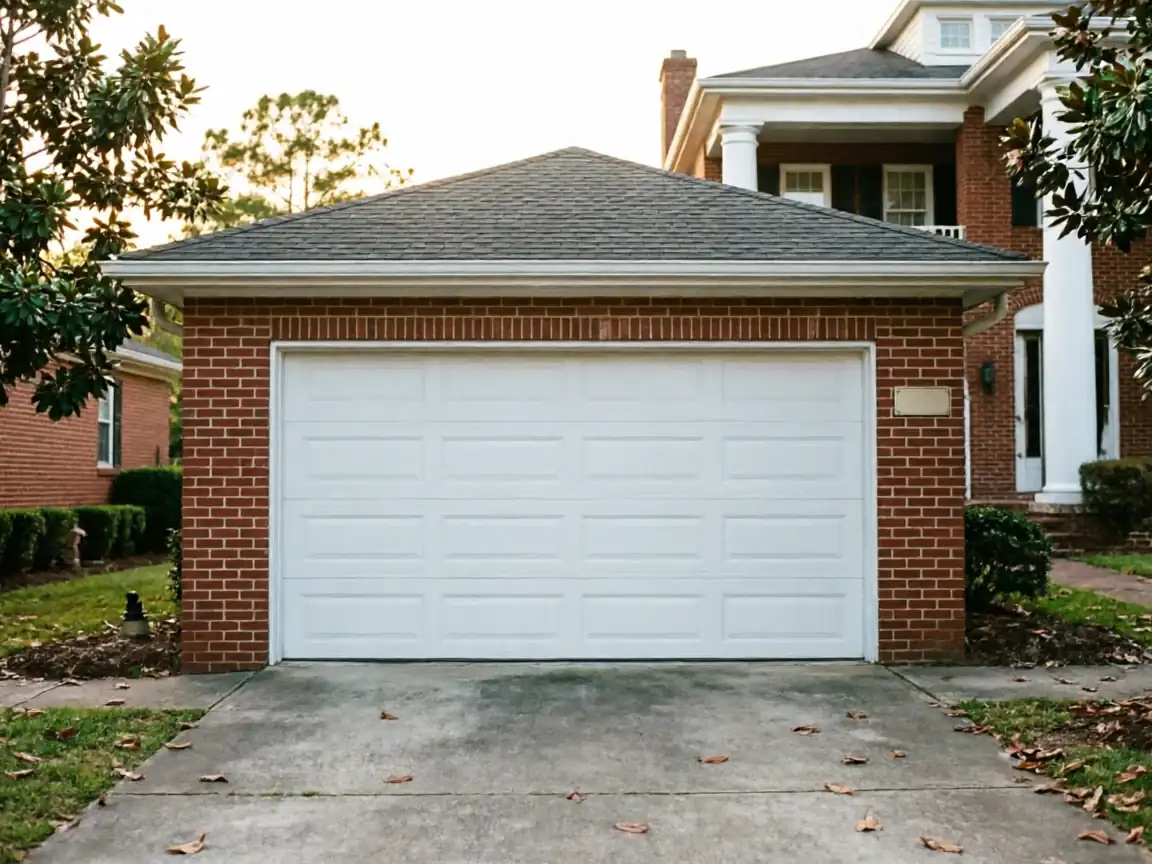
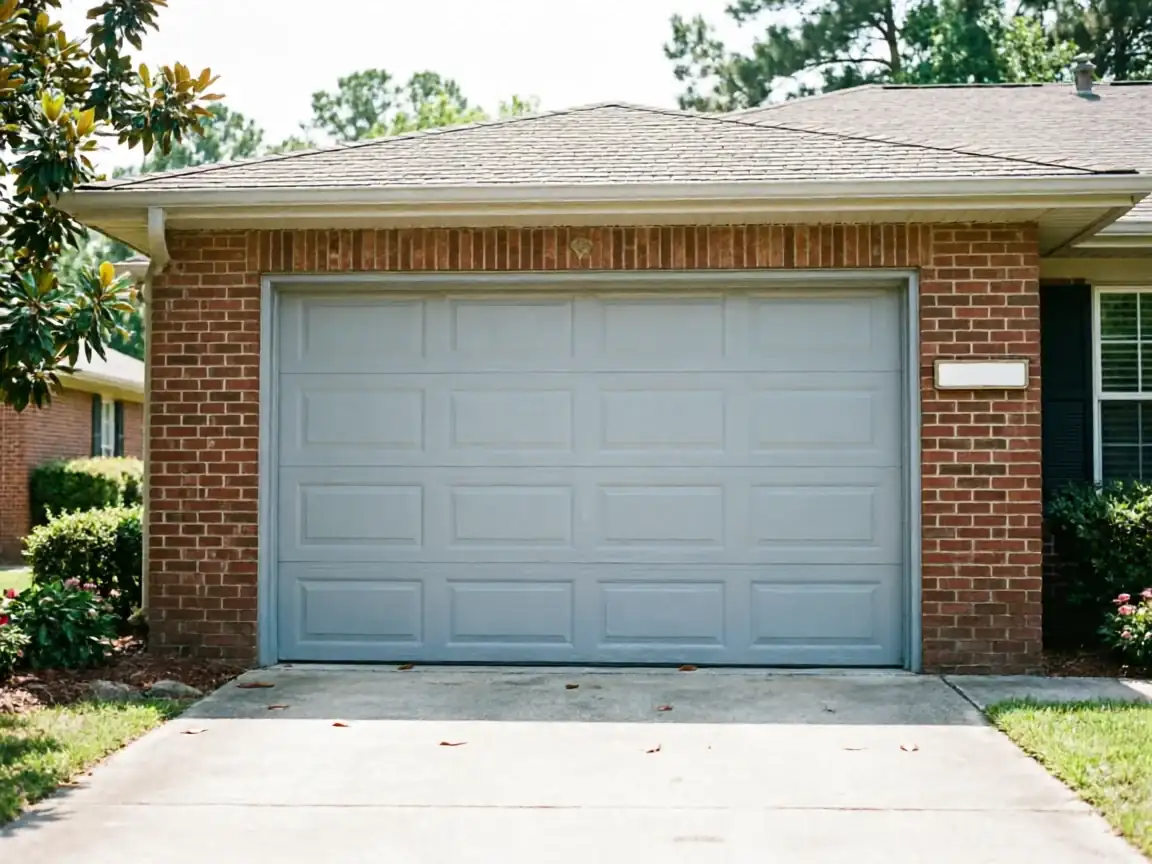
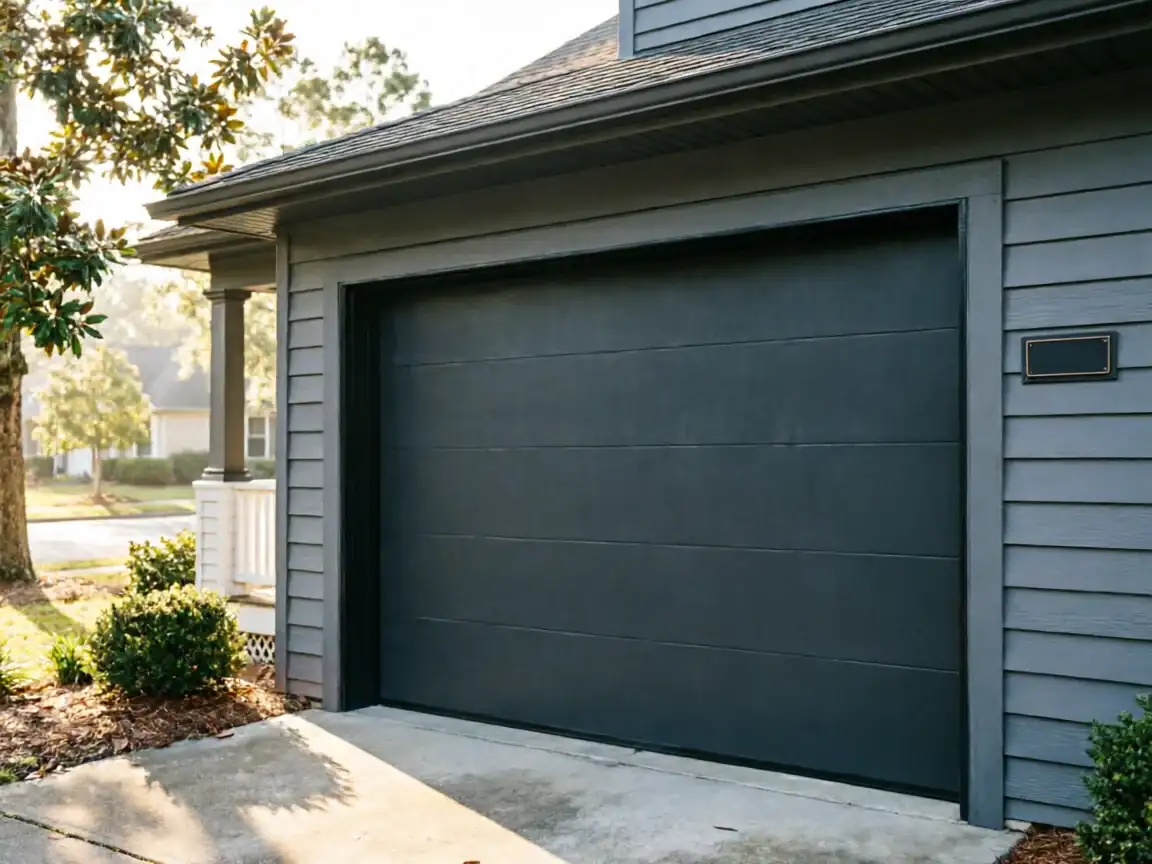
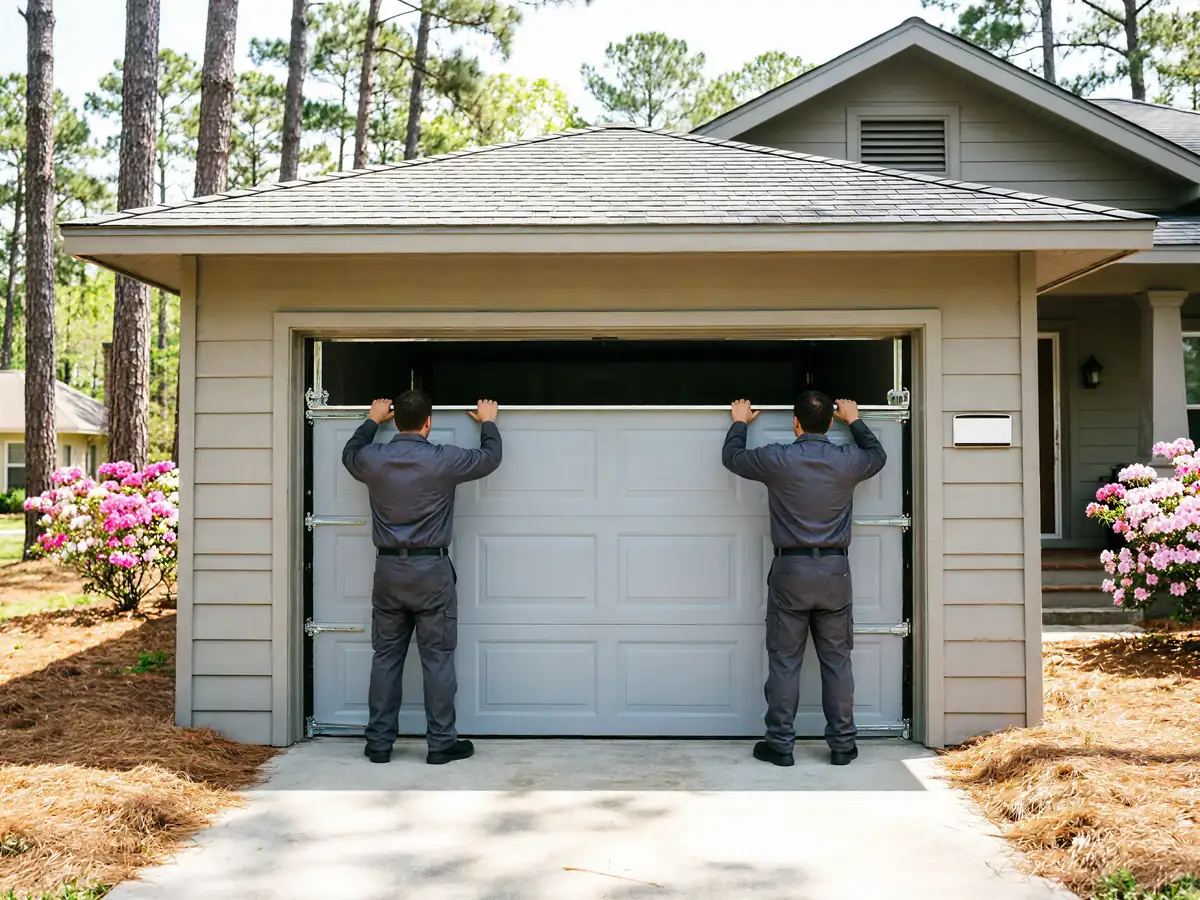
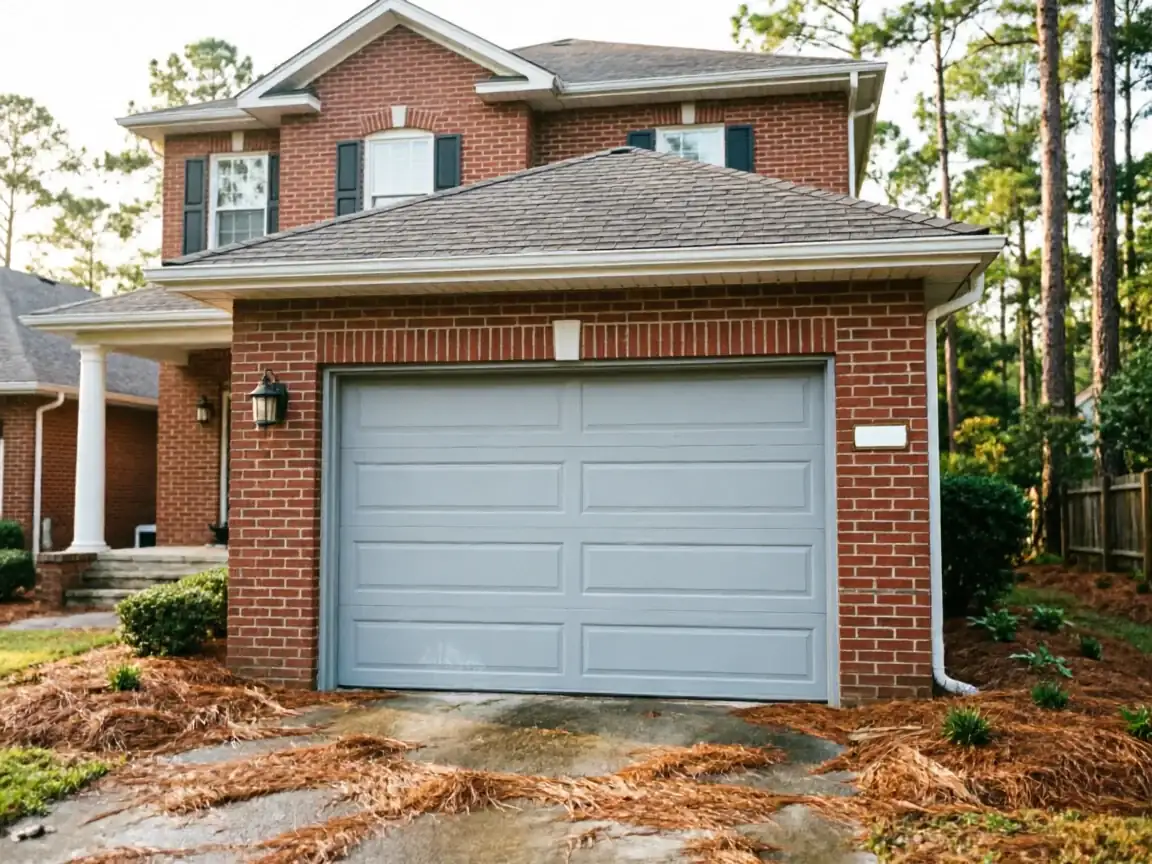
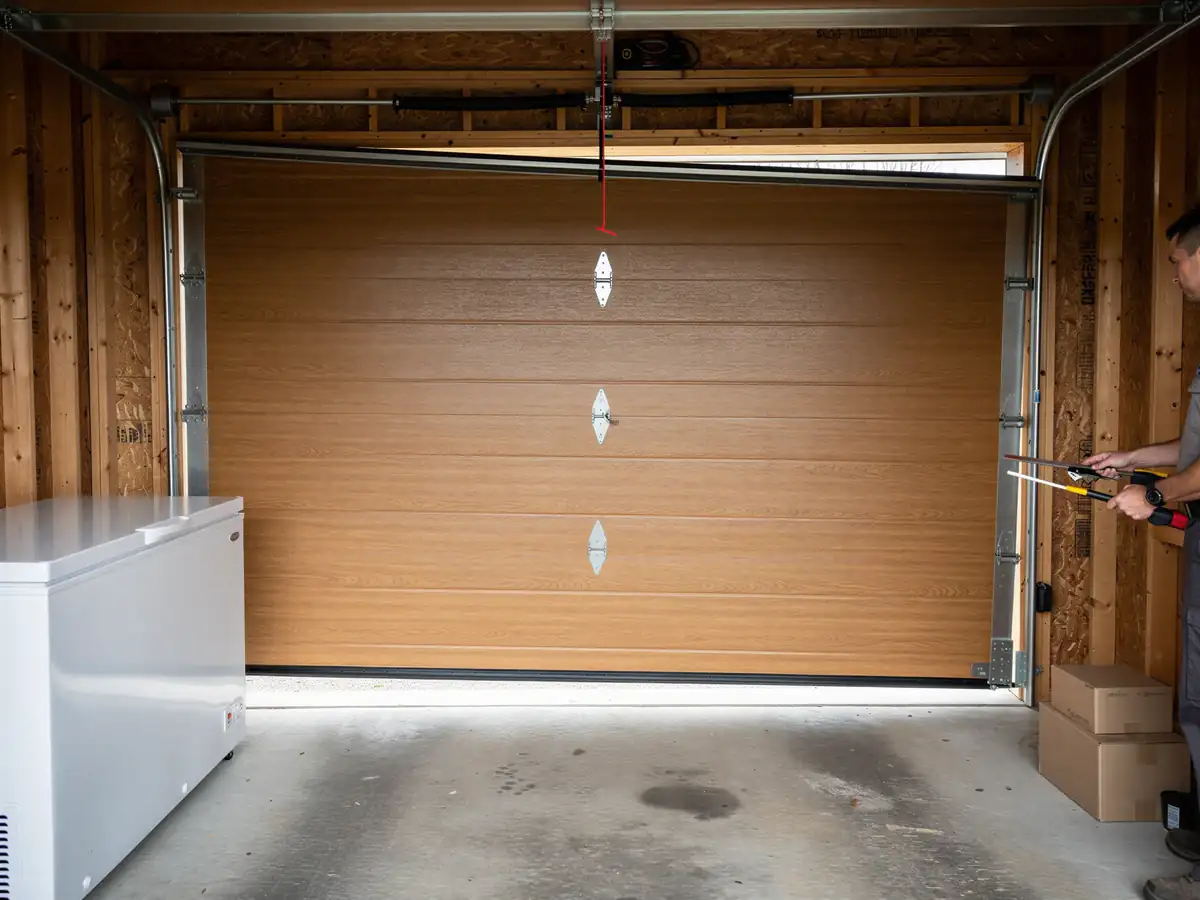
We run this job out of Gastonia, about 11 miles down the road to Mount Holly. That drive doesn't change what we find once we're in the driveway: most houses here went up around 1997, give or take a few years on either side, which puts the garage door itself squarely in the builder-grade steel sectional era. These are raised-panel steel doors, usually 16x7 for a two-car opening or 8x7 for a single, with a factory baked-on finish and a thin foam or vinyl-backed insulation layer sandwiched between two steel skins. They were solid doors for their time, but the steel gauge builders specified in the late 90s was thinner than what goes into a door today, and after two and a half decades that steel shows it. We don't quote a fixed time window for every job sight unseen - a single bottom panel swap is a different job than matching three damaged sections on a door that's been discontinued by the manufacturer, and we tell you which one you've got before we start.
What Causes It Around Here
Mount Holly sits in a cold-moderate climate band, which means the panels here go through real freeze-thaw cycling every winter and real humidity swings every summer. That combination works on a steel panel two ways. First, the seams between the steel skin and the insulation core expand and contract enough, year over year, that the factory seal can separate - you'll see it as a faint ripple or bubble along a panel edge before anything looks broken. Second, the thinner steel used in late-90s builder-grade doors dents more easily than current-gauge steel, and a dent that sits through a freeze cycle is more likely to crack the paint and start rust from the inside out. We also see a fair amount of sun-fade on south-facing panels on these doors - the factory finish from that era wasn't UV-stabilized the way current finishes are, so a replaced panel can be a noticeably different shade from the surviving originals even when the profile matches exactly.
The DIY Question
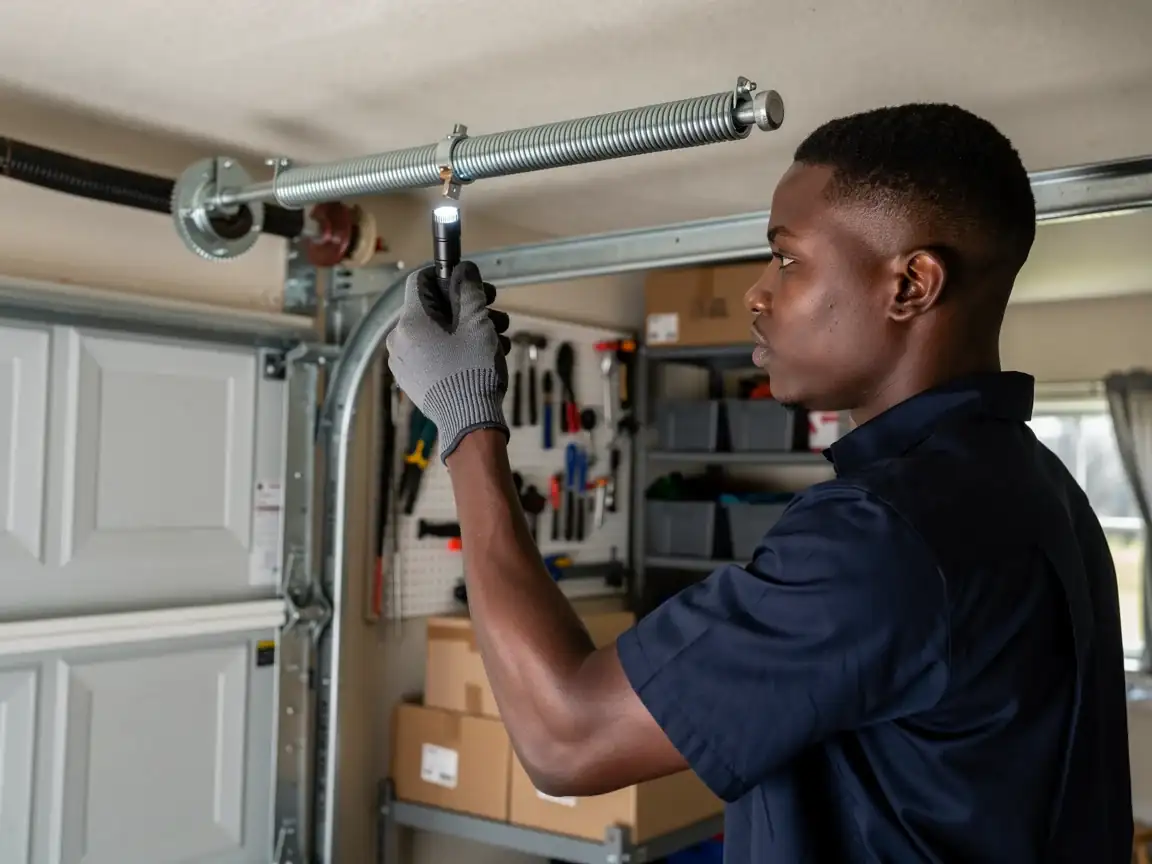
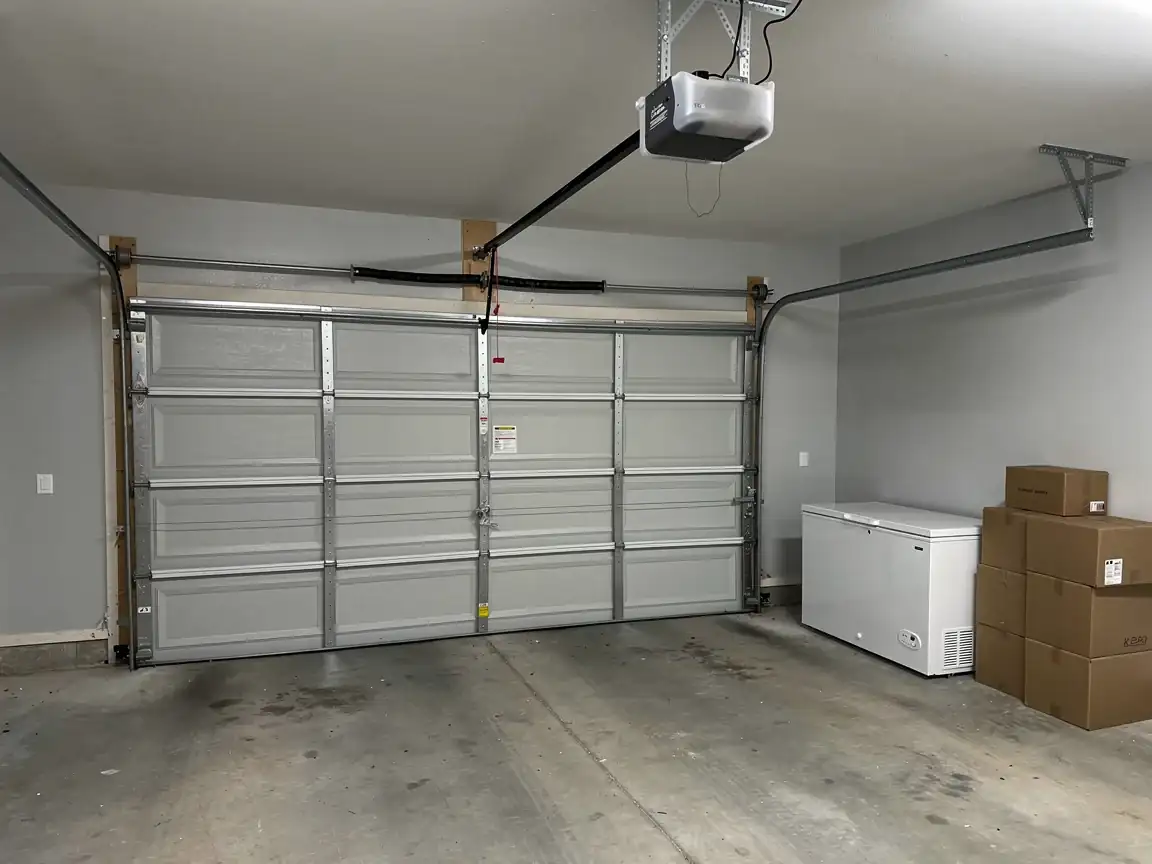
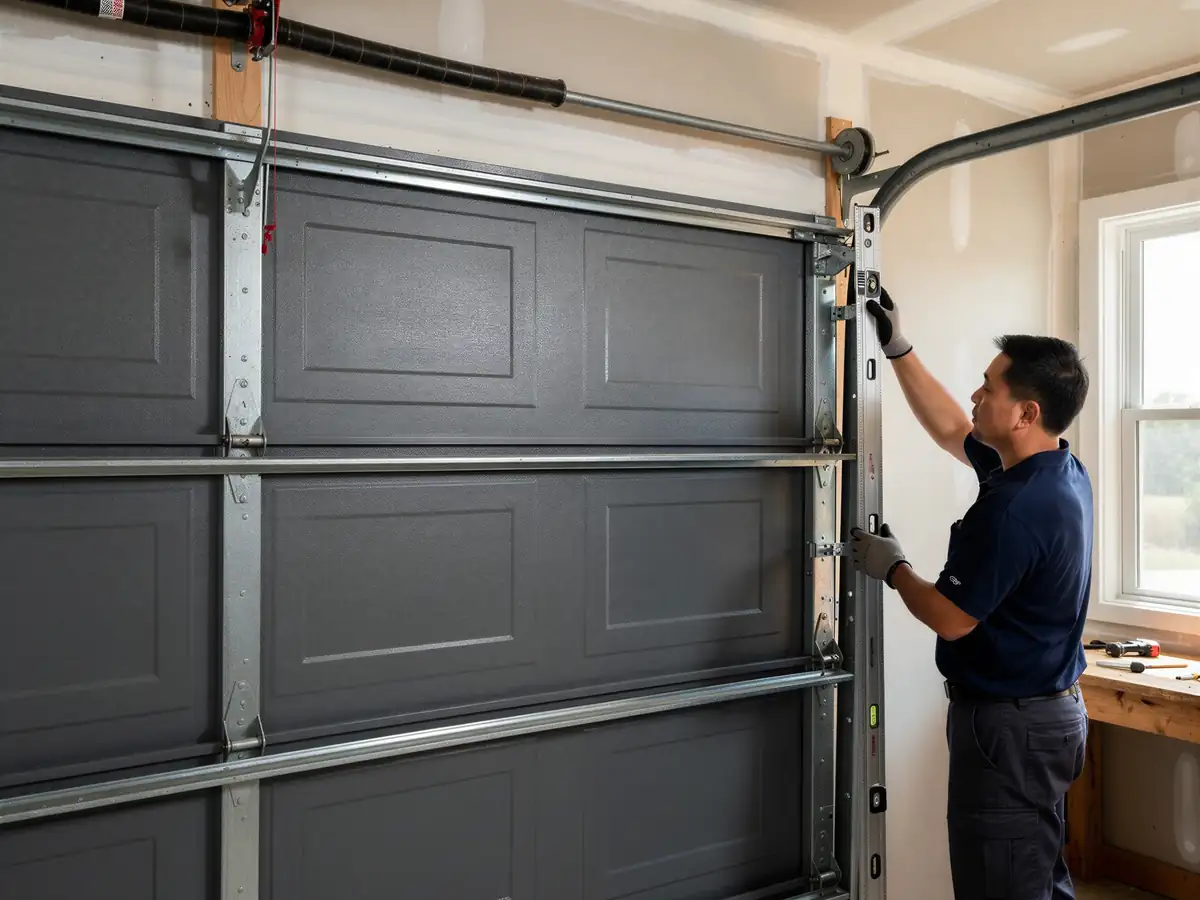
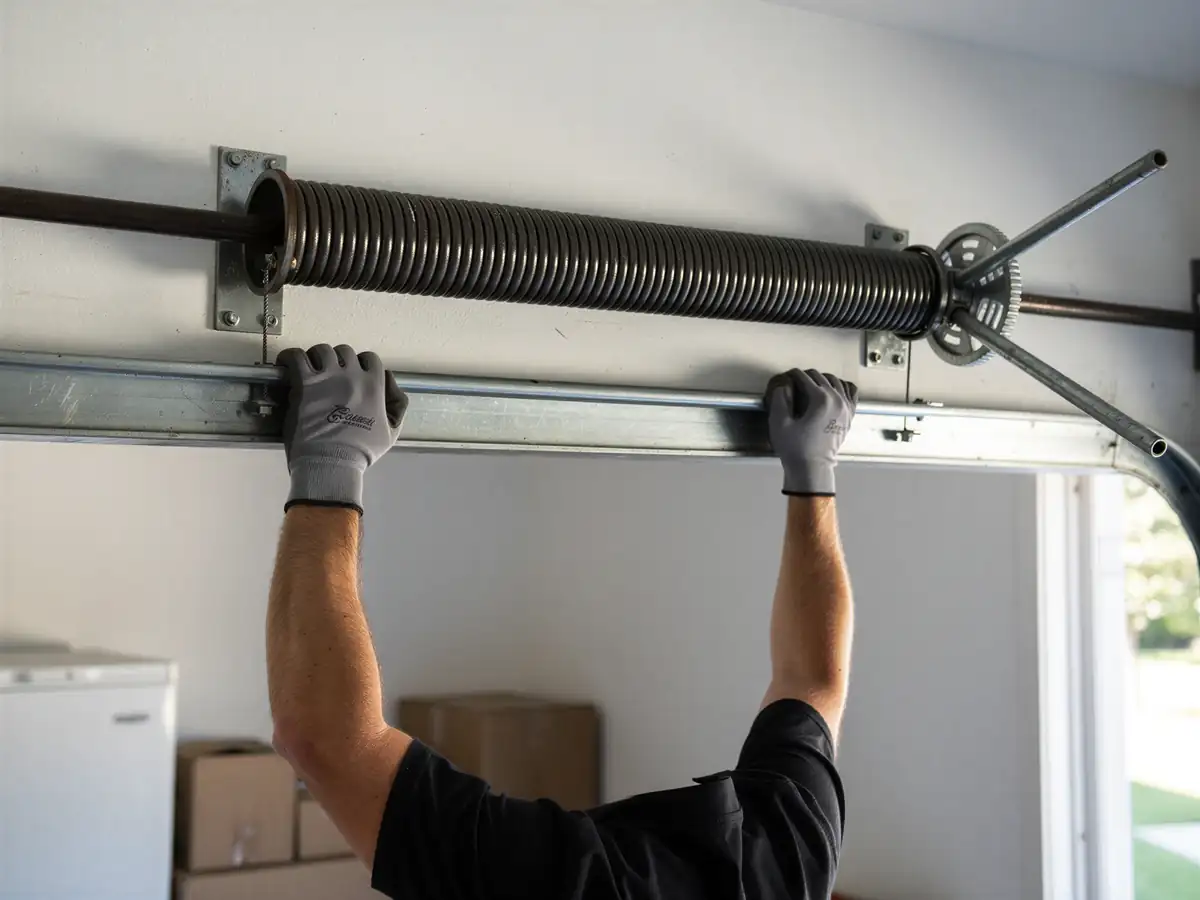
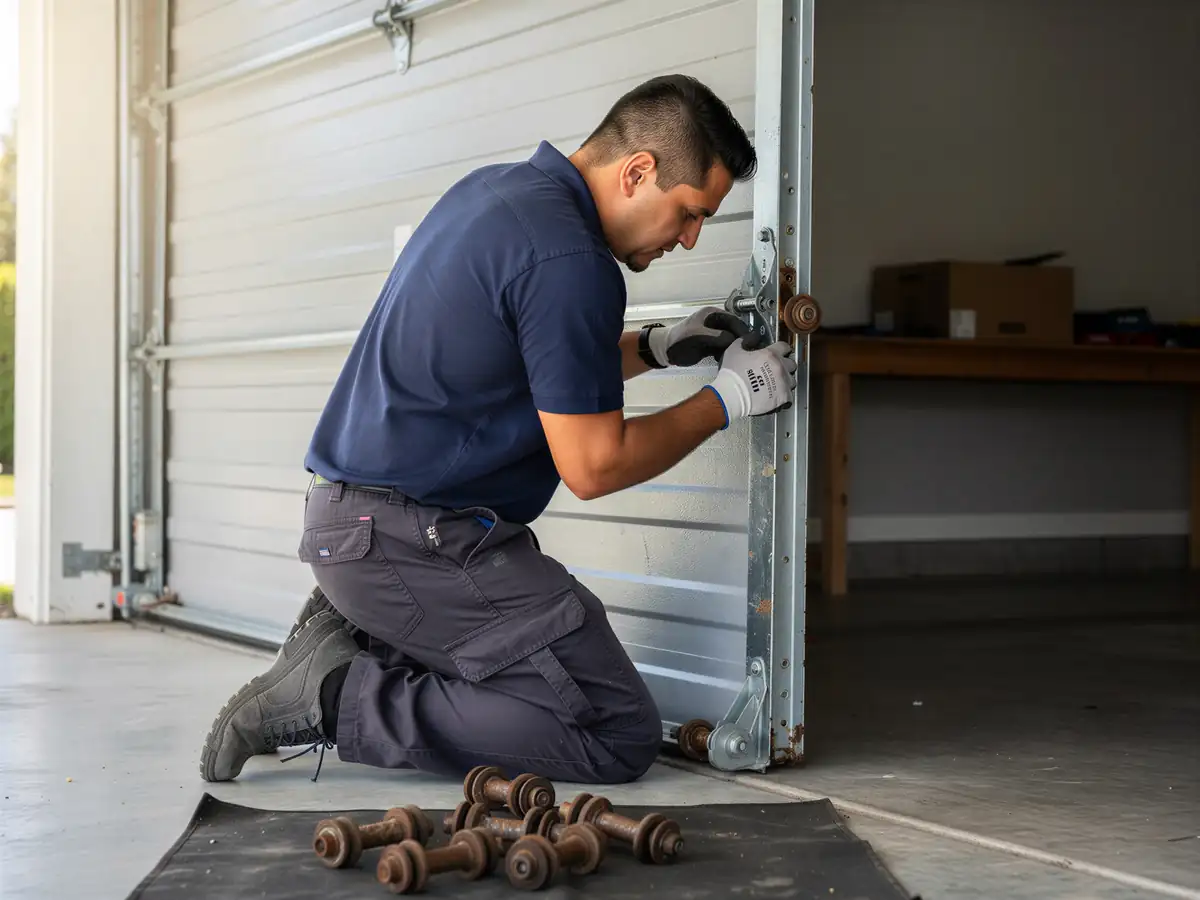
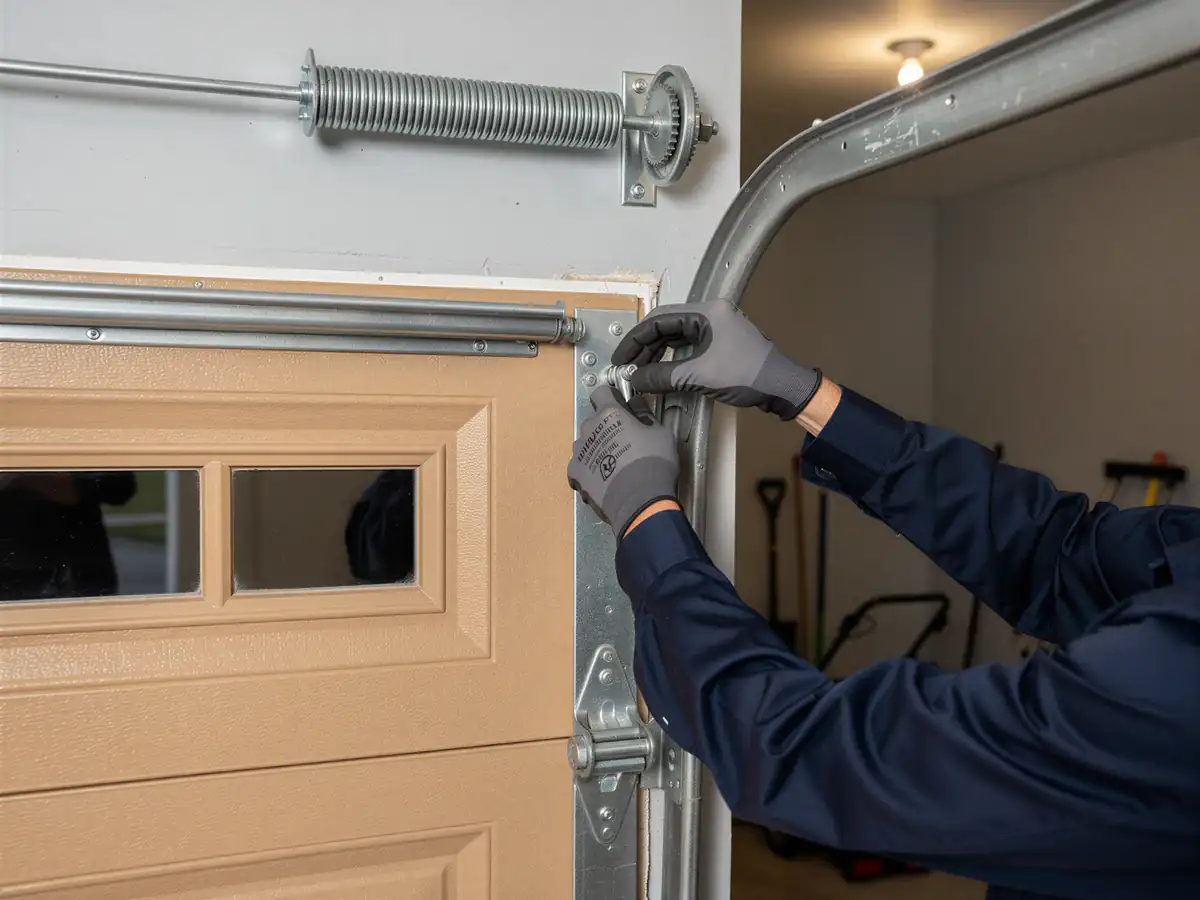
Swapping a single bottom panel on a sectional door is within reach for a homeowner who's comfortable with a ratchet and isn't afraid of a loaded torsion spring sitting above the door - the panel itself isn't the dangerous part, the spring system is. Where it gets harder is sourcing the exact panel: a door built around 1997 may carry a model number that the original manufacturer no longer makes, and ordering the wrong profile means a panel that doesn't sit flush with its neighbors. We'll tell you straight if a repair isn't worth it - once two or more panels on an older door need replacing, the mismatched color and the hunt for a discontinued profile usually costs more in time and money than a new door would. That's not us upselling; it's the math on a 25-plus-year-old steel door.