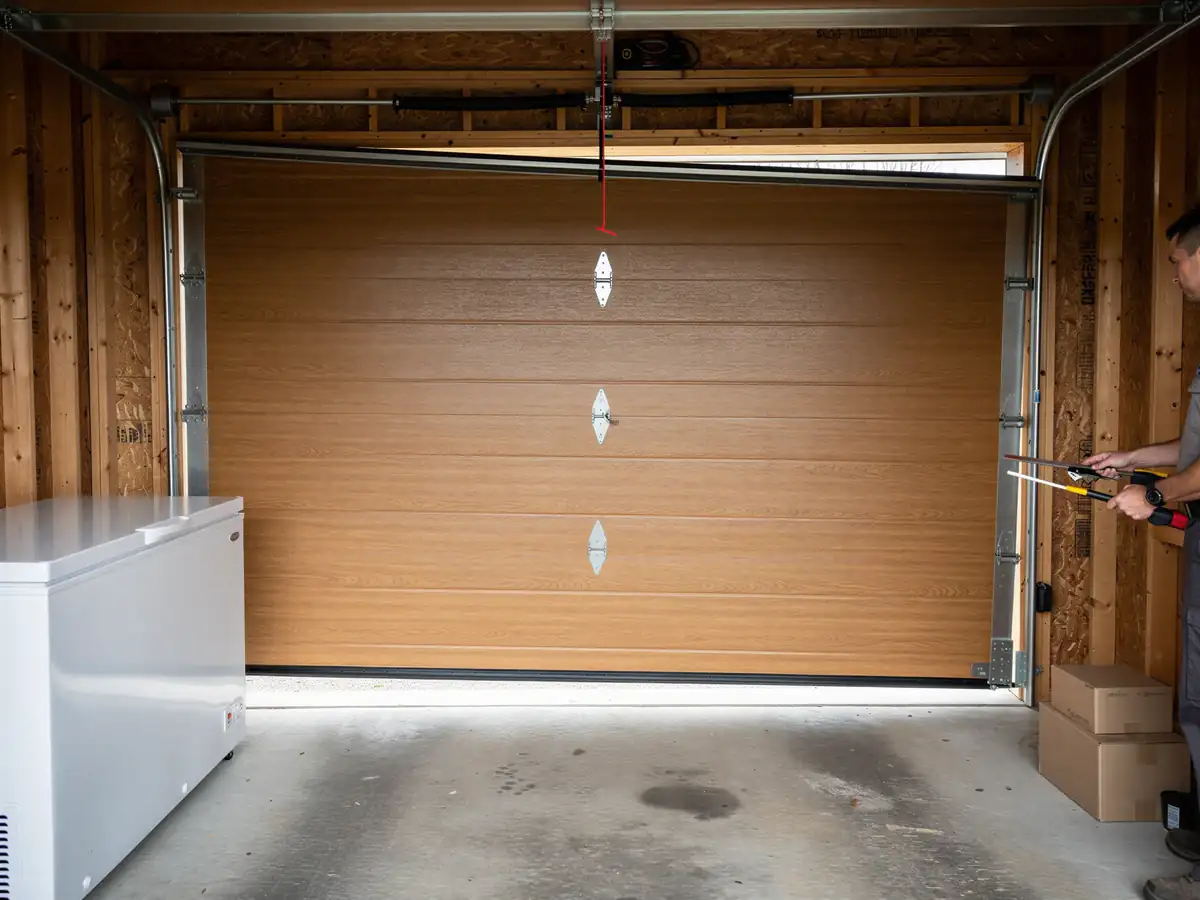
The DIY Question
Dallas sits about five miles from our shop in Gastonia, and most of the houses here went up around 1997. That matters more than the mileage does, because a door installed when a house was built is now pushing close to three decades old. Torsion springs are rated for somewhere between 7 and 10,000 cycles, which on an average household works out to 7-10 years. Do the math on a 1997 door and you're looking at a spring that has already been replaced once, maybe twice, if anyone ever got around to it - or one that's original and badly overdue.
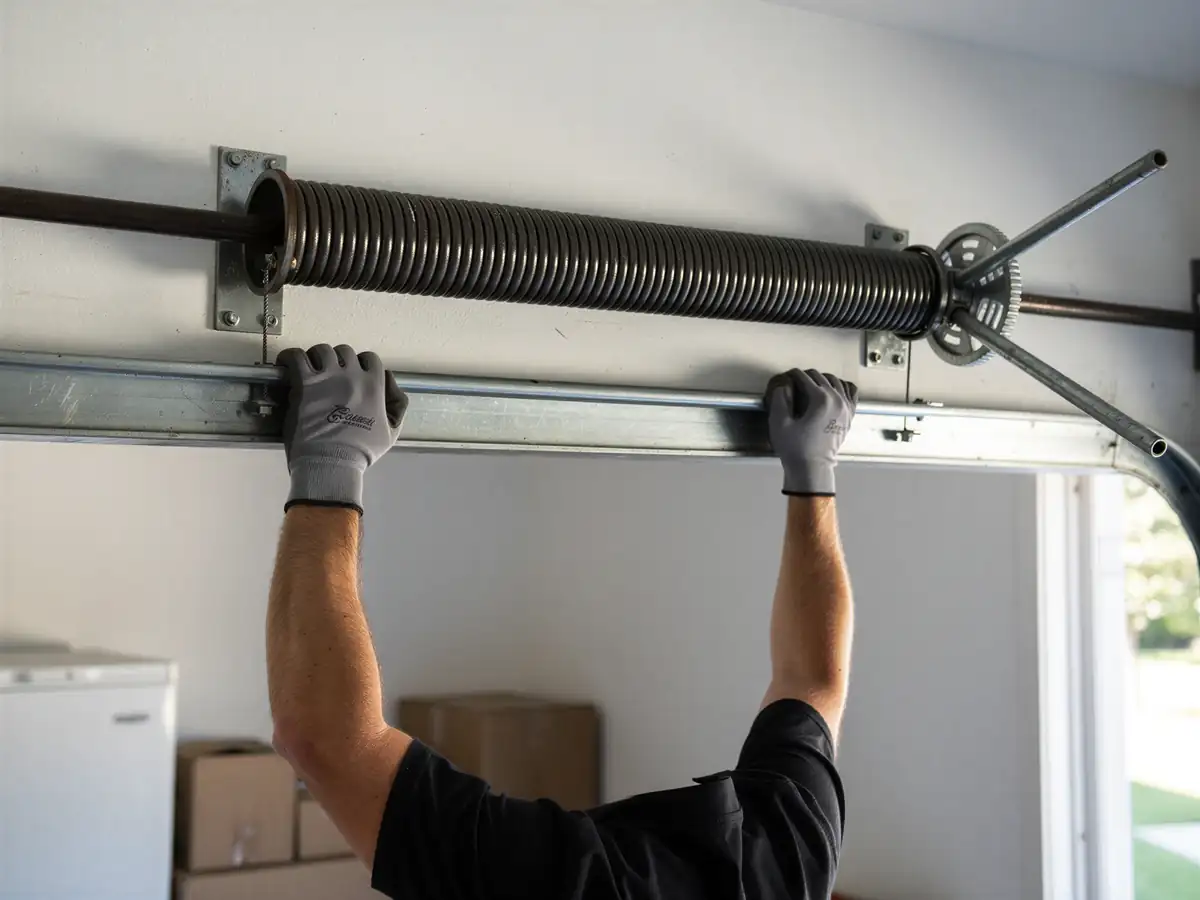
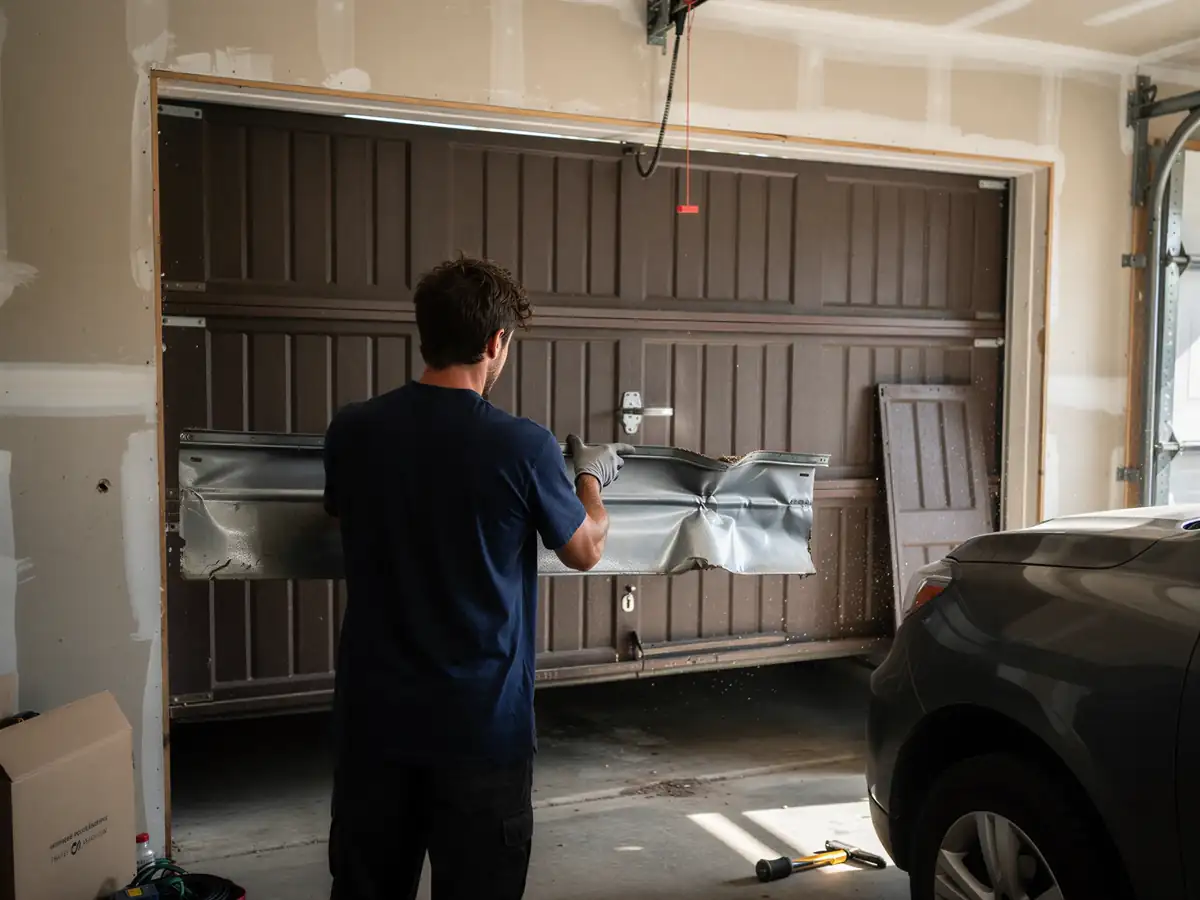
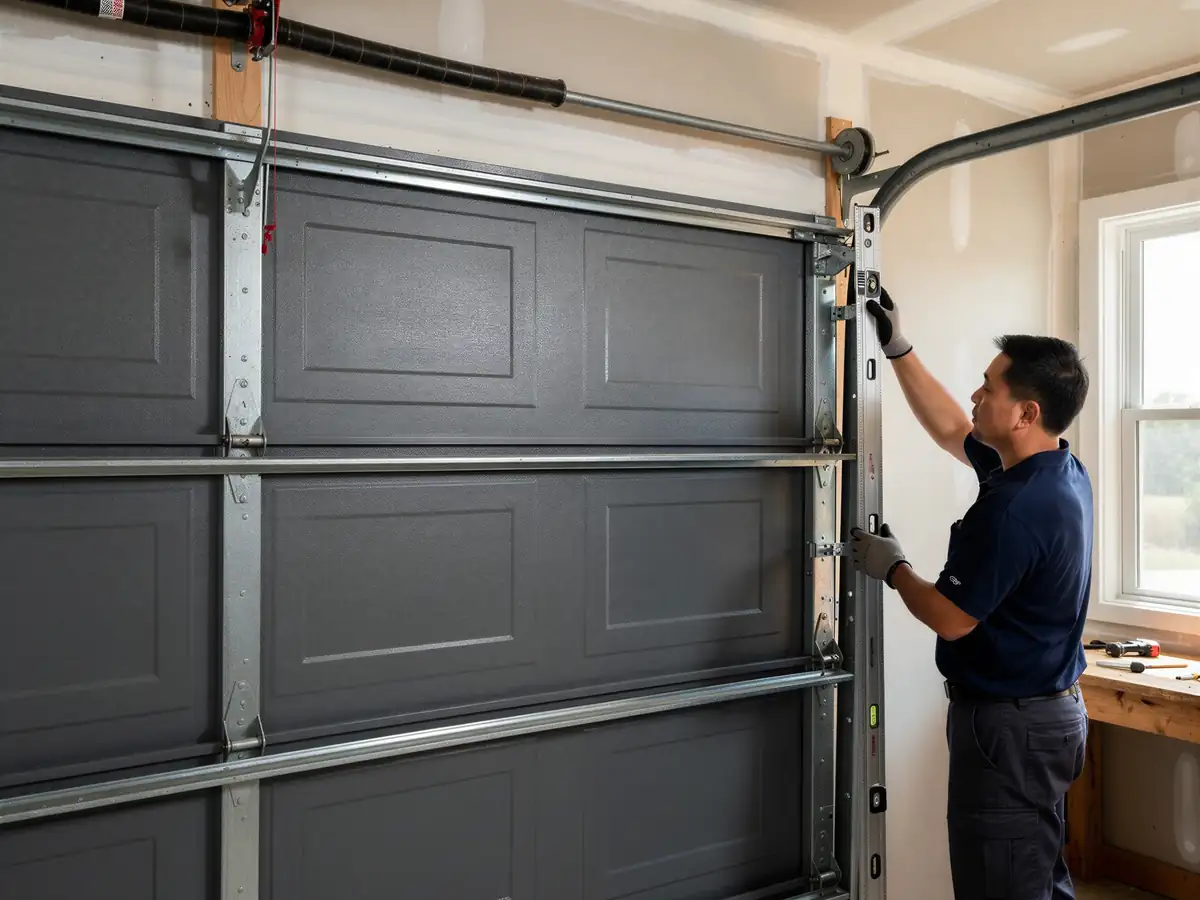
That's the honest answer to whether you should tackle this yourself. Swapping a roller or tightening a loose hinge bolt, fine, most owners can handle that with a ladder and a Saturday morning. A spring under tension, a cable that's frayed at the drum, or an opener that's original to a 1997 build and wired into hardware nobody makes anymore - that's a different job. We've seen plenty of DIY spring jobs end with a trip to urgent care instead of a trip to the hardware store, and that's not scare talk, it's just how torsion springs behave when they let go wrong.
If what you're looking at is a stuck door with the opener light blinking, that's worth five minutes of your own troubleshooting first. If it's a door that slammed down or a spring that's visibly separated, stop and call.
What You Are Seeing
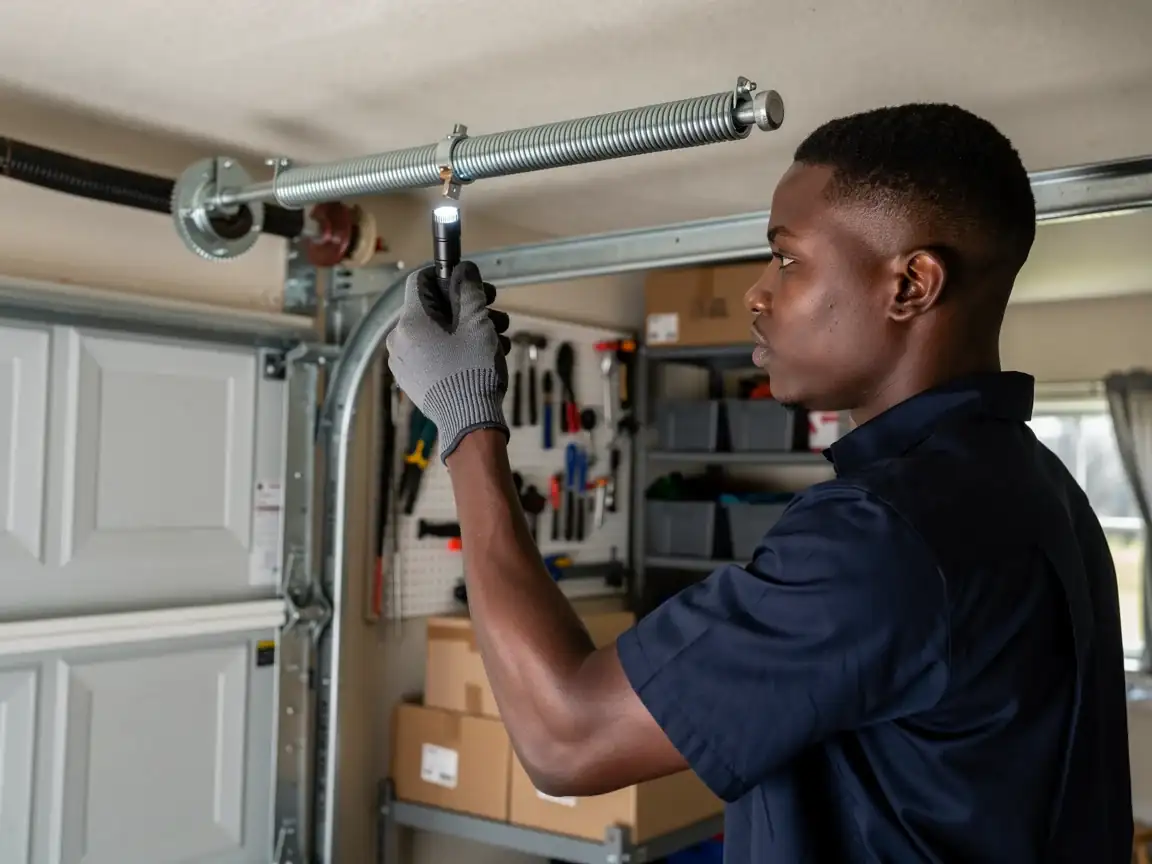
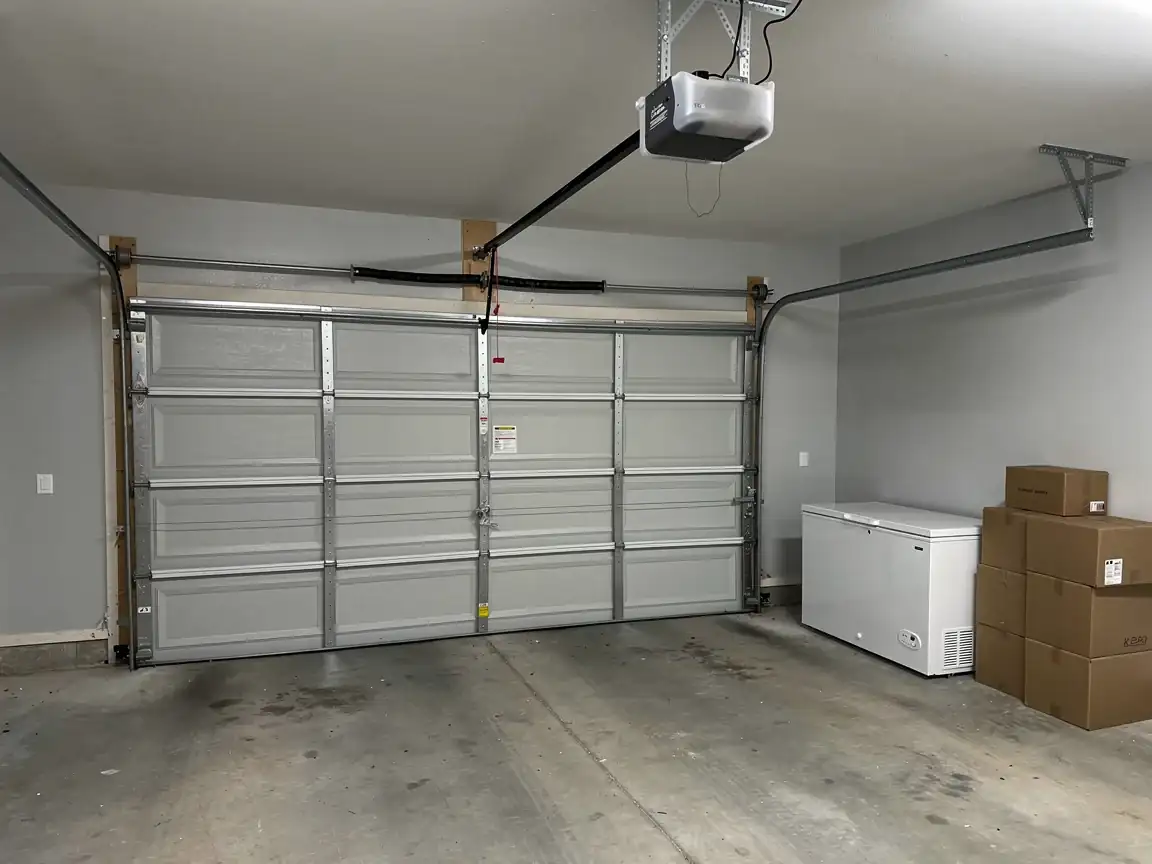
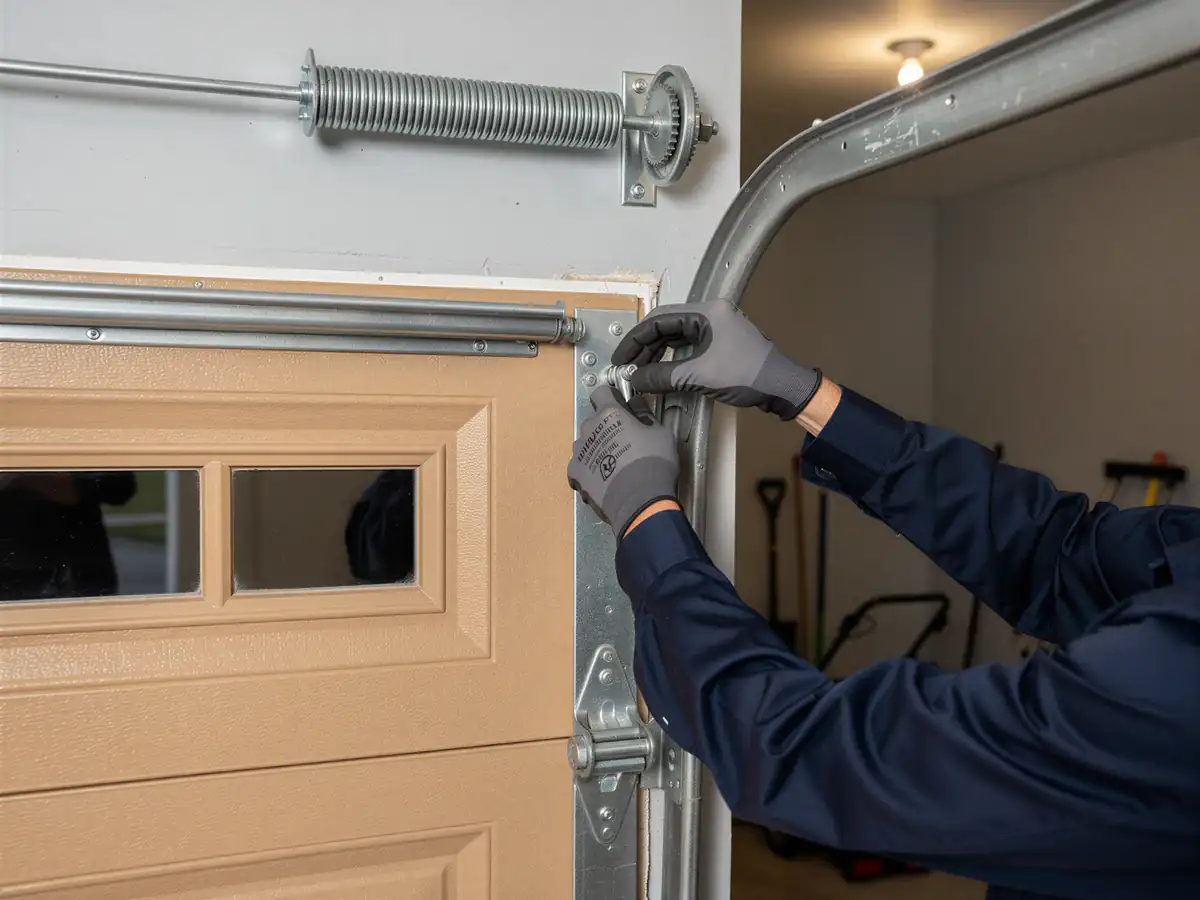
With a median build year of 1997, a lot of Dallas garages are running original torsion hardware, especially if the house has changed hands once or never. The telltale signs are consistent: a door that feels heavier than it used to, an opener that strains and groans before it lifts, a spring with a visible gap where it's separated along its coil. On a 1997 door that's never been serviced, that spring has been doing silent, worsening work for years before it finally quits - usually without warning, usually on a morning you need to get somewhere.
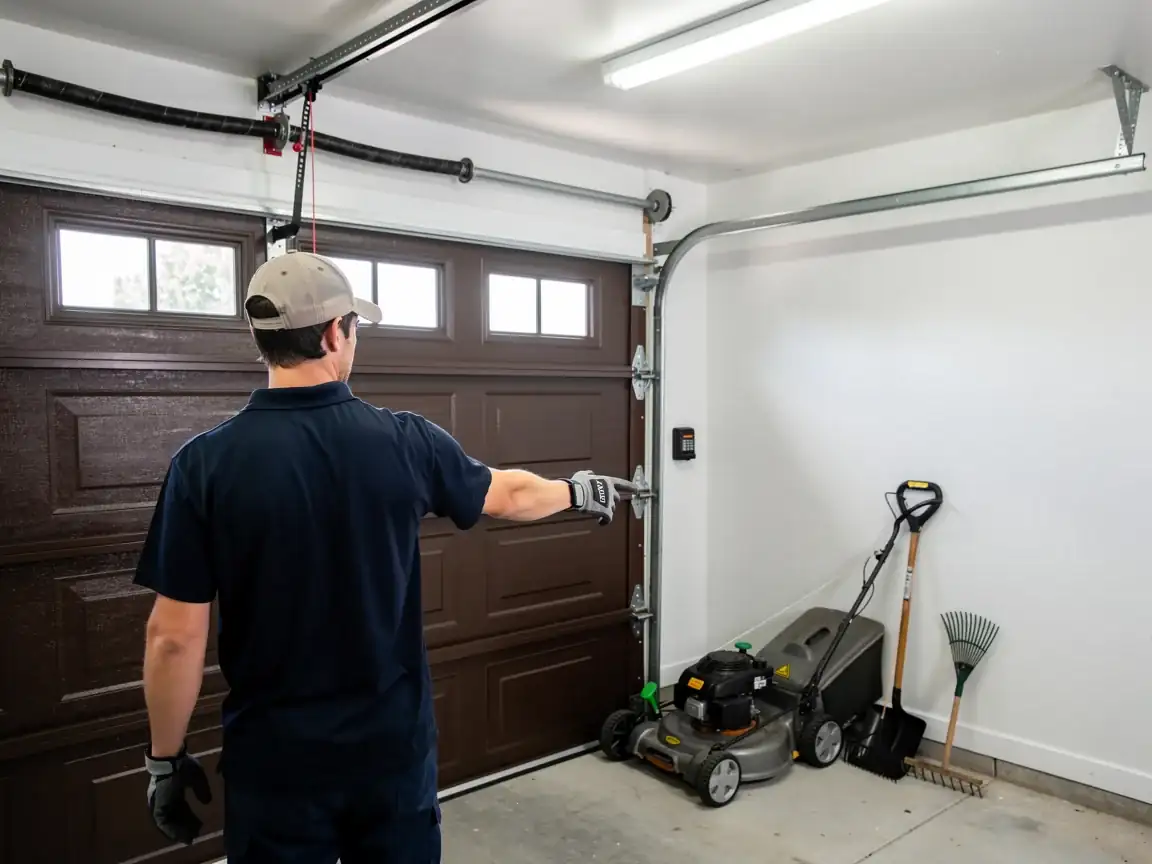
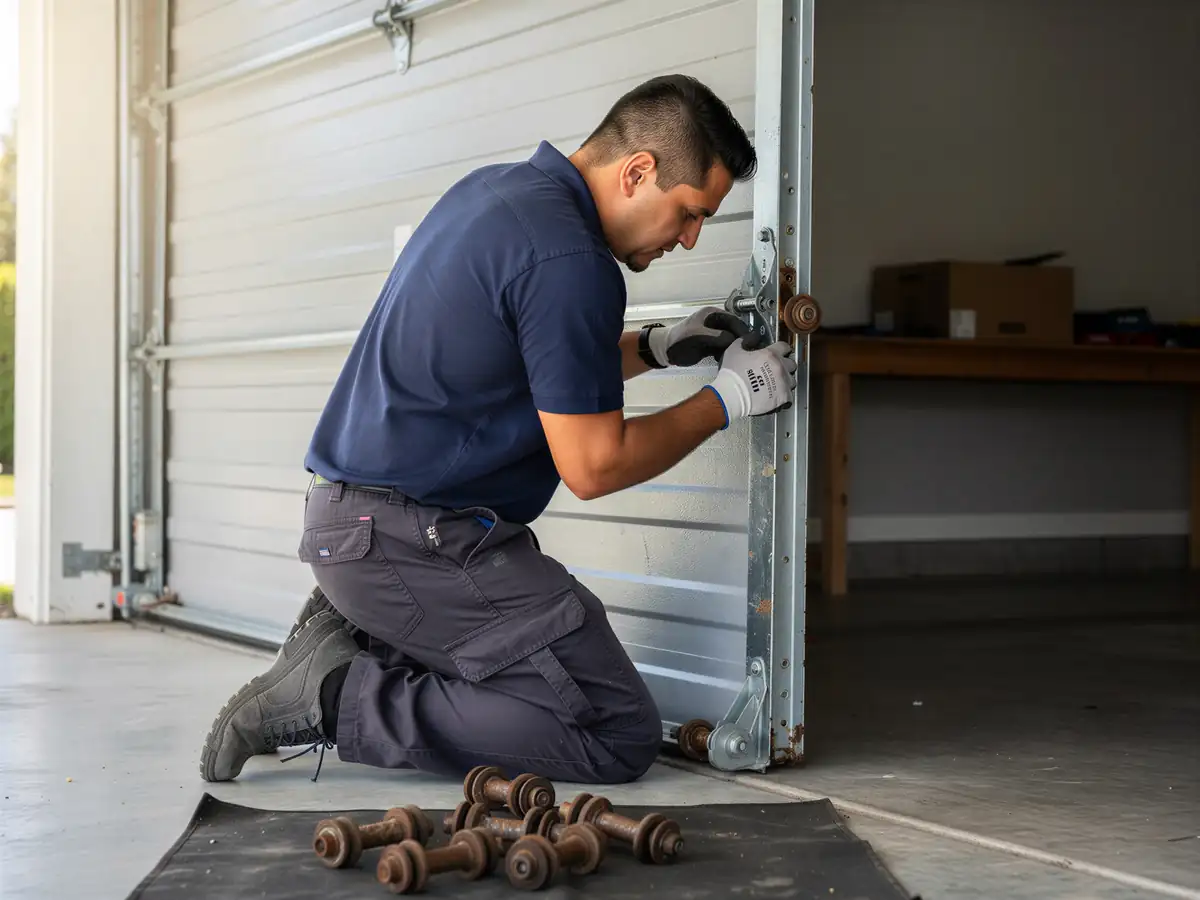
Track and roller wear shows up a little differently. If your rollers are the original steel ones from a late-90s install, they're loud, and they've usually worn a groove into the track that makes the door bind partway through its travel rather than run smooth. Cables fraying at the bottom bracket are another original-hardware symptom - galvanized cable from that era wasn't built to last 27 years and a lot of it is now showing rust blooms at the drum end.
With 2,137 households in Dallas, a meaningful share of them sitting right around that 1997 build year, this isn't a one-off problem we're describing. It's the same hardware, at the same age, showing up on a lot of driveways on the same week.
What Causes It Around Here
The straightforward cause is age matched to original parts
A door built in 1997 came with springs, cables, and a bottom bracket sized for that door's weight, and none of that is designed to last indefinitely - it's designed to last a service life, and that life has usually run out. Houses in Dallas haven't been getting consistent service on that hardware because, frankly, most owners don't think about a garage door until it stops working.
Income plays a role too, though not the way people assume
Dallas's median household income sits at $57,755, which is close to, but a bit below, the wider service area's $59,583. That's not a reason doors fail - it's a reason that when a spring goes, a lot of owners patch around it (an extra zip tie, a 2x4 propped under the door) rather than replace the part outright, which just pushes the real fix down the road and often turns a $150 spring job into a $400 one once the cable or bottom bracket gets dragged into the failure.
The other factor is the opener itself
A 1997-era chain drive opener is well past any reasonable service life, and when the gear set inside finally strips, that's often mistaken for a spring problem because the symptoms look similar - strain, grinding, a door that won't lift.
The Complications
Cold weather in this region is moderate, not severe, but it's enough to stiffen grease in an original 1997 opener gear housing and make an already-tired torsion spring feel heavier on a 20-degree morning than it does in July. That's not a Dallas-specific quirk so much as a regional one, but it compounds the age problem described above - an old spring under extra resistance is more likely to be the one that finally snaps.
The real complication with original hardware this age is parts. Some 1997-era track and drum assemblies don't match current standard sizing, which means a repair can turn into a partial retrofit rather than a straight swap - we'll tell you up front if that's what we're looking at rather than force a part that doesn't fit. We don't stock every obsolete bracket size on the truck, and for some of the oldest original installs, full replacement ends up being the more honest answer than trying to keep patching hardware that's outlived its design life.
We cover Dallas from our Gastonia location, about five miles out, so there's no local branch here - just a short drive and the same crew each time. For the broader range of garage door work we handle across the area, that's covered on our main Gastonia repair page, not this one.