The DIY Question
Cherryville has 2,418 households, which is a small enough number that most garage door trouble here is a known quantity rather than a mystery. We're not chasing a flood of calls from a dense subdivision grid - we're answering specific, recurring problems tied to a housing stock that's older than much of the rest of the service area.
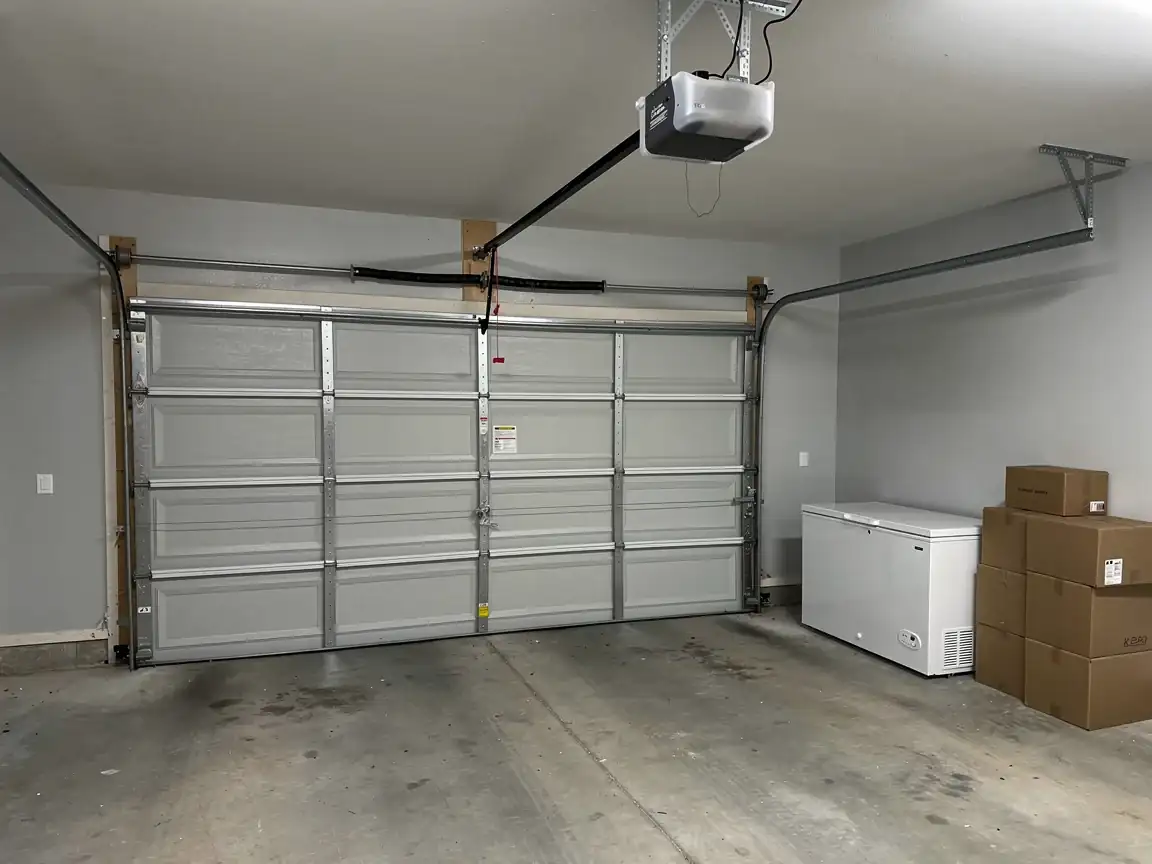
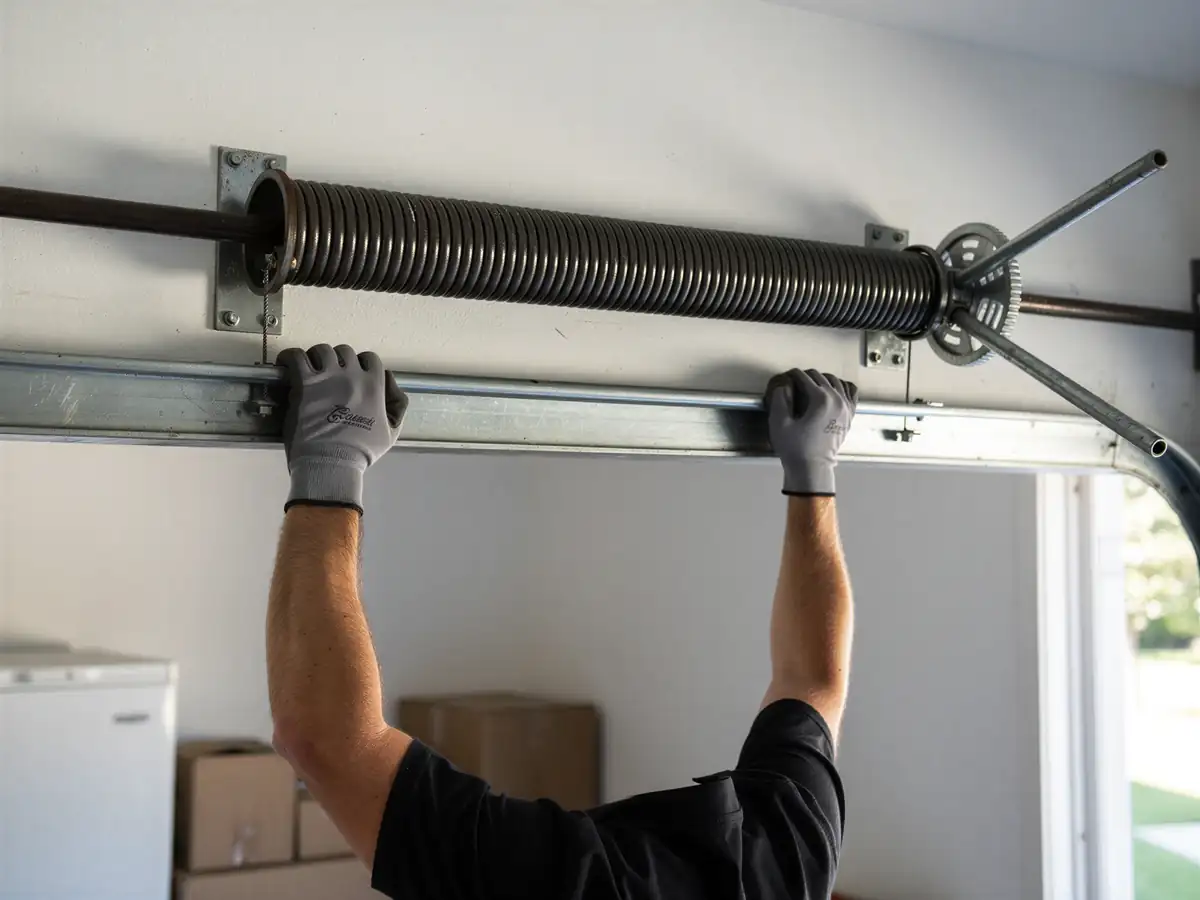
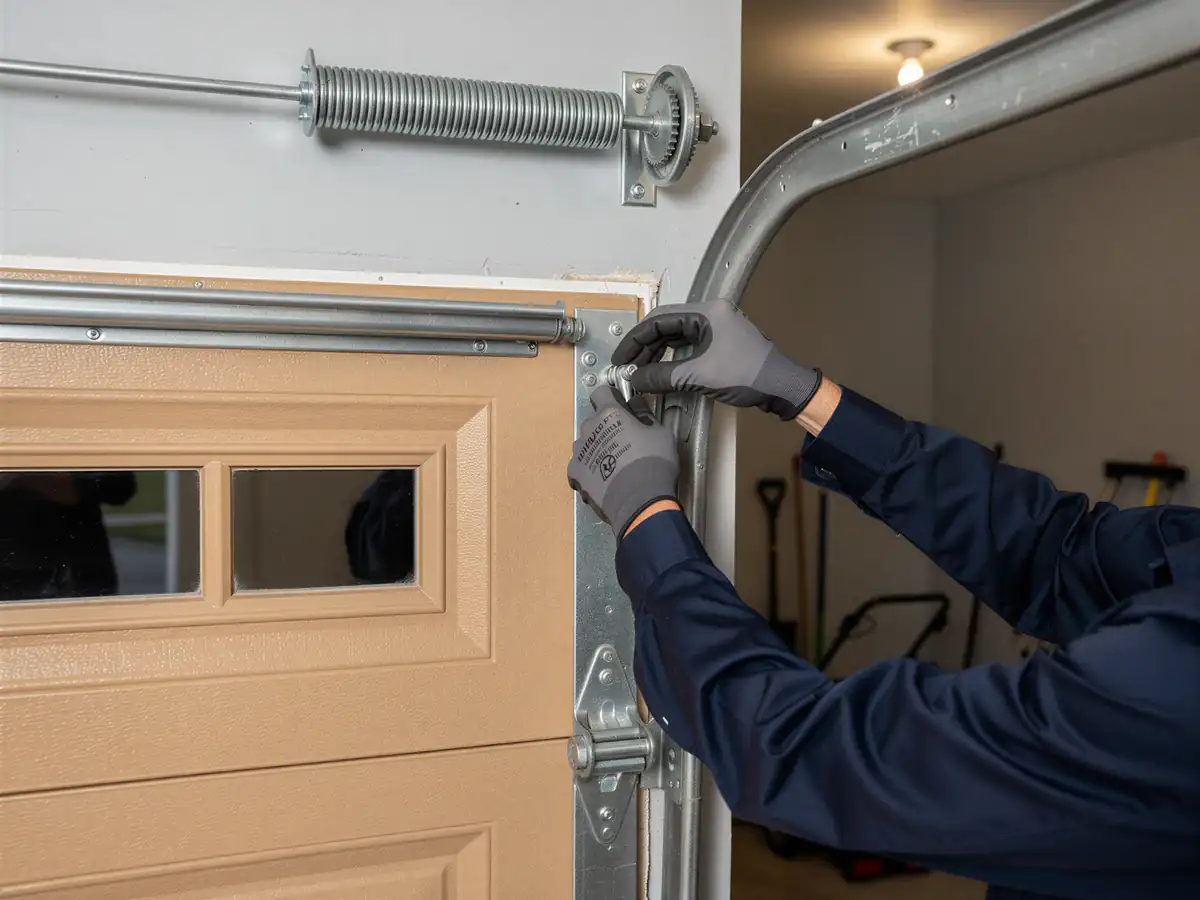
That matters for the DIY question. A homeowner can safely swap a roller or tighten loose hardware on the track. What you should not touch is a torsion spring under tension, and on a house built around 1970 that spring and its mounting hardware have likely never been replaced. The brackets corrode, the winding cones seize, and the spring itself is original-era steel that doesn't behave the way a new one does when it lets go. If you're not sure how old your spring is, that uncertainty is the answer: call it in.
We're honest that some jobs are a ten-minute fix you could do yourself with a screwdriver. Loose hinge screws, a dirty track, a sensor knocked out of alignment - those don't need a truck. Springs, cables, and anything involving the opener's drive gear do.
What the Repair Takes
We come out from Gastonia, 14 miles from Cherryville, so the first thing the job takes is that drive. It's not around the corner, which is part of why we try to diagnose as much as we can over the phone before we load the truck - what the door is doing, what it sounds like, when it started.
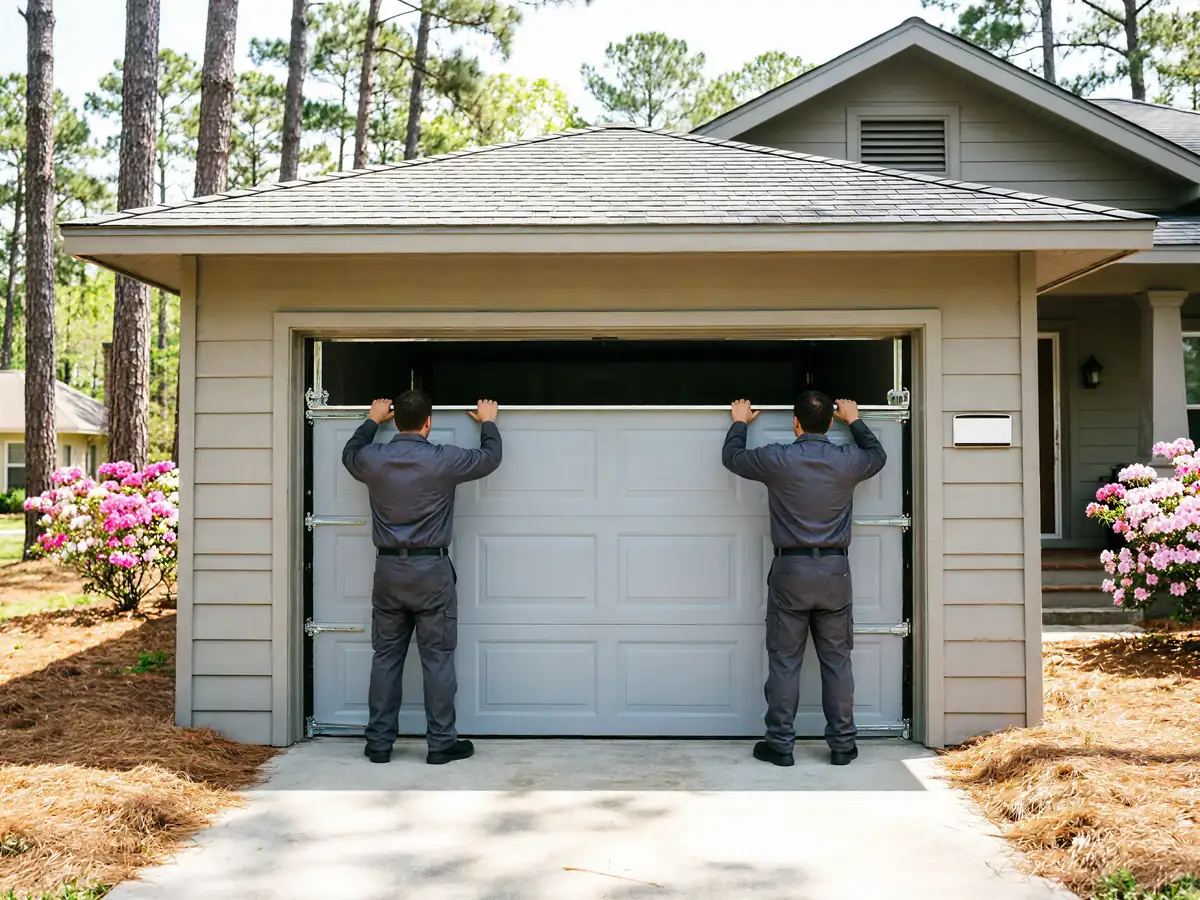
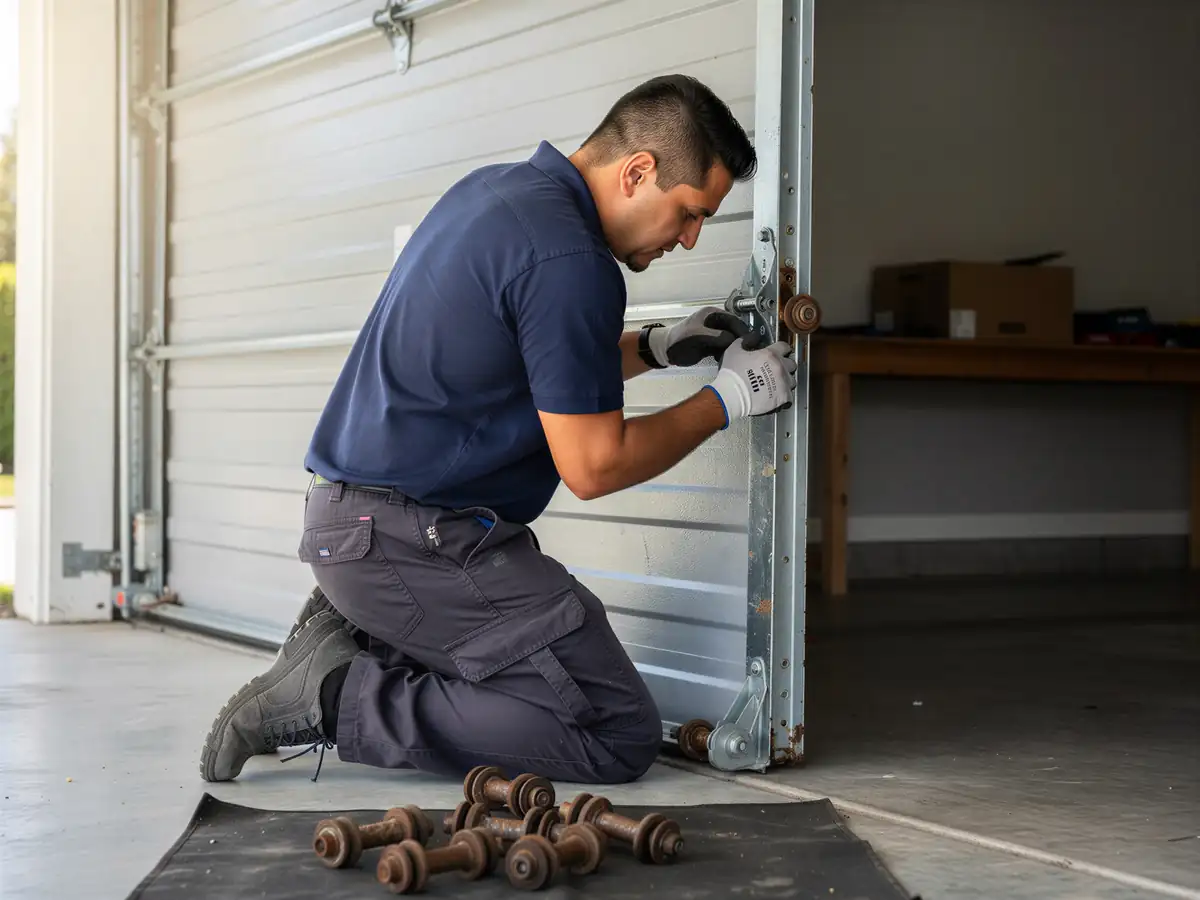
Once we're on site, the repair itself depends on what's failed and what's still original. On a house dating to around 1970, the opener has almost certainly been replaced at least once, but the track and the spring mounting can still be the house's original hardware if nobody's touched it. That means matching new parts to an older rail width or an older header bracket, which takes a bit more fitting than a straight swap on a newer build.
We carry common spring sizes and standard track hardware on the truck. What we don't always carry is a part specific to an opener model that stopped being made years ago - if your opener is old enough to be in that category, we may need to order the part rather than finish same-visit. That's the honest limitation: we can diagnose on the spot, but a rare part can mean a second trip.
What You Are Seeing
On a door of this house age, the symptoms tend to cluster
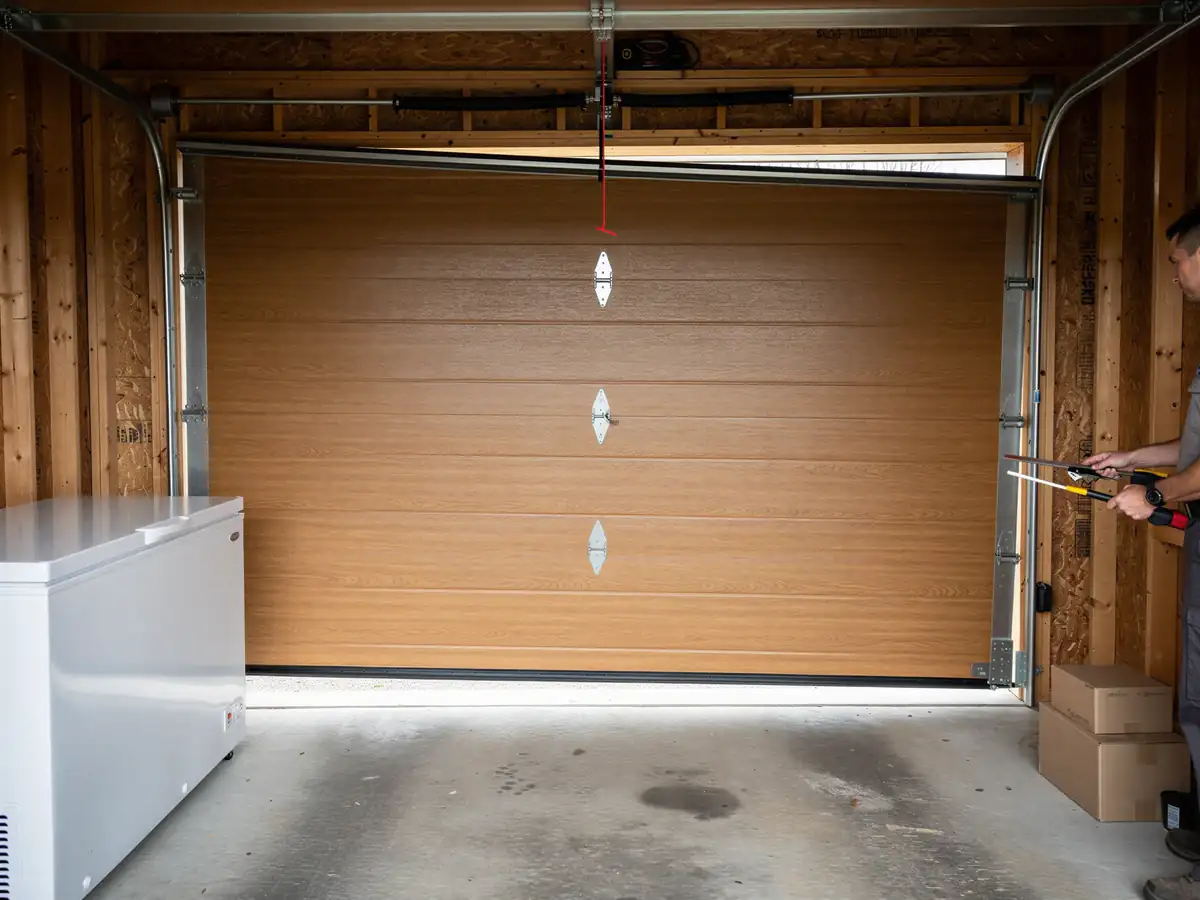
A door that slams the last six inches instead of settling is usually a spring that's lost tension gradually rather than snapped outright - common on original hardware that's 30-plus years past its expected cycle life. A door that opens but reverses halfway is often a track that's shifted out of parallel on a bracket that's rusted loose at the lag screw.
If the opener runs but the door doesn't move
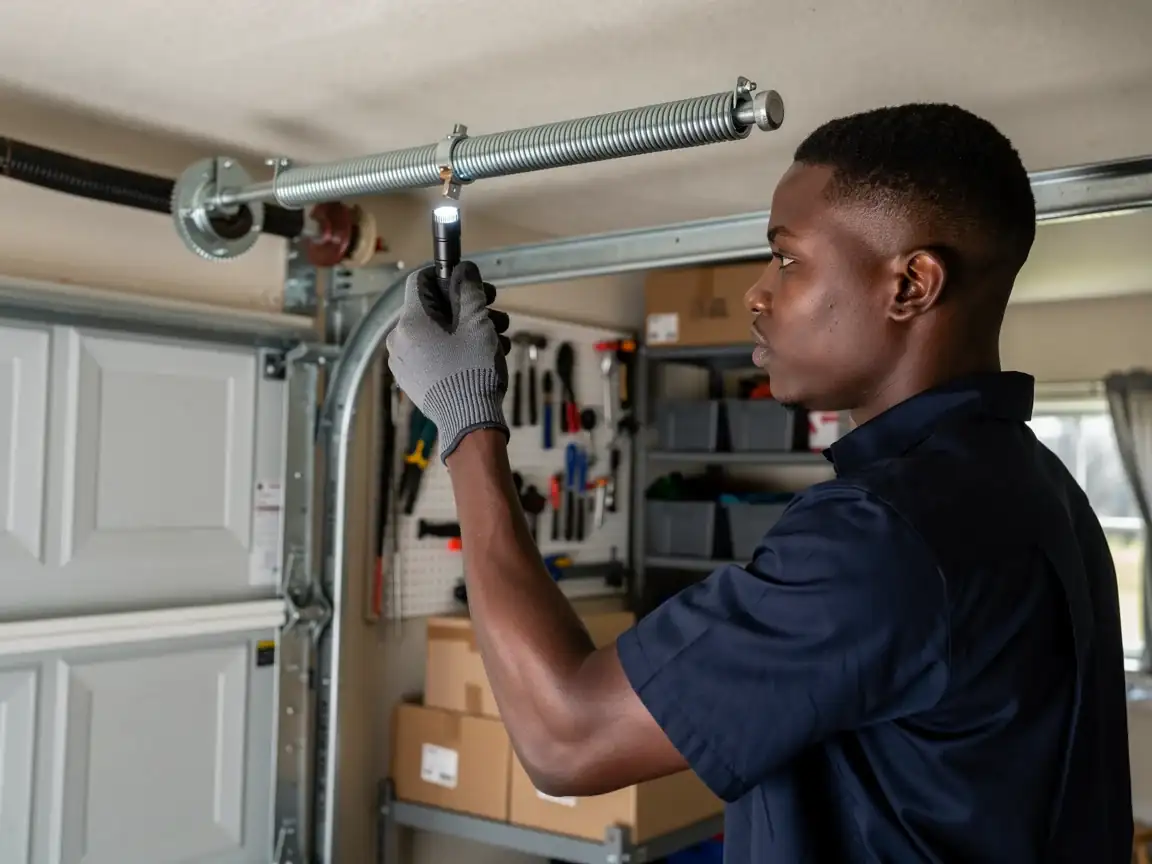
Check the drive gear and the chain or belt tension before assuming the motor is dead - on older units that gear strips long before the motor quits. And if you hear a loud bang followed by the door refusing to open at all, that's almost always the torsion spring letting go. Don't try to lift the door manually in that state; the cable and drum assembly are now holding weight they weren't built to carry alone.
We're describing symptoms, not diagnosing your specific door over text
But if what you're seeing matches one of these, it narrows down what we bring on the truck.
The Cost of This Job
We don't publish a flat price here because the range on any given repair depends on what's actually broken and whether the hardware is standard or something we have to match to an older install. What we can say is where Cherryville sits relative to the rest of the area we cover: median household income here is $58,701, close to the broader service area's $59,583, so pricing isn't adjusted for this town specifically - it's the same rate card as the rest of the route.
The variable that actually moves the number is parts, not location. A standard torsion spring replacement costs less than a job where we're also replacing a bent track section or an end bearing plate that's seized from age. On a house from around 1970, it's common for one failure to reveal a second, smaller one nearby - a worn roller next to the broken spring, for instance - and we'll always tell you about it and quote it separately rather than bundle it in without asking.
What Causes It Around Here
The region sits in a cold-moderate climate band, and that swing matters for steel hardware more than people expect. Springs and cables contract in cold snaps and expand again when temperatures climb, and on hardware that's already decades old, that repeated flex is what finally cracks a weak spot in the coil or frays a cable strand that was already thinning.
Cherryville's housing dates mostly to around 1970, noticeably older than the service area's overall median of 1983. That age gap is the real driver of what breaks here: more original torsion hardware still in service, more openers that have been replaced once already but on track and spring setups nobody's touched since the house was built. It's a different failure pattern than you'd see in a subdivision built in the 2000s, where the first thing to go is usually the opener's circuit board rather than the mechanical hardware.
We don't have wind or storm data specific to Cherryville, so we won't claim a particular weather event as a cause - just the climate band and the age of the stock, which are the two things we can point to.
Time on the Job
Most single-spring or cable repairs run under two hours once we're on site, parts permitting
Add the drive time from Gastonia - 14 miles - and that's the honest window for a same-day call: travel plus the repair itself, not a promised arrival time, since we don't run a depot in Cherryville and we're not going to claim a response window we can't back up.
- 14 miles
Where it runs longer is when the hardware doesn't match what's on the truck
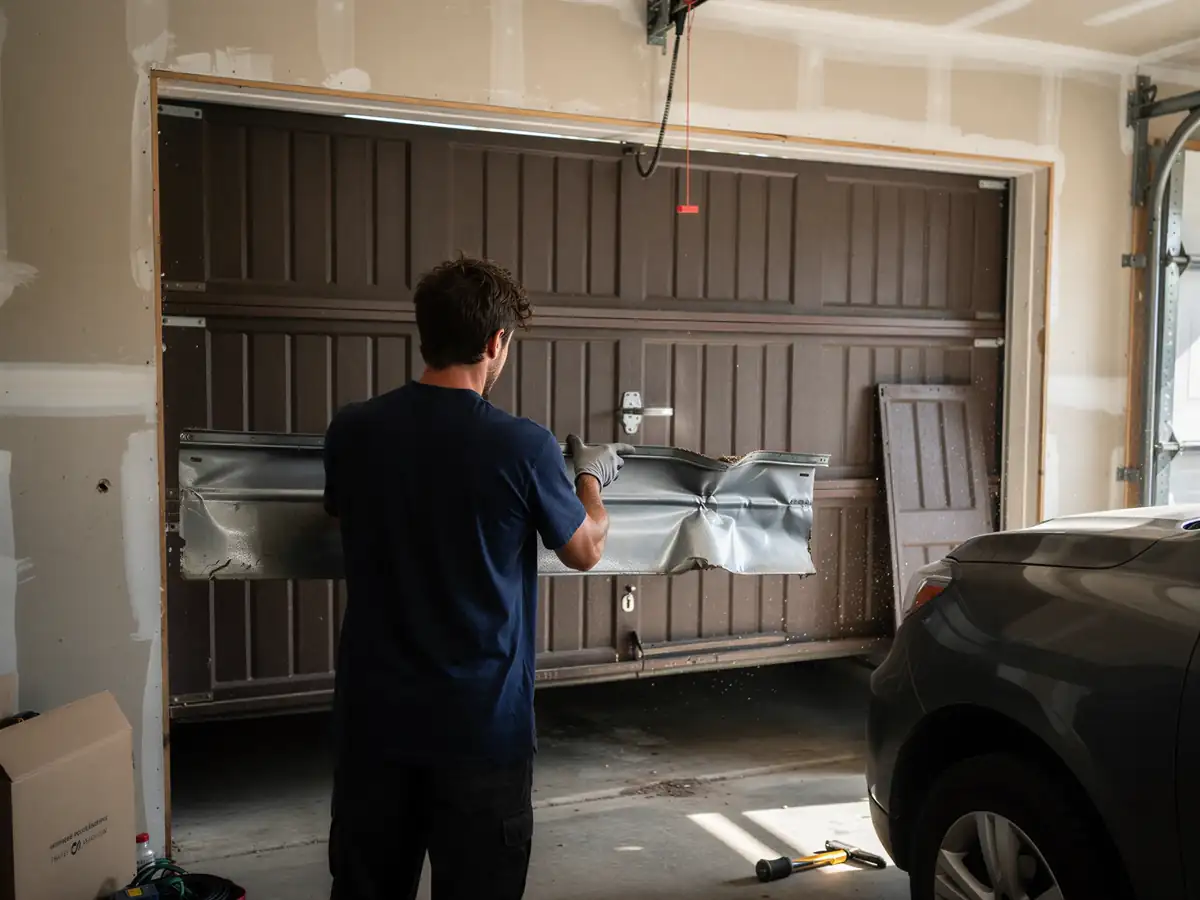
A track bent badly enough to need full replacement, or a bracket that's rusted into the header and needs to be drilled out rather than unbolted, both add time beyond the baseline. On original-era installs like a lot of what's still standing in Cherryville, that's more common than it would be on a newer build.
We'll give you a time estimate once we've seen the door, not before
Guessing a number over the phone before anyone's looked at the spring or the track does nobody any favors.