The DIY Question
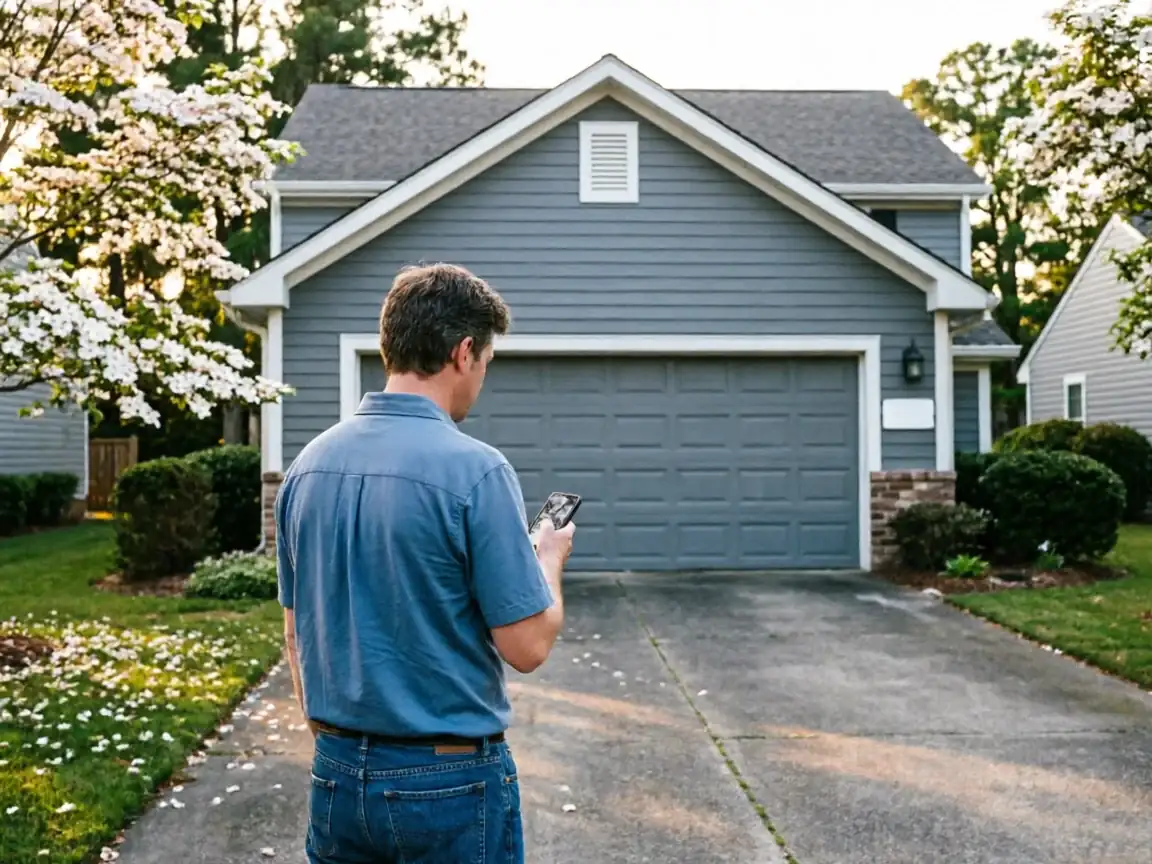
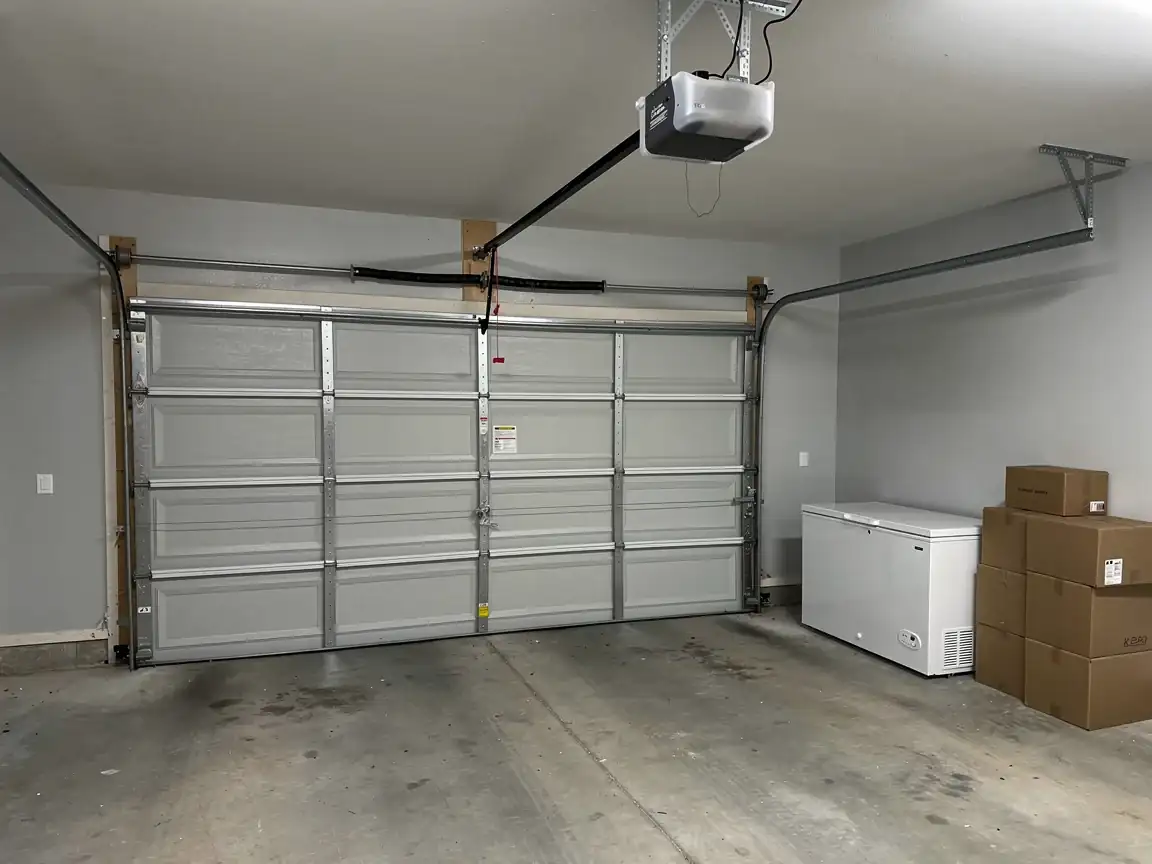
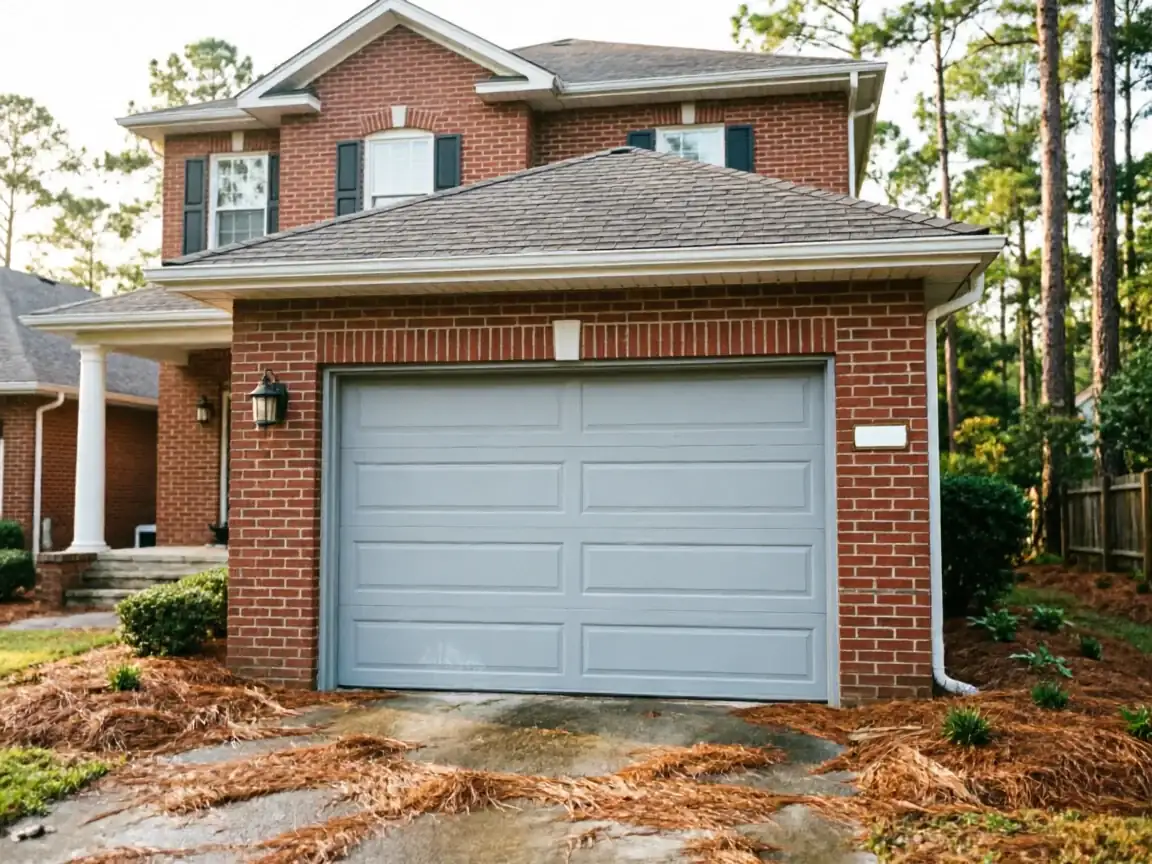
You can grease a track and tighten a hinge bolt yourself, and on a door from the last ten years that's often enough. Cherryville is a different case. A lot of the garage doors in this town are original to houses built around 1970, which means the torsion springs, the drums, and the center bearing are all pushing fifty years old. That's not a job for a can of spray lubricant.
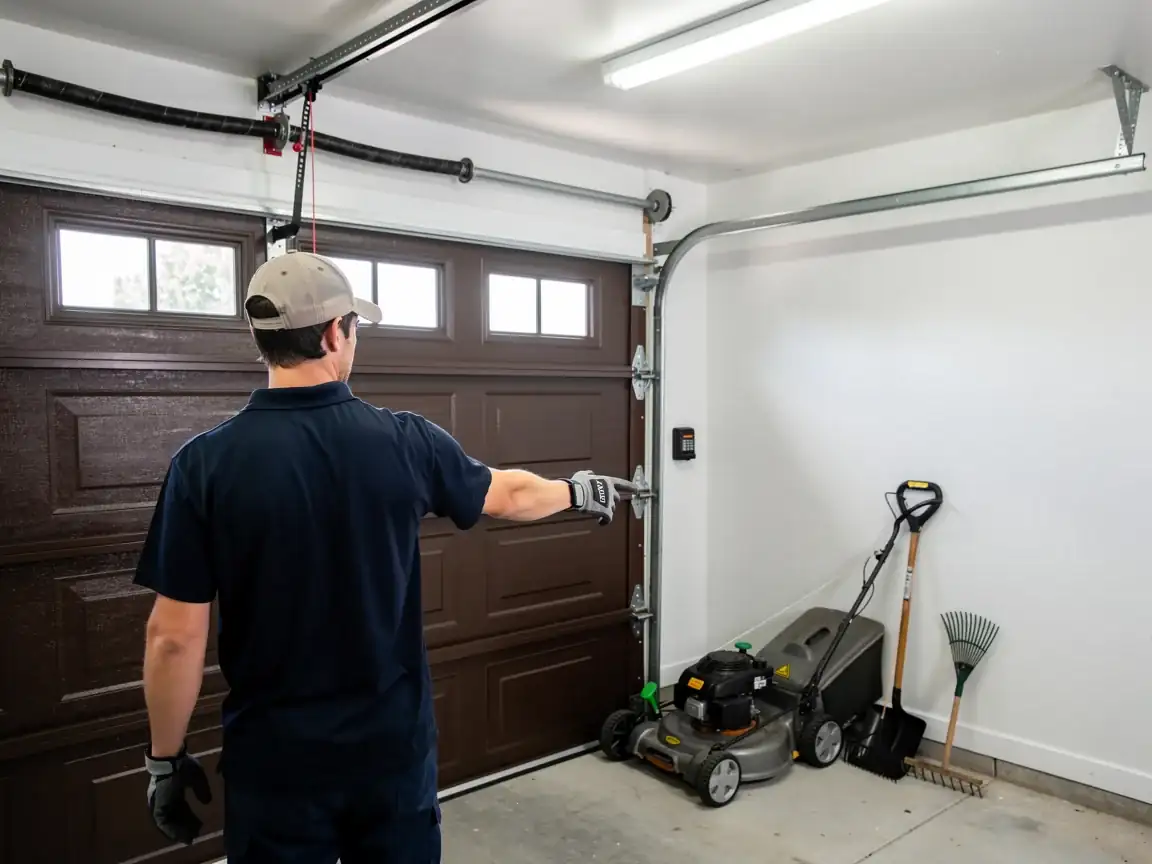
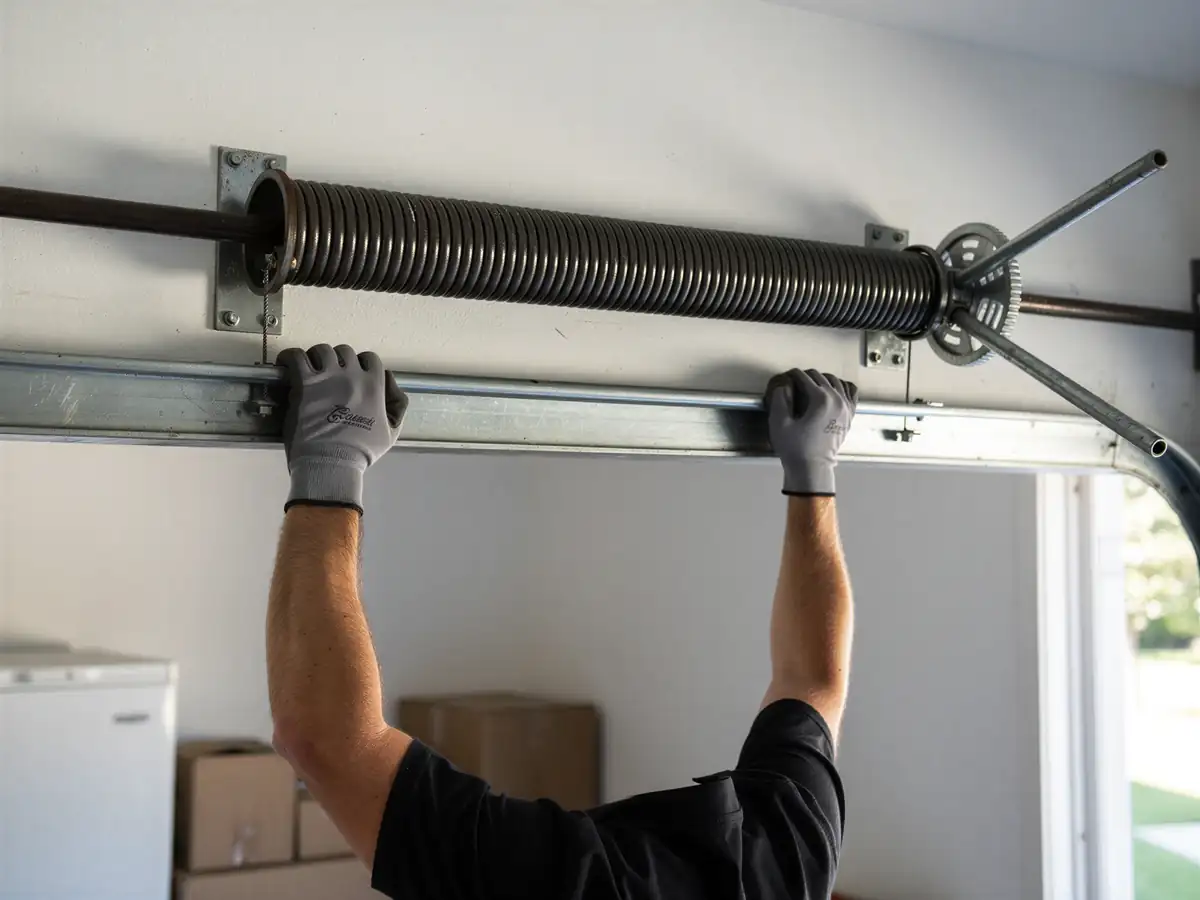
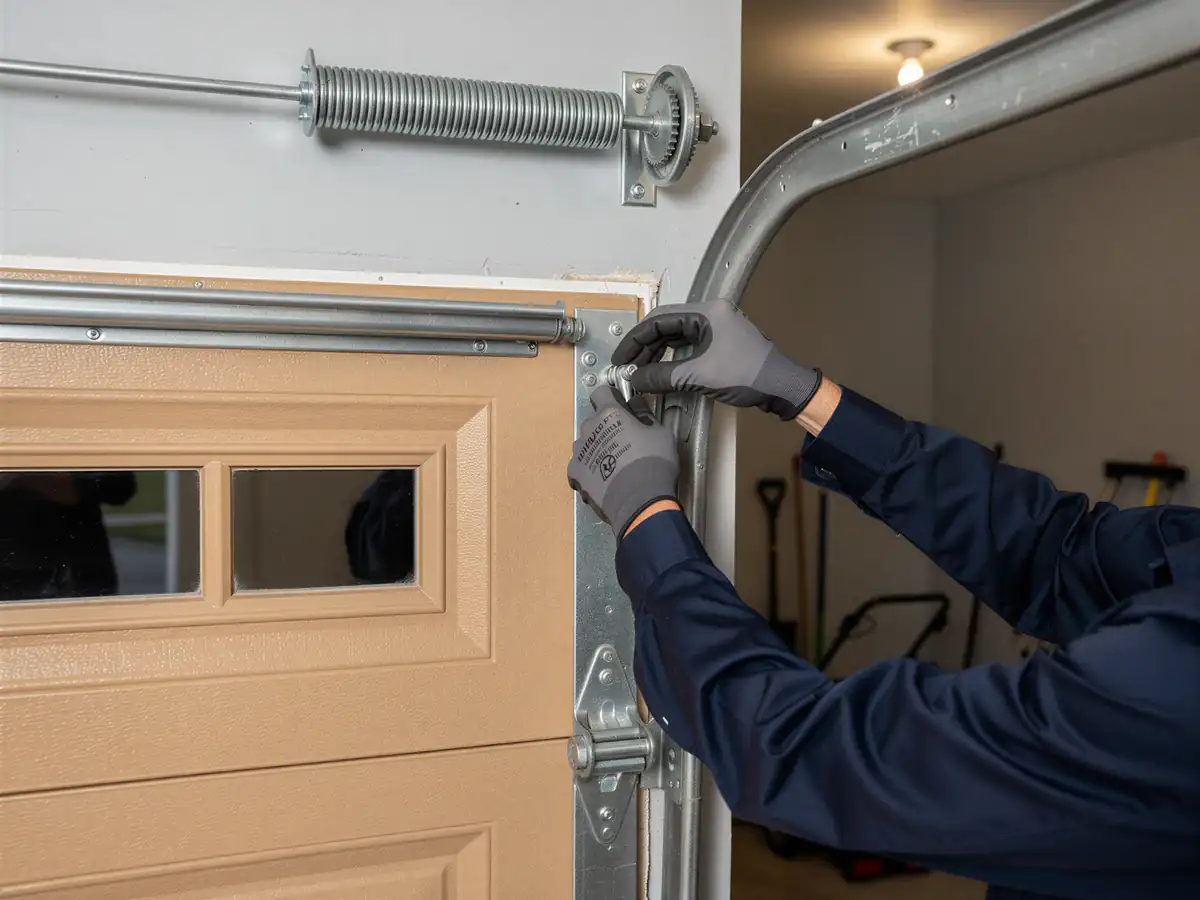
What you can safely do: wipe down the tracks, check that the photo-eye sensors are clean and aligned, and listen for a new grinding sound when the door runs. What you shouldn't do is touch the spring itself, loosen the bottom bracket, or try to true up a track that's pulled away from the frame. On hardware this old, a bolt that looks fine can be stripped underneath, and you won't know until it lets go under tension. If the door is sticking, binding, or dropping unevenly, that's the point to call rather than keep adjusting it yourself.
What the Repair Takes
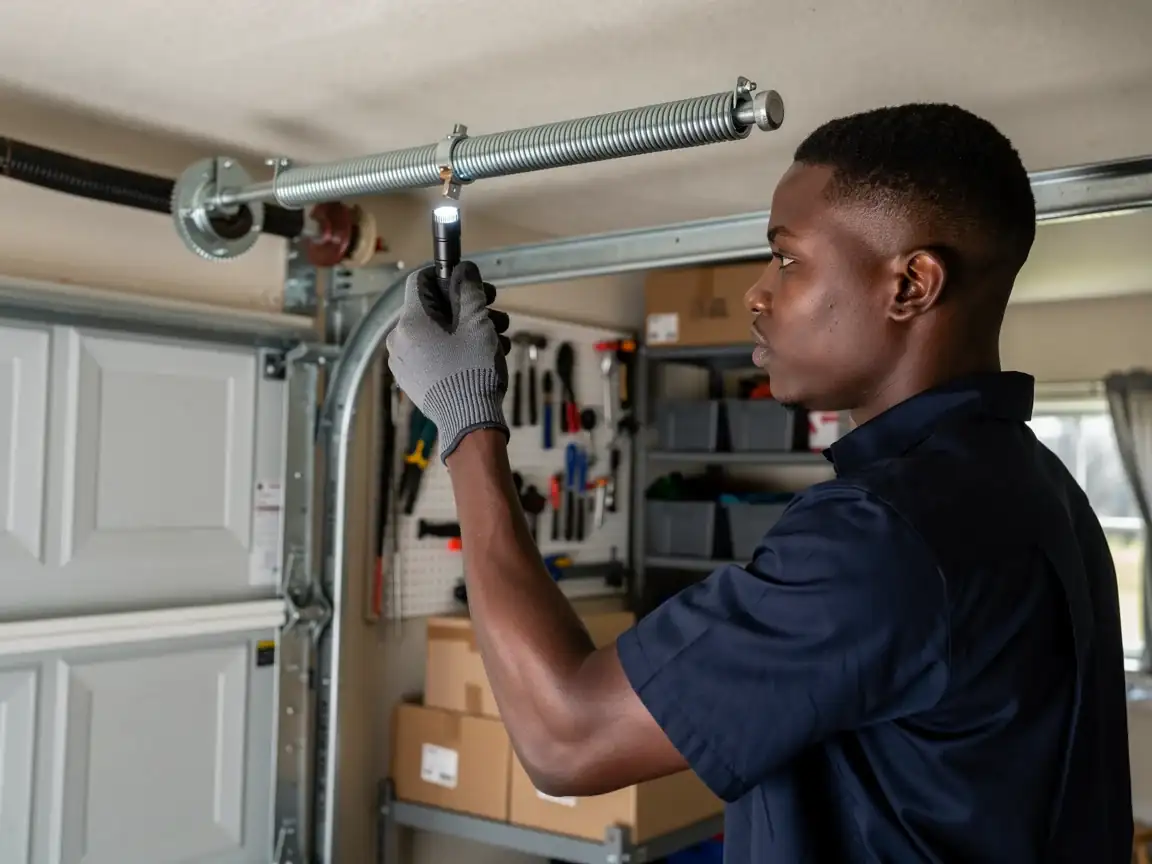
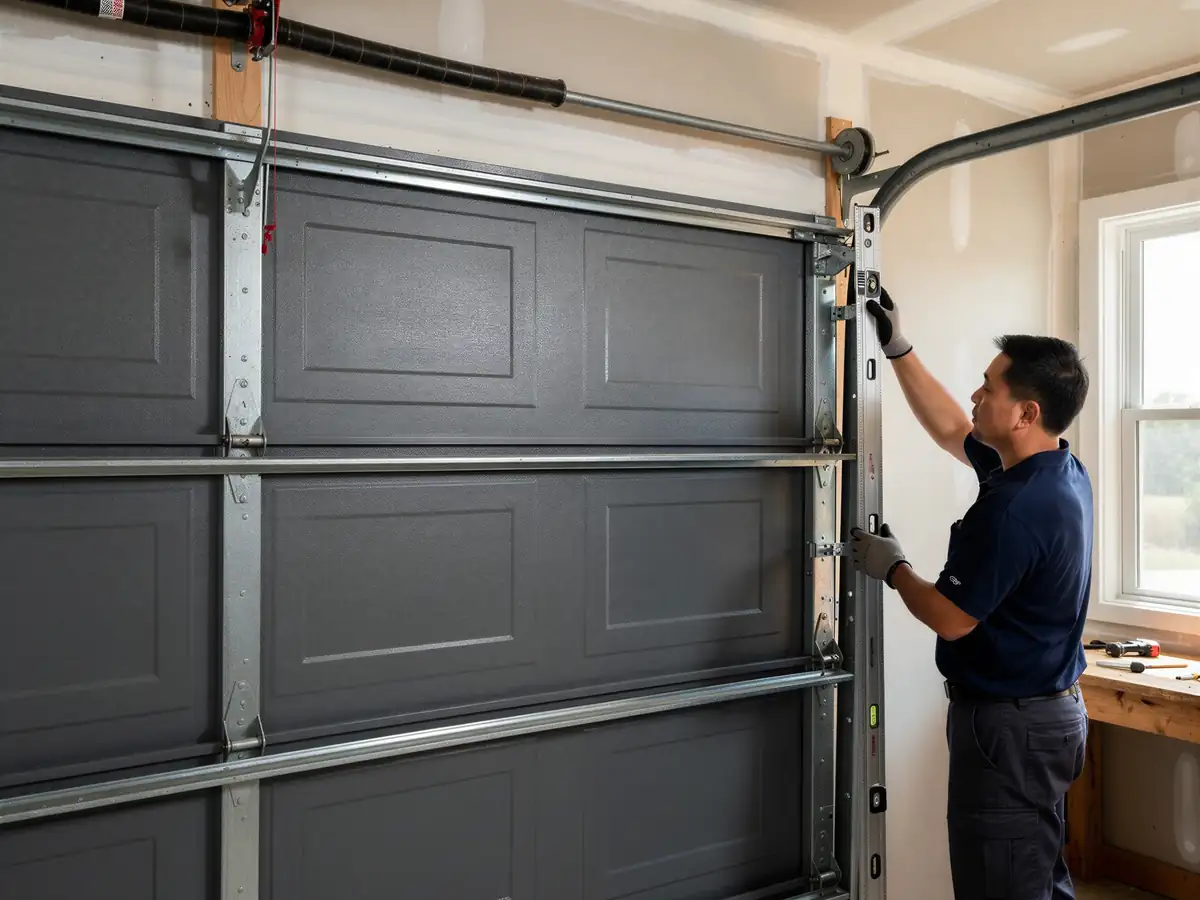
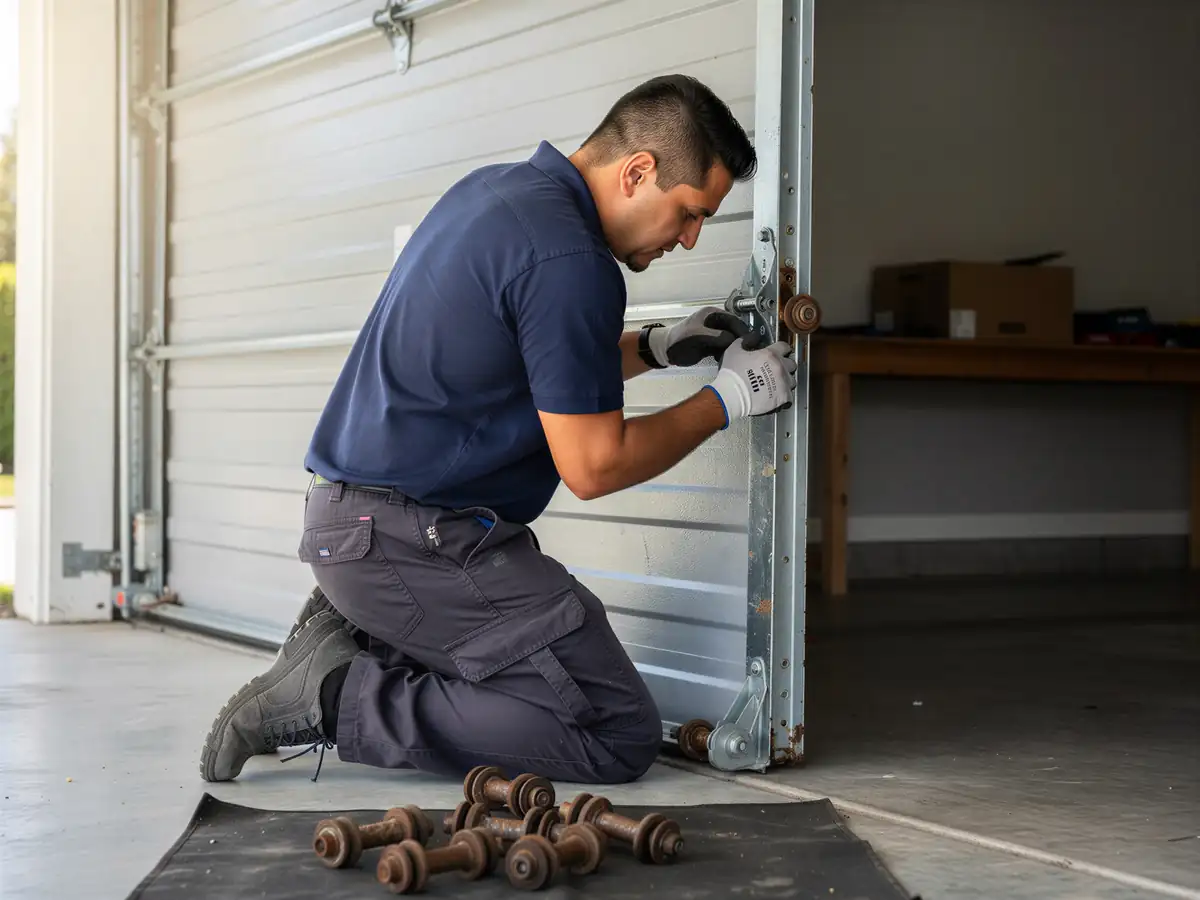
Maintenance on a door this age starts with pulling the spring tension down to inspect the cable and the drum for wear that doesn't show at full tension. On a house built in 1970, we're also checking the track brackets against the jamb, because wood framing from that era has usually shifted a little over five decades, and the door has been compensating for it quietly.
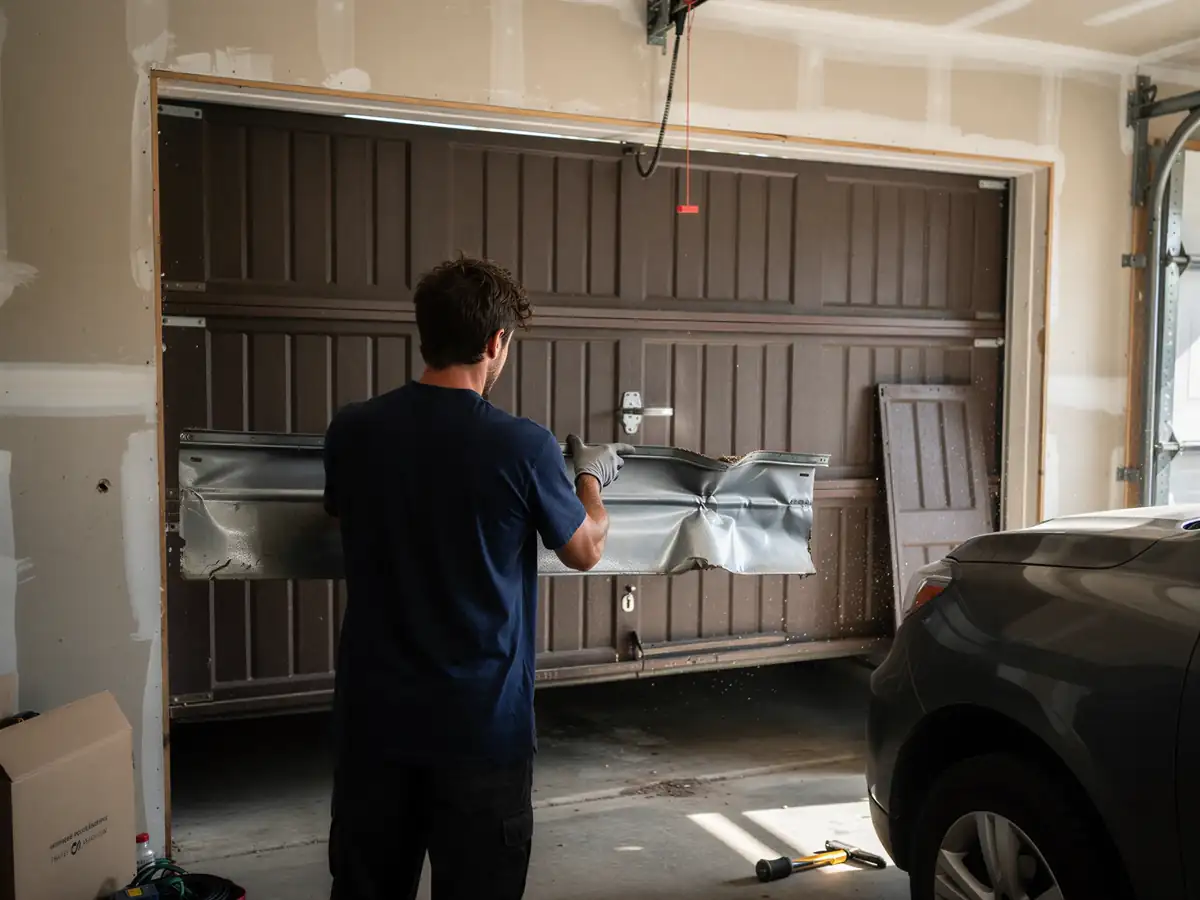
Rollers get swapped if they're still the original steel ones - they're noisy and they chew up the track over time. Hinges get checked for elongated holes, which is the first sign a panel is starting to sag. None of this is dramatic work, but it's slower on older hardware because fasteners can be seized and parts aren't always a direct modern match. We budget the extra time rather than force it.
What You Are Seeing
The door that's loud on the way up, especially in the morning when it's cold
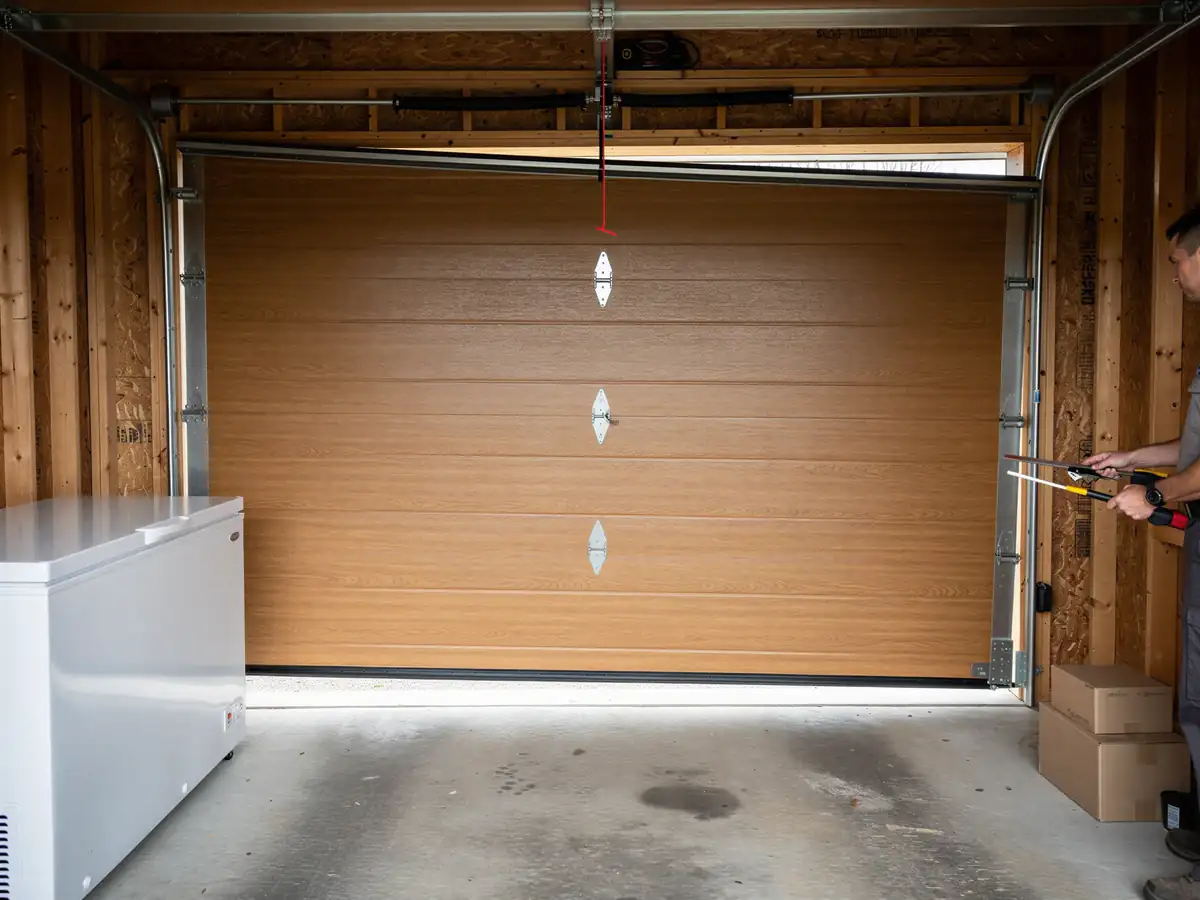
Is usually bearings or rollers starting to dry out or wear flat. The door that hesitates at the same spot every time is a track that's slightly out of plumb, which is common once a house passes the forty-year mark and the slab or framing has settled.
If the opener strains and the door still looks level, check the spring before the opener
The motor isn't built to carry the weight the spring should be carrying, and an opener that's working overtime will burn out its gears trying to compensate. A door that drops the last foot instead of closing smoothly is almost always a cable or spring issue, not an opener setting, no matter what the remote's manual says to adjust.
The Cost of This Job
We don't post a flat number here because the condition of fifty-year-old hardware varies house to house - some doors in this age bracket have been serviced over the years and some haven't been touched since they were installed. What we can tell you is that a maintenance visit on original 1970s-era hardware usually runs longer than on a ten-year-old door, simply because there's more to check and sometimes a part or two to source.
With Cherryville's median household income sitting at $58,701, we try to be upfront early in the visit about what's wear-and-tear versus what's actually failing, so you're not paying to maintain a spring that's a year from needing full replacement anyway.
What Causes It Around Here
This part of the service area sits in a cold-moderate climate band, and that matters more for a fifty-year-old door than a newer one. Steel springs and cables that have already lost some temper from age contract more in a hard cold snap, and that's when a weak spring finally snaps rather than just creaking. We see more spring failures called in during the first real cold stretch of the season than at any other time of year.
It's also simple age. A door installed when the house went up in 1970 has gone through roughly five decades of temperature swings, and galvanized hardware from that period wasn't built with the coatings used today. Surface rust on the torsion bar and hinges, even light rust, is a sign the hardware is past its working life, not just due for a clean.
Time on the Job
A standard maintenance visit, once we're on site, usually runs under an hour for a door in reasonable shape
Add time if we're replacing rollers or a cable on original hardware, since older brackets sometimes need to be worked loose carefully rather than unbolted straight off.
The honest limitation
We're driving from Gastonia, about 14 miles out, so Cherryville visits are scheduled rather than same-hour. If a spring has already gone and the door won't move at all, say that when you call so we can plan the truck's route accordingly. We'd rather tell you the realistic window than promise a time we can't hold for a drive this long.
- 14 miles