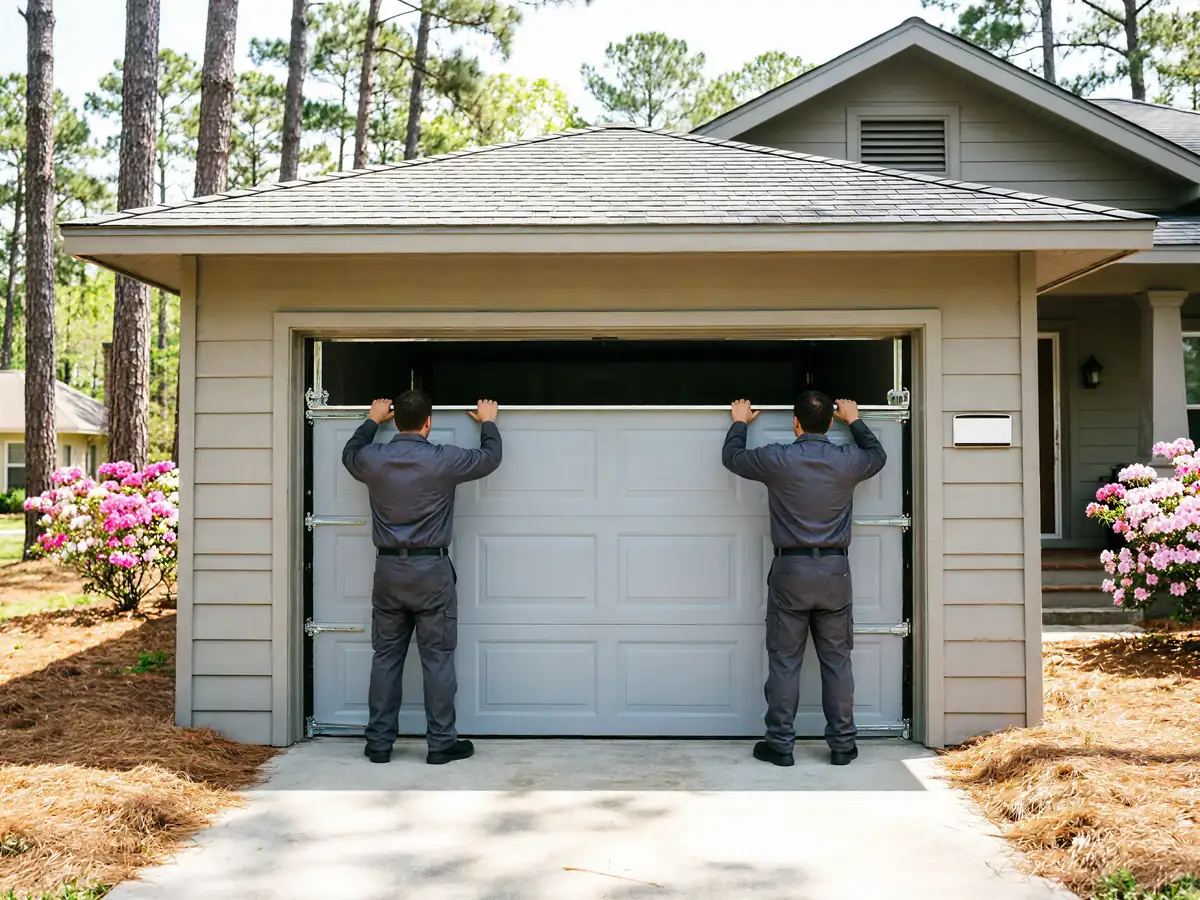
Parts We Carry
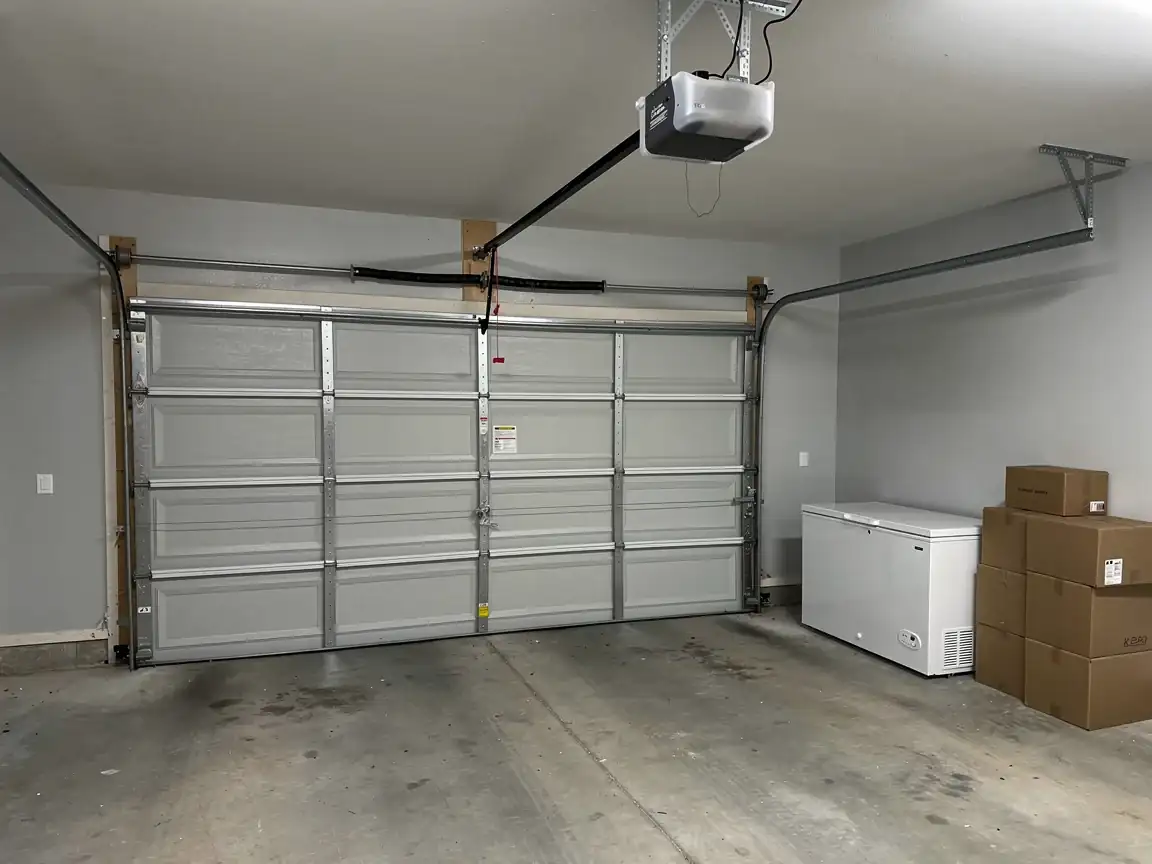
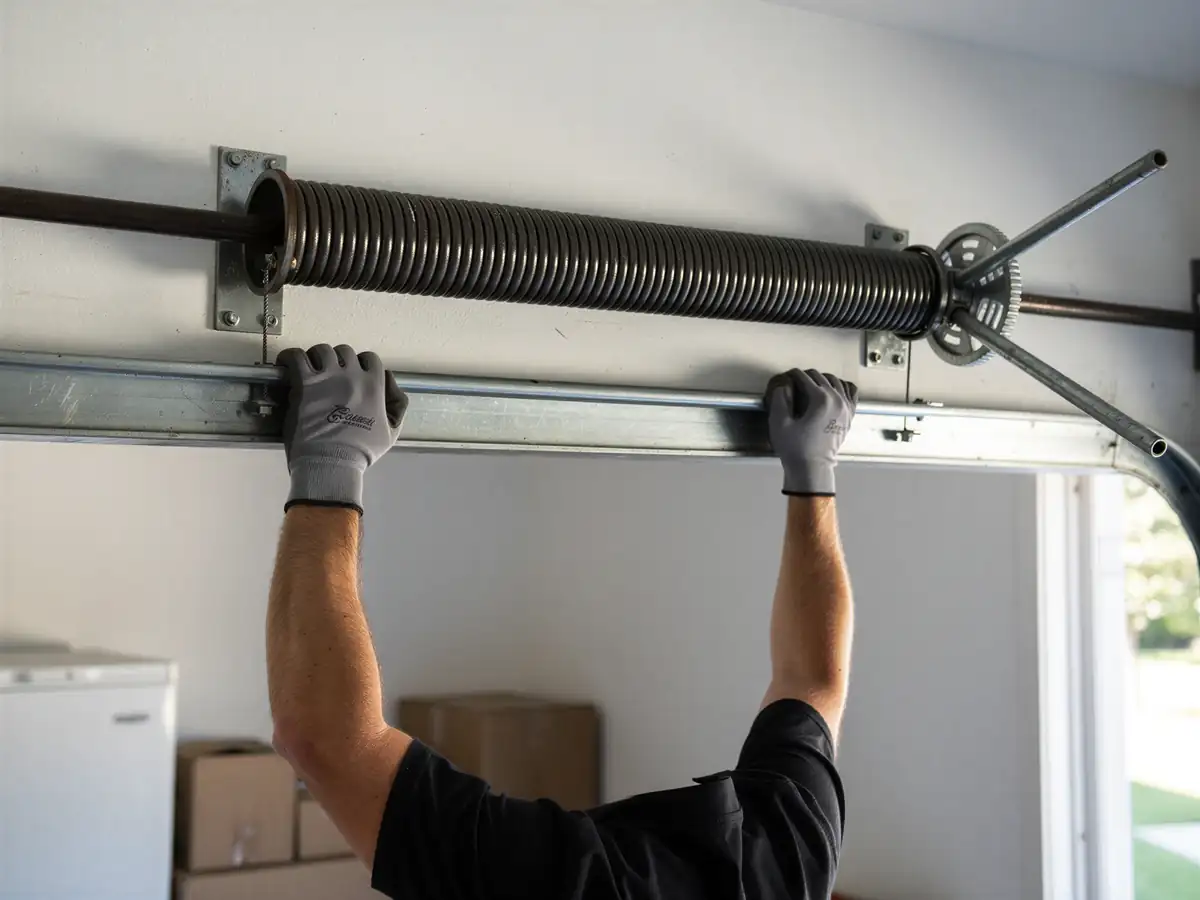
Most of the doors we pull out of Stanley garages are single-layer steel, hung on a torsion spring sized for a lighter door than anyone would spec today. The median home here went up around 1977, which puts a lot of these openings at close to fifty years old - older than the 1983 median across the rest of the territory we cover out of Gastonia. That six-year gap matters more than it sounds: doors from the late 1970s typically have no foam core at all, just a single skin of steel over an open frame, and the track hardware is often the original galvanized stamped steel rather than the rolled steel used from the mid-80s on.
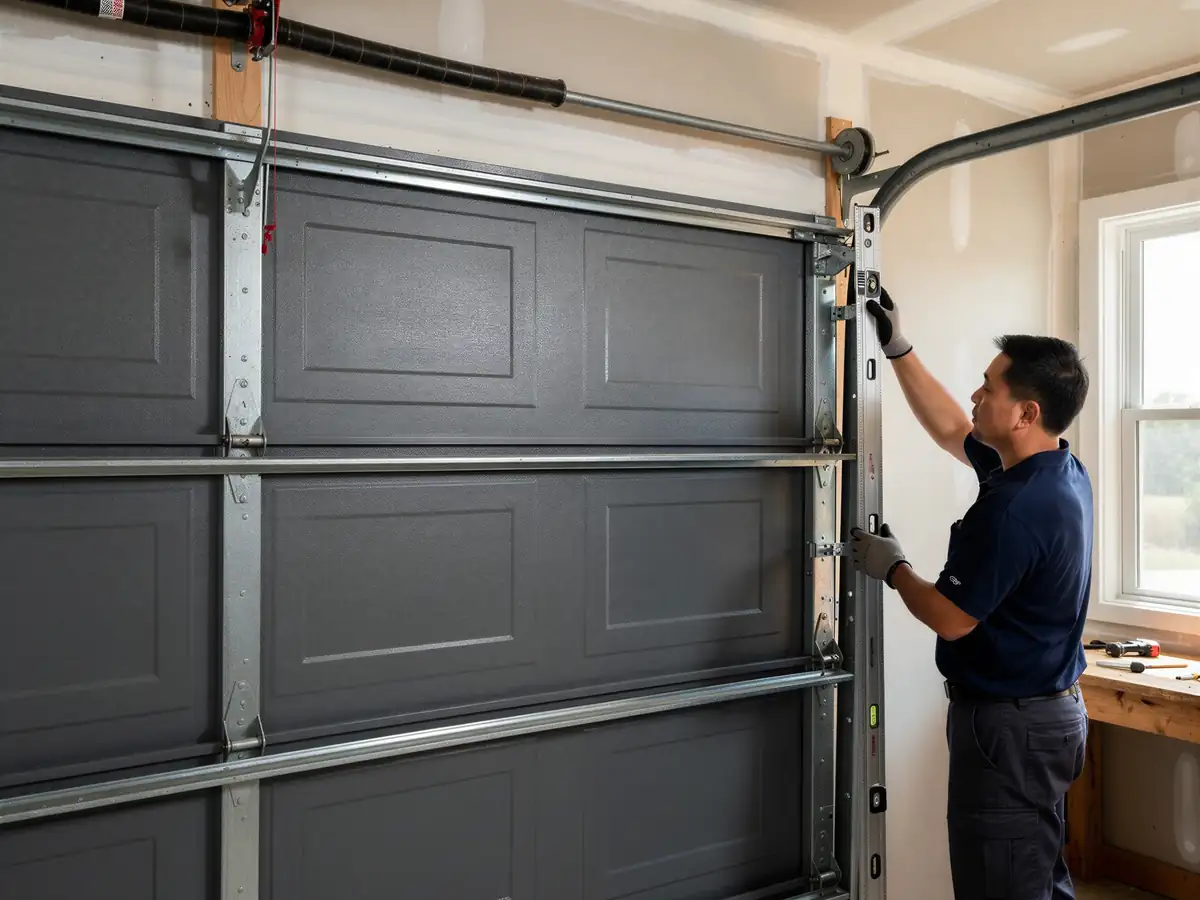
When we install new in Stanley, we're usually sizing a heavier torsion spring to carry an insulated panel the old opening was never built for, and swapping galvanized track for something that won't pit as fast. We stock standard widths for the 16-foot and 9-foot openings that show up most in this housing stock. We don't stock every custom width - if your opening is non-standard, that's a special order, and we'll tell you that up front rather than promise a door we don't have.
The Cost of This Job
We're not going to put a number here that doesn't belong to your door. What drives the bid in Stanley specifically is the age of the opening: a 1977-built garage usually needs new jamb hardware along with the door itself, because the original wood framing has shifted enough over the decades that a direct swap won't seal right. That's an extra line item that a newer-built house in the wider service area, closer to the 1983 median, often skips entirely.
Insulation is the other variable. If you're going from an uninsulated original door to a modern insulated one, you're paying for the upgrade in material, not just labor - and in this climate band, with real winter cold, that upgrade actually does something rather than sitting there as a spec sheet number.
The honest limitation: we can't quote a firm number without seeing the opening. A phone estimate on a door this old is a guess, and we'd rather walk it and tell you straight than lowball you over the phone and argue about it on install day.
Booking a Visit
Stanley sits about nine miles out from our shop in Gastonia
And we build that drive into the schedule rather than treating it as an afterthought. There's no Stanley branch and no truck parked locally - every job here is a dispatch from Gastonia, same as the runs out to Ranlo, Dallas, and Lowell nearby. That's worth knowing because it means we don't promise a same-day slot for every call; we schedule the trip.
For a new install specifically, we'll want to see the opening before we quote, for the reasons above
The age of the framing changes the job. If you're also curious about what we handle across the rest of the area, the general installation page covers the broader service, but this page and the quote you get from it are specific to your opening in Stanley.
What Causes It Around Here
The housing stock in Stanley, with a median year built around 1977, is older on average than much of the rest of the territory, where the typical build year runs closer to 1983 and a good chunk of the stock dates from the 1980s and 90s. That decade or so matters for garage doors because it's roughly when manufacturers shifted from plain steel skins to insulated sandwich panels, and from stamped hardware to rolled.
Add the climate here - a cold, moderate band with real winter swings - and a door built before that shift has spent forty-plus years doing condensation cycles against bare steel. That's what you see: rust starting at the bottom panel seams, rollers that have worn oblong rather than round, and torsion springs that were never rated for the weight anyone would want on a door today. None of that is unique to one house. It's the pattern across a town where most garages are pushing fifty.
The Complications
Older openings don't always take a modern door cleanly. In Stanley's 1977-era garages, we regularly find framing that's narrower or shorter than current standard sizes by an inch or two, which means trim work before the new door goes in, not just a straight swap. Some of these openings were also framed without a header built to carry a heavier insulated door and a stronger spring system, so reinforcement is sometimes part of the job even though nobody asked for it.
Electrical is the other wrinkle - if you're adding an opener where there wasn't one, or upgrading an old chain-drive unit, the outlet in a lot of these garages is original to the house and not on its own circuit. We'll flag it if we see it, but we don't do electrical work ourselves, and that's worth knowing before you assume the quote covers it. It's a smaller town than the rest of the territory - about 1,468 households total - so we're not seeing a high volume of any one problem, but the build-year pattern repeats enough that we know what we're walking into.