The DIY Question
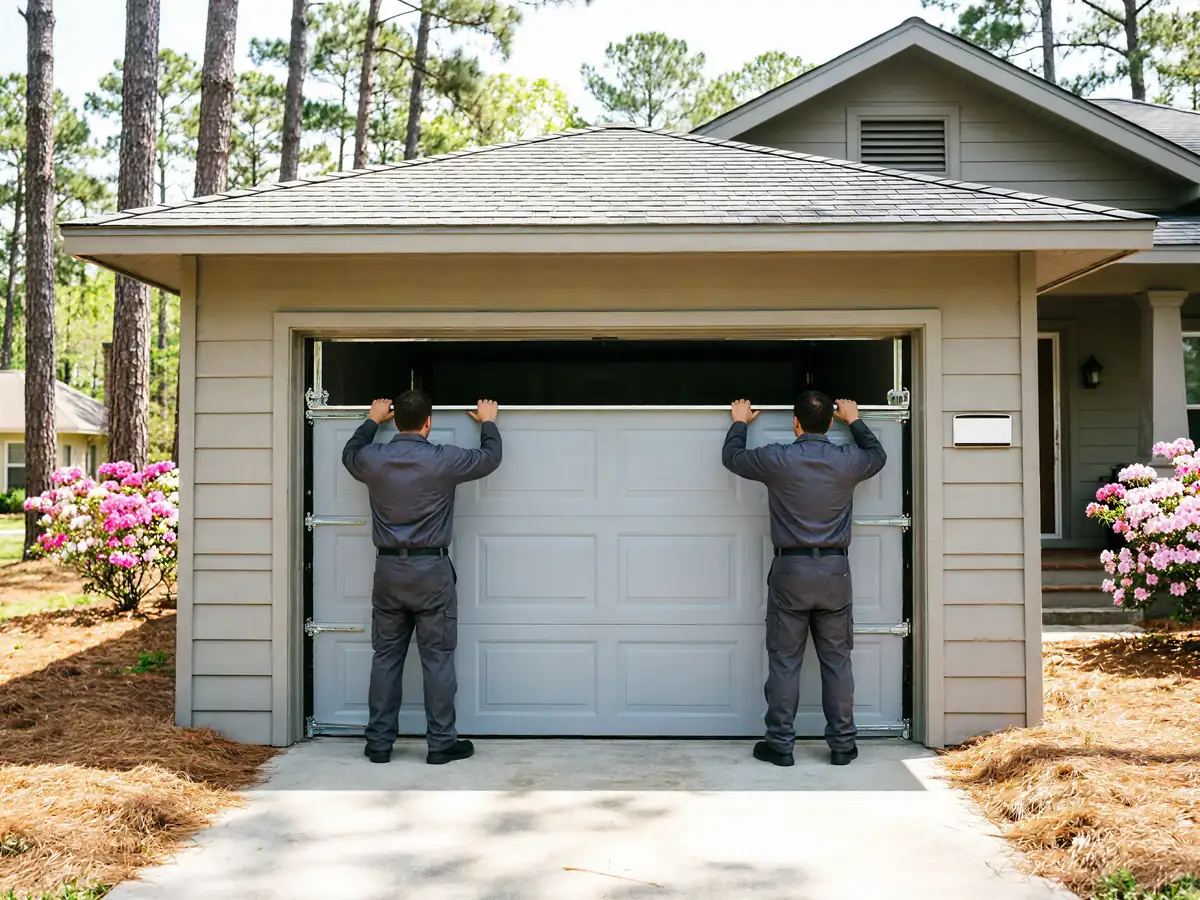
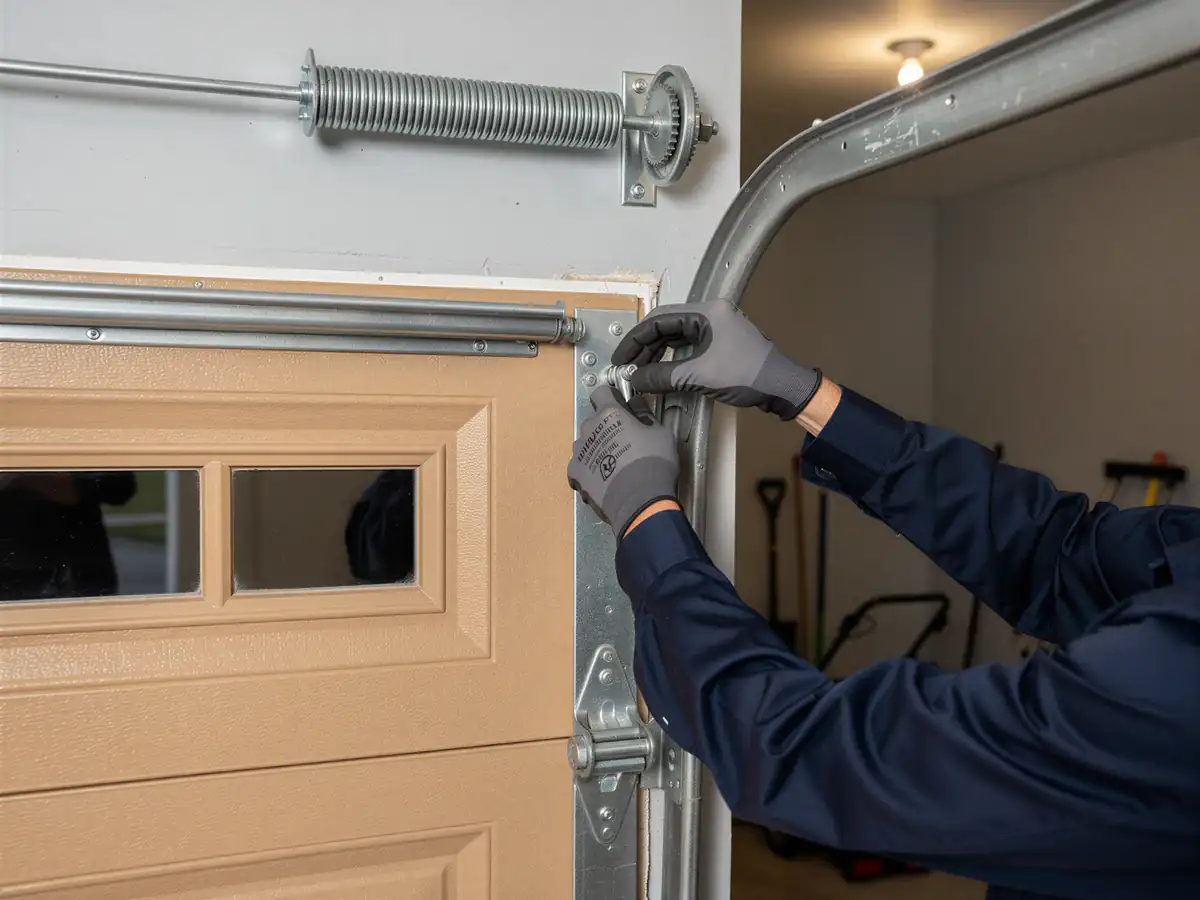
The fault we see most in Belmont isn't a snapped spring or a dead opener. It's a door that's jumped the track on one side, usually because a roller worked its way out of the channel and the door kept trying to travel anyway. Trying to force it back on your own usually just bends the track further or walks the second roller out too.
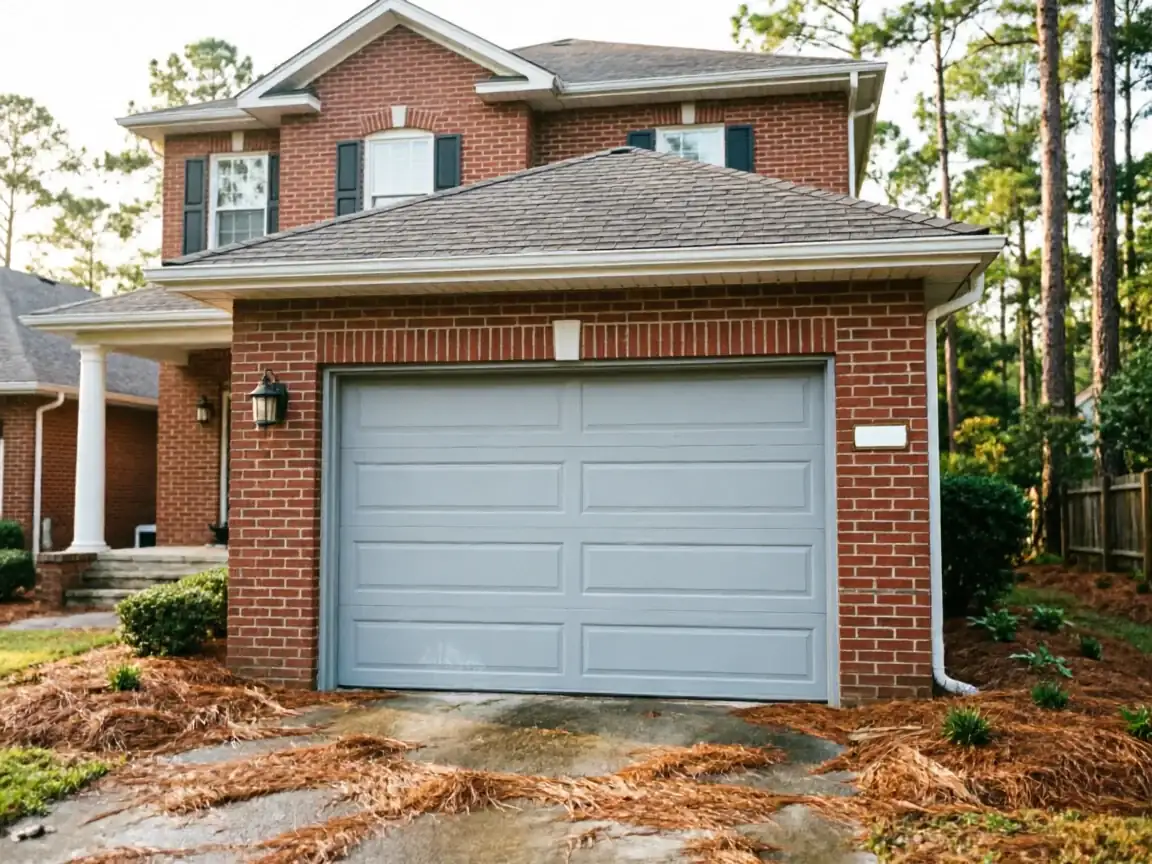
Belmont's housing mostly went up around 1998, which puts it well past the 1967-2011 spread that covers the wider Gastonia service area. That later build date matters here: most of these doors came in on lightweight steel track with plastic idler pulleys, standard for that era, not the heavier gauge track and steel rollers you'll find on older stock elsewhere in the area. Lightweight track holds alignment fine for years, then goes out all at once when a roller finally gives. That's the call we get - not a slow decline, but a door that worked Tuesday and won't move Wednesday.
If the door is still on the track but dragging or binding, that's worth a look too, but it's a different job than a fully derailed panel.
What You Are Seeing
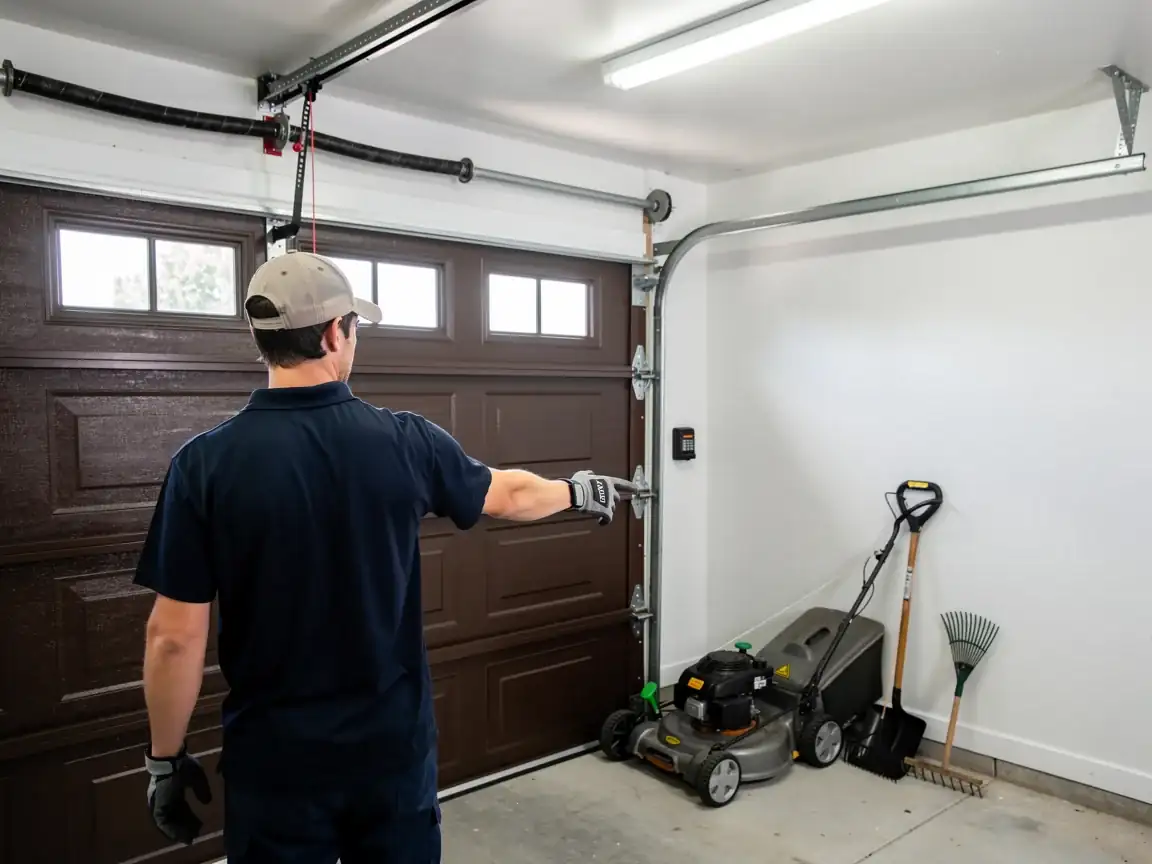
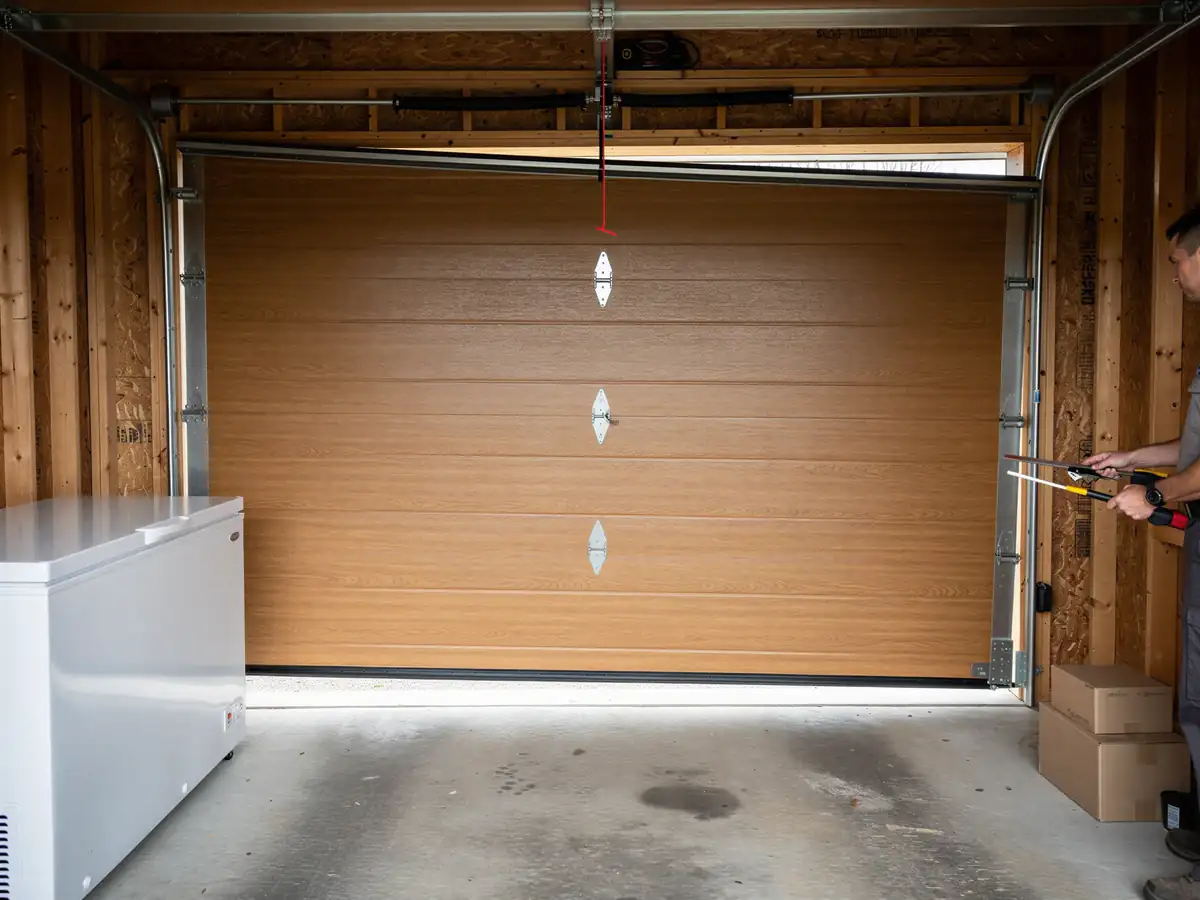
A door off track shows itself a few ways. The most obvious is a visible gap between the bottom panel and the floor on one side while the other side sits flush - that's one roller still seated and one that's popped free. You might also hear a grinding or clicking as the door tries to travel, coming from wherever the loose roller is dragging against the track rail instead of rolling in it.
Sometimes the door looks fine sitting shut but won't open at all, or opens a few inches and stalls. That's usually the opener sensing resistance from a track that's splayed slightly out of parallel, which happens gradually in homes with the late-90s steel track common here as the lag bolts holding the track brackets work loose over time.
Don't keep hitting the opener button once you see the gap or hear the grind. Running the opener against a door that's bound up strains the drive gear and the cable on the working side, turning a track and roller job into an opener job too. Pull the release cord, leave the door where it sits, and call.
Booking a Visit
We run out of Gastonia, about 8 miles from Belmont
And that's the trip we make for every call here - there's no branch or shop in town, just a truck that comes out when you call. Worth knowing going in, since it affects timing more than it would if we were already parked down the street.
- 8 miles
When you call, tell us what side the gap is on and whether the door moves at all with the opener disconnected
That tells us whether we're bringing a spare roller set and a pry bar or a full track section, which saves a second trip if the first one turns up something worse than expected.
See our Belmont coverage page for what else we handle out this way
And the Gastonia off-track page if you want the broader rundown on this repair across the rest of the service area.
Parts We Carry
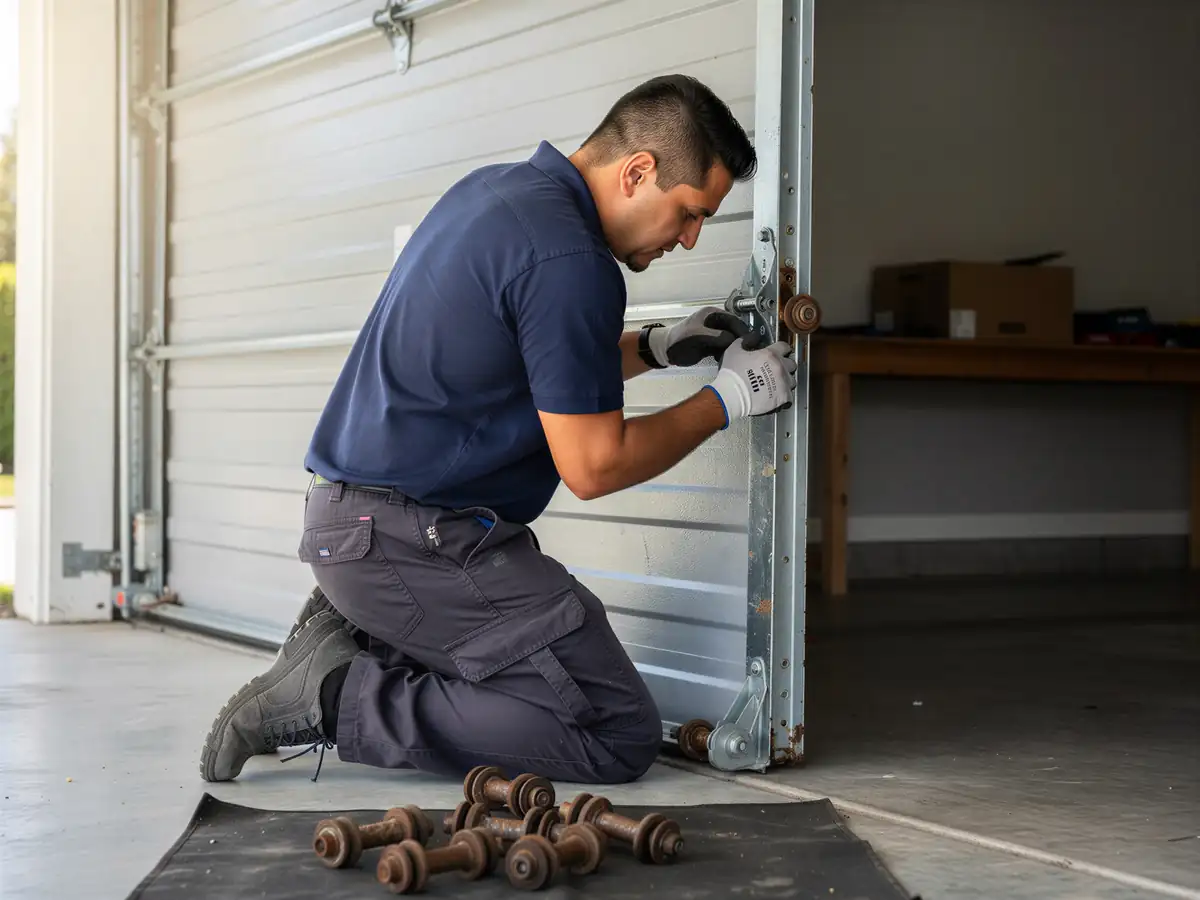
For a standard off-track call we carry replacement nylon rollers, the stems and bearings that go with them, track sections in the common widths, and the brackets and lag hardware that anchor track to the jamb. That covers the vast majority of what fails on Belmont's late-1990s stock, since the track and roller hardware from that build era is still widely made and easy to match.
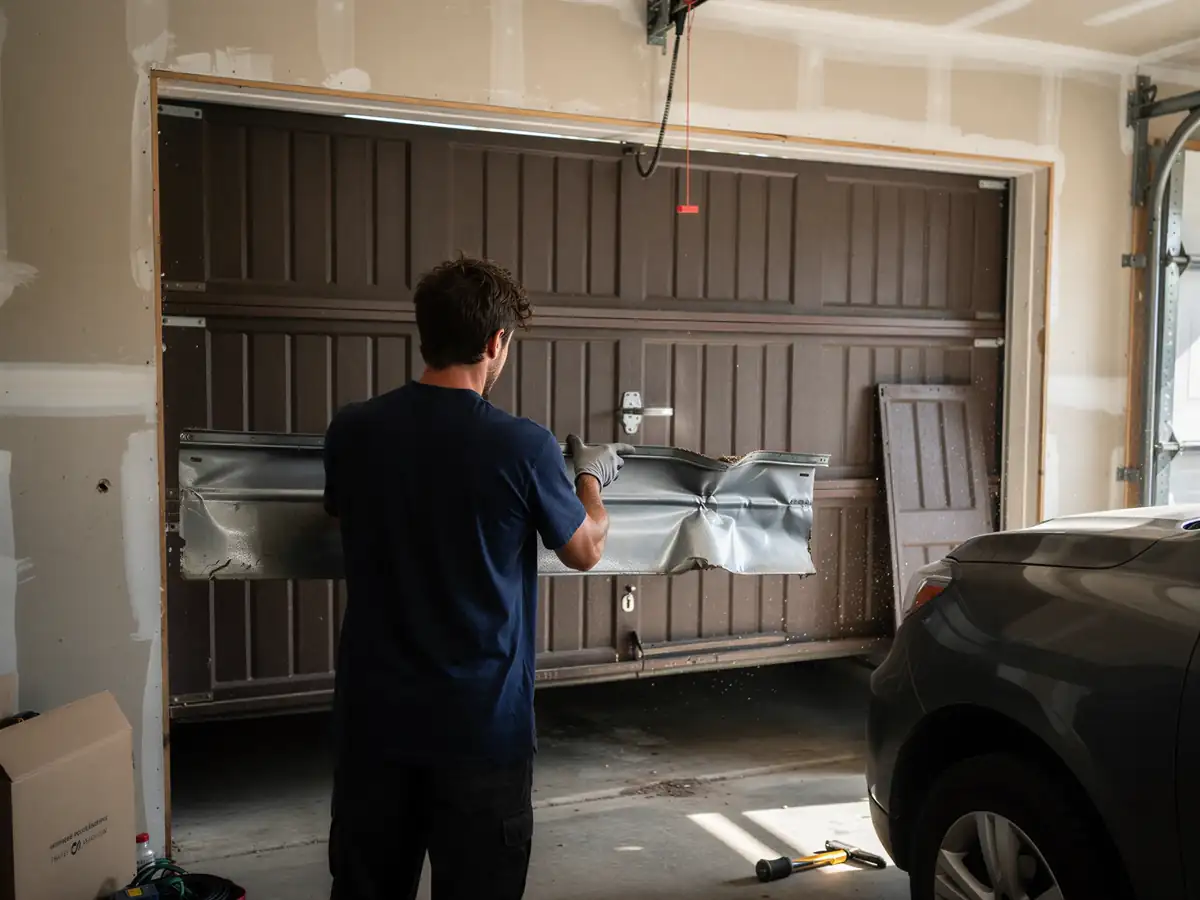
What we don't carry on the truck is anything custom - a non-standard track radius, a panel that's been dented in the same fall that knocked it off track, or hardware for a door old enough to use parts nobody's made in twenty years. None of that is common in Belmont given how recent most of the housing is, but it does turn up occasionally on a renovated or relocated structure, and if it does, that's a second-trip part we order rather than something we're carrying for a guess.
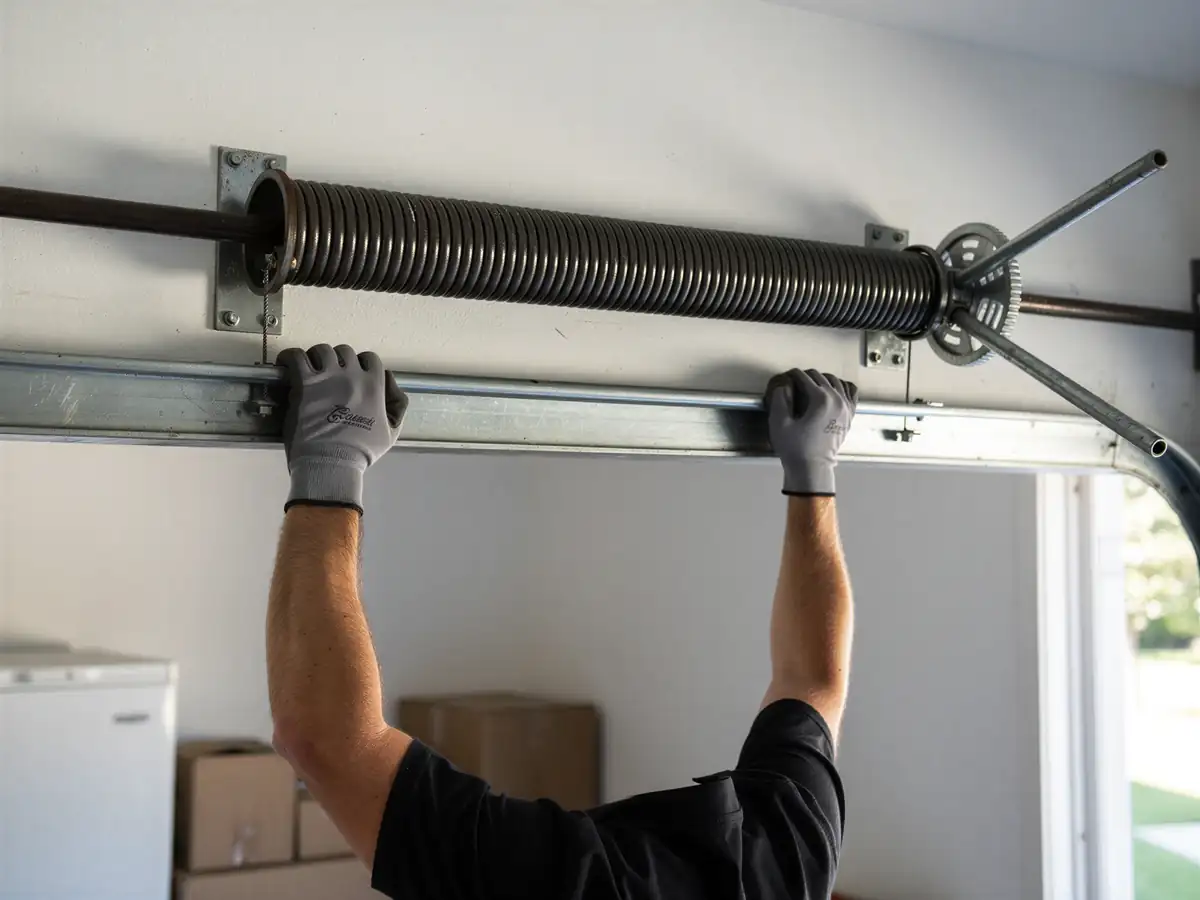
We don't stock springs sized for anything above a standard double door's weight rating on every visit either - those get confirmed and brought on the next trip if the job calls for it.
What the Repair Takes
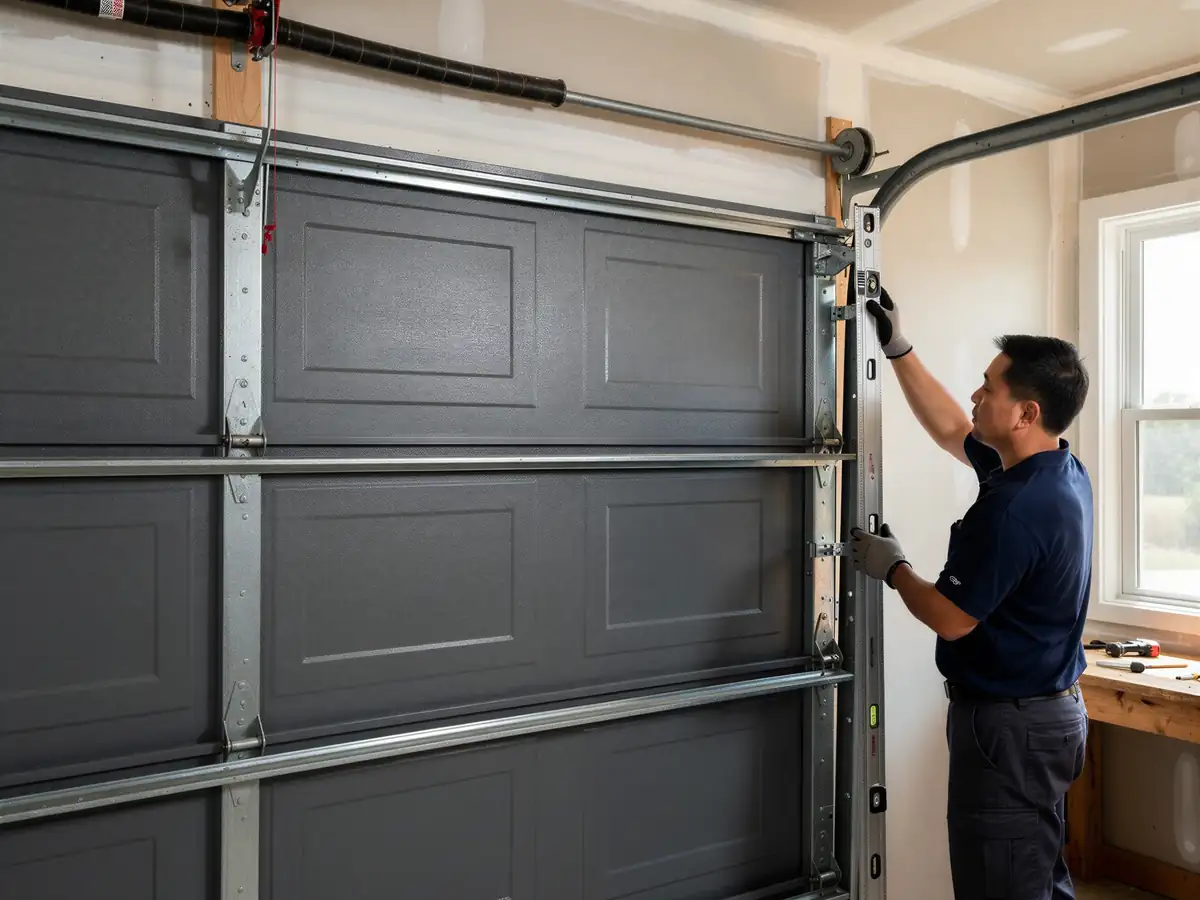
Most off-track jobs start the same way: release the opener, check both tracks for square against the jamb, and figure out whether the roller just popped free or the track itself bent on impact. If it's just the roller, we reseat the door, swap the roller, and check the rest of the set while we're in there since one failed roller on a 1998-era door usually means its neighbors aren't far behind.
If the track bent - which happens when the door's been run on the bad roller for a while before anyone calls - that section gets replaced rather than hammered straight. A hammered-straight track looks fine and fails again in six months, and we'd rather tell you that up front than sell you a patch.
Once the hardware's square, we run the door through several open-close cycles by hand before touching the opener again, checking that it rolls without drag on either side. That full cycle check is what keeps you from calling us back next week for the same gap on the other panel.
Time on the Job
A straight roller swap and realignment
Where the track itself is sound, is a short visit - most of the time is spent cycling the door by hand to confirm it tracks clean, not swinging a wrench. A bent track section adds time, since that section has to come off and the new one has to be set plumb before anything gets tightened down.
We don't give a window for how fast we can get out there
Since we're coming from Gastonia for every Belmont call and that part depends on where the truck already is that day. What we can tell you is that once we're on site, an off-track repair on Belmont's typical late-90s hardware doesn't run long - it's one of the more contained jobs we do, next to a full spring replacement or an opener swap.