The DIY Question
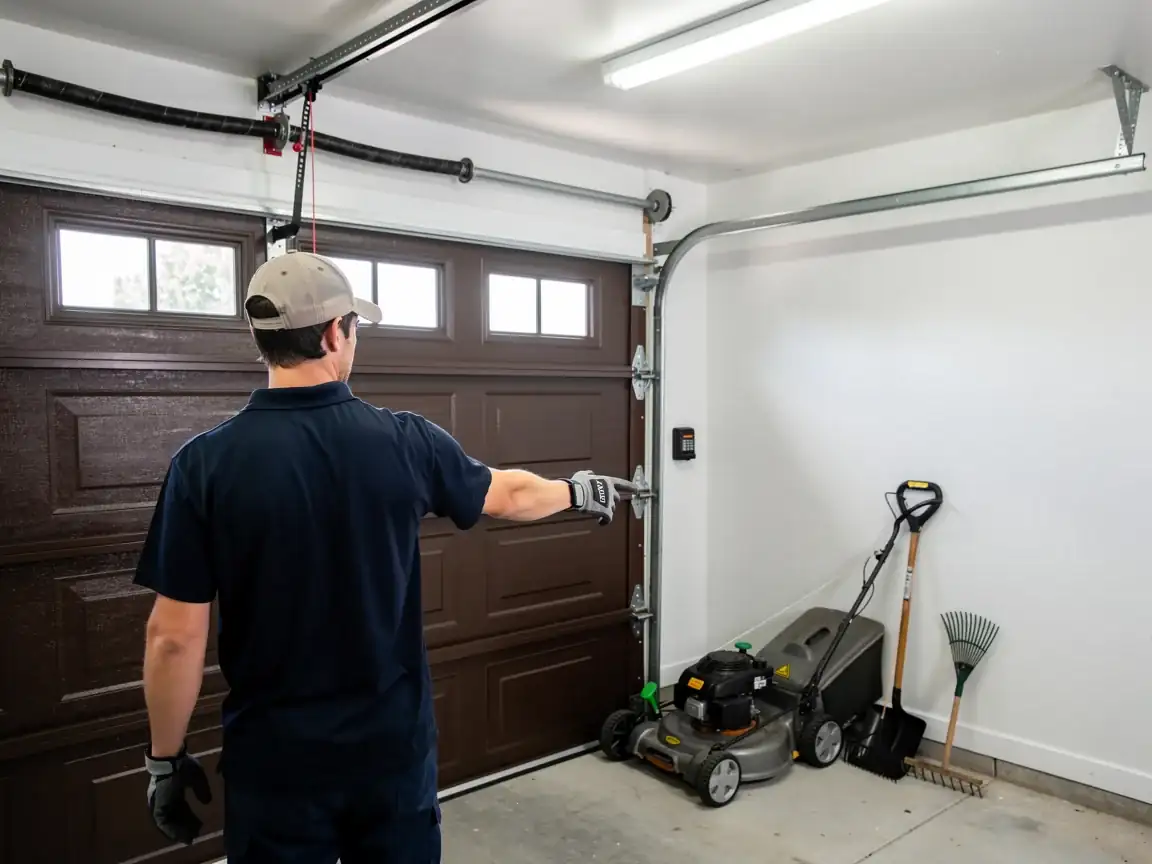
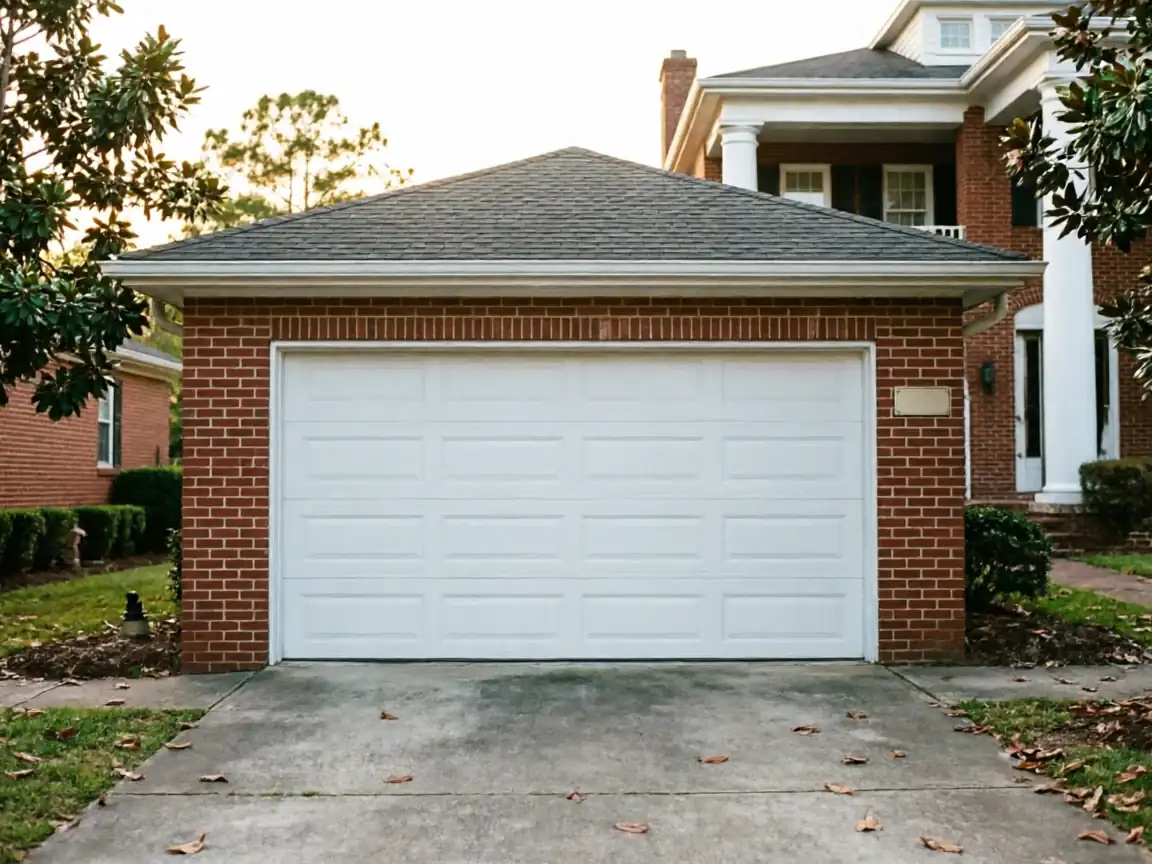
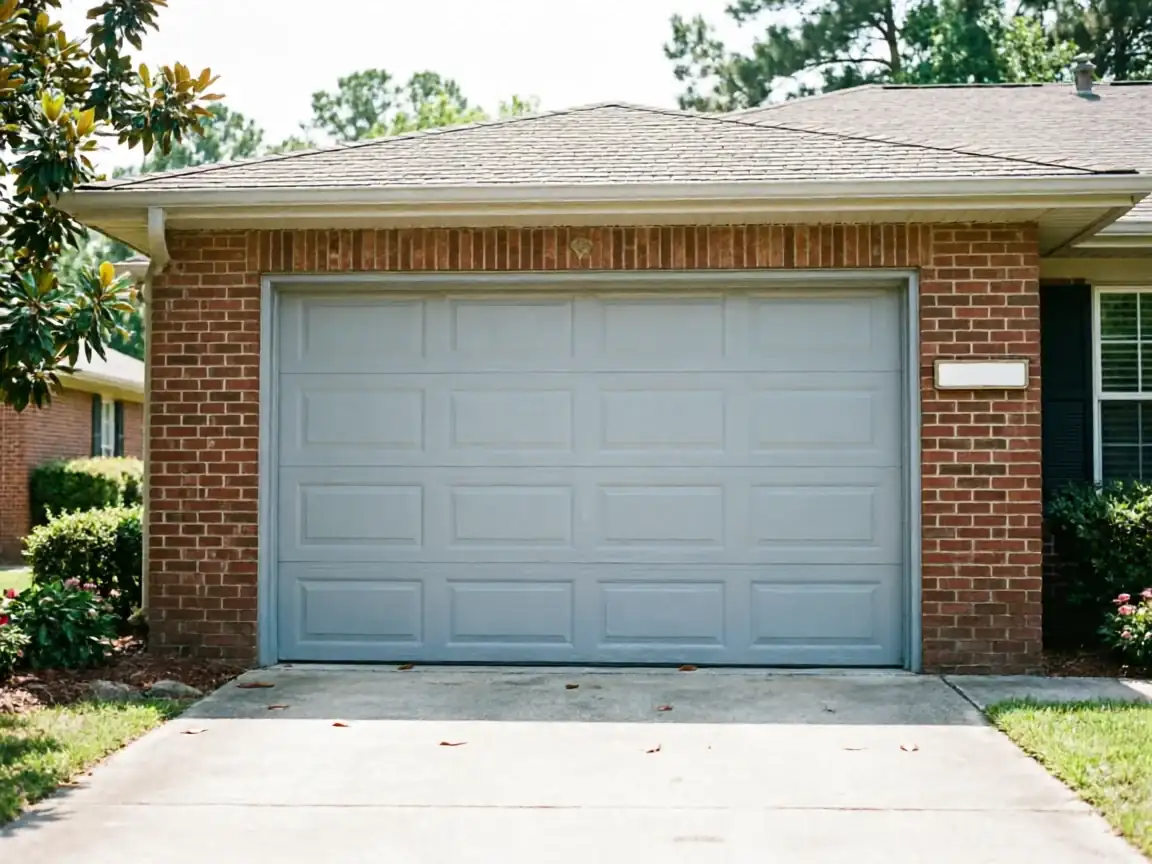
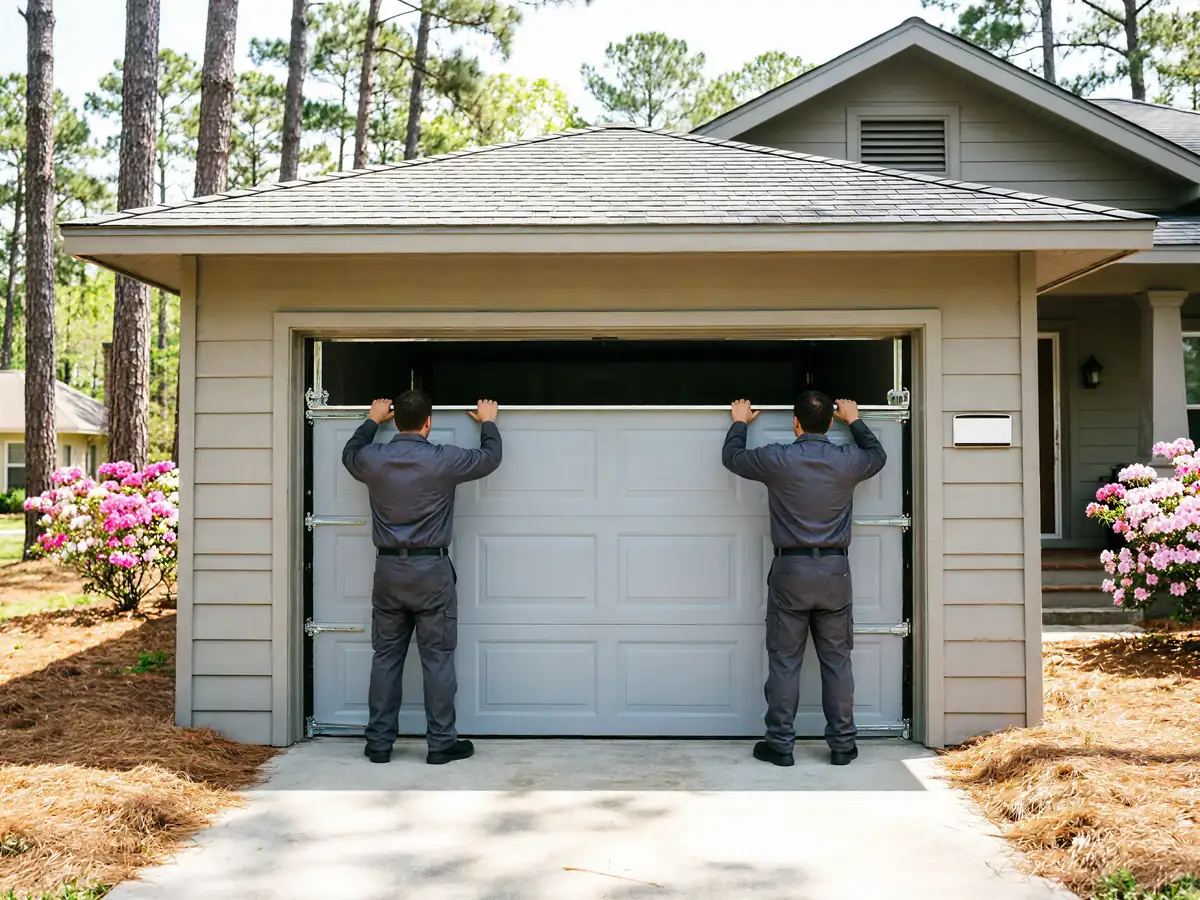
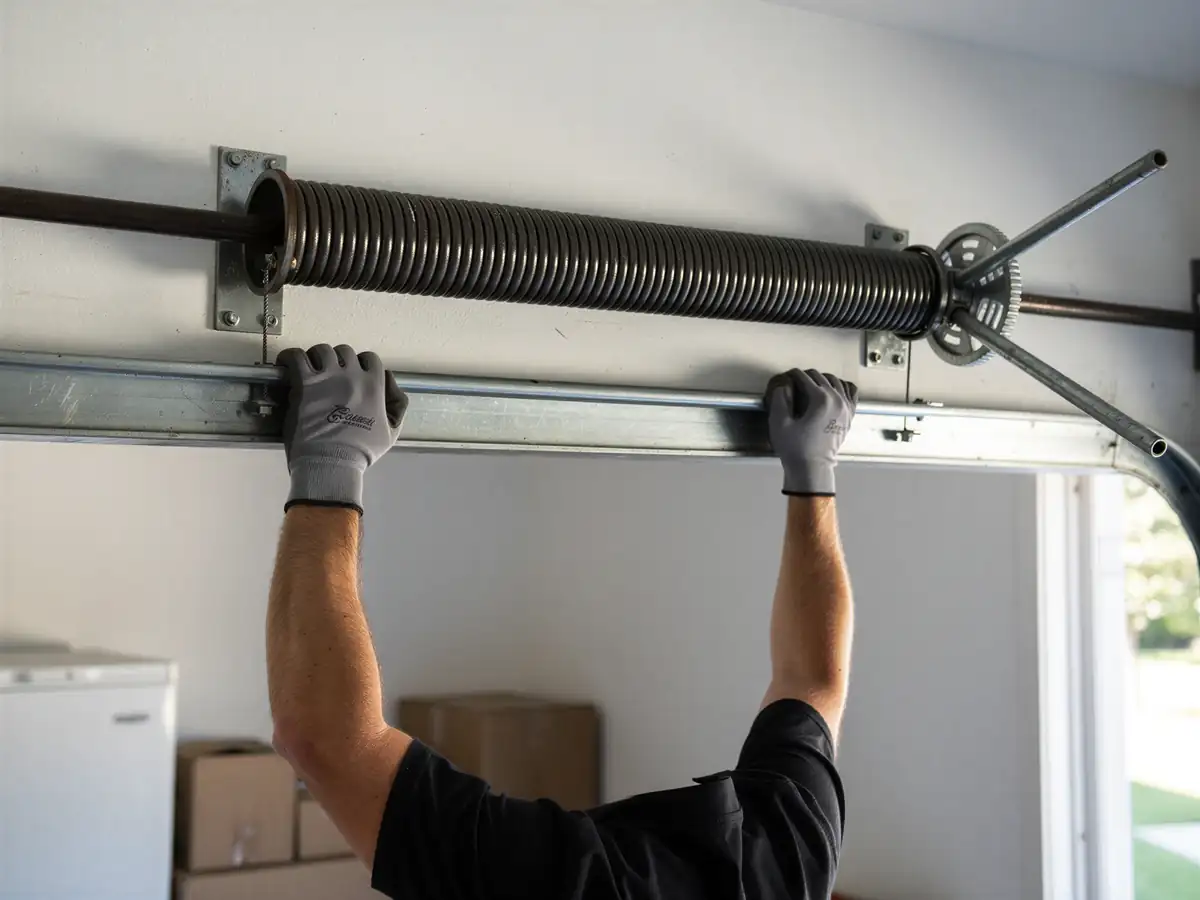
A lot of the doors we see in Belmont are steel sectional units hung on tracks that went in during the building boom of the late 1990s and 2000s, since the area's housing stock centers on 1998 rather than the older mix you'll find closer to Gastonia proper. That means the rollers on a typical Belmont door are more likely to be the stock plastic-and-steel-stem kind than the older all-steel rollers found on houses built decades earlier. Swapping a roller sounds simple: pull the hinge pin, slide the old roller out, slide the new one in. On paper it is. In practice, the spring is under load, the track can be bent just enough to bind, and pulling the wrong roller on a double door can drop a panel on your hand. If you've got one roller making noise and the door still opens smooth, you can sometimes manage a bottom roller with the door down and the opener disconnected. Anything above the second panel, or any roller on a door with a broken or worn spring, is not a safe solo job. We'd rather tell you that up front than sell you a service call for a five-minute fix.
What You Are Seeing
On a door from the late 1990s or 2000s, worn rollers usually show up as a grinding or popping sound as each roller hits the bend between the vertical and horizontal track, or as the door shuddering partway through its travel. Plastic rollers with nylon wheels wear at the bushing first, so the wheel starts to wobble on the stem before it ever cracks. Steel rollers from the same era, often with no sealed bearing, dry out and squeal instead. Either way, the fix is roller replacement, not a new opener or a new spring, unless the wear has gone on long enough to chew up the track itself. Belmont's winters sit in the same cold-moderate band as the rest of the service area, so the freeze-thaw cycle on an unheated garage plays a part too, drying out lubricant faster than people expect.
Parts We Carry
For doors in the Belmont age range, we stock sealed-bearing nylon rollers in the stem lengths that fit most late-1990s and 2000s steel sectional doors, plus the longer stems some double-door setups use on the end rollers. We carry both 7-ball and 10-ball bearing rollers, since the quieter 10-ball version is worth the upgrade on a door near a bedroom wall, which is common in the newer subdivisions in this part of the service area. We do not stock every roller stem length on the truck, especially the oddball sizes that show up on custom or imported doors, so on a less common door we may need a day to get the right part rather than force-fit something close.
What the Repair Takes
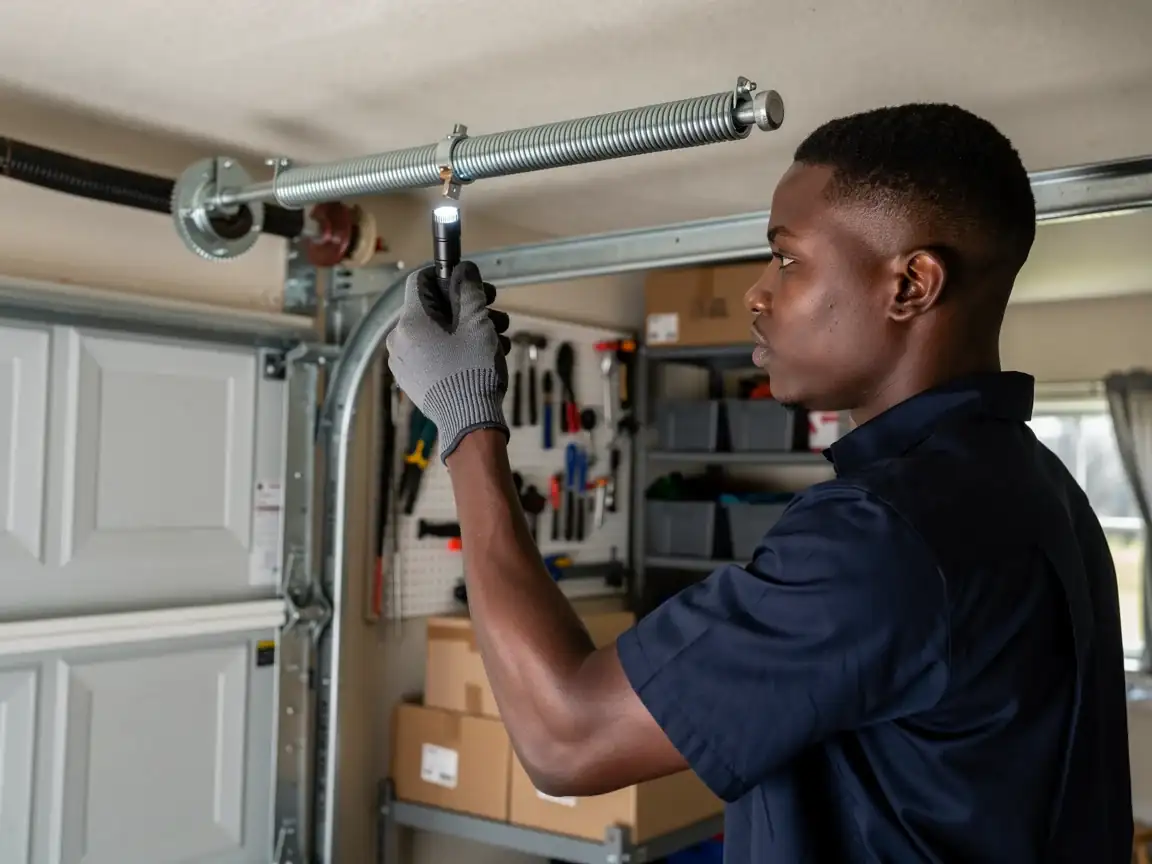
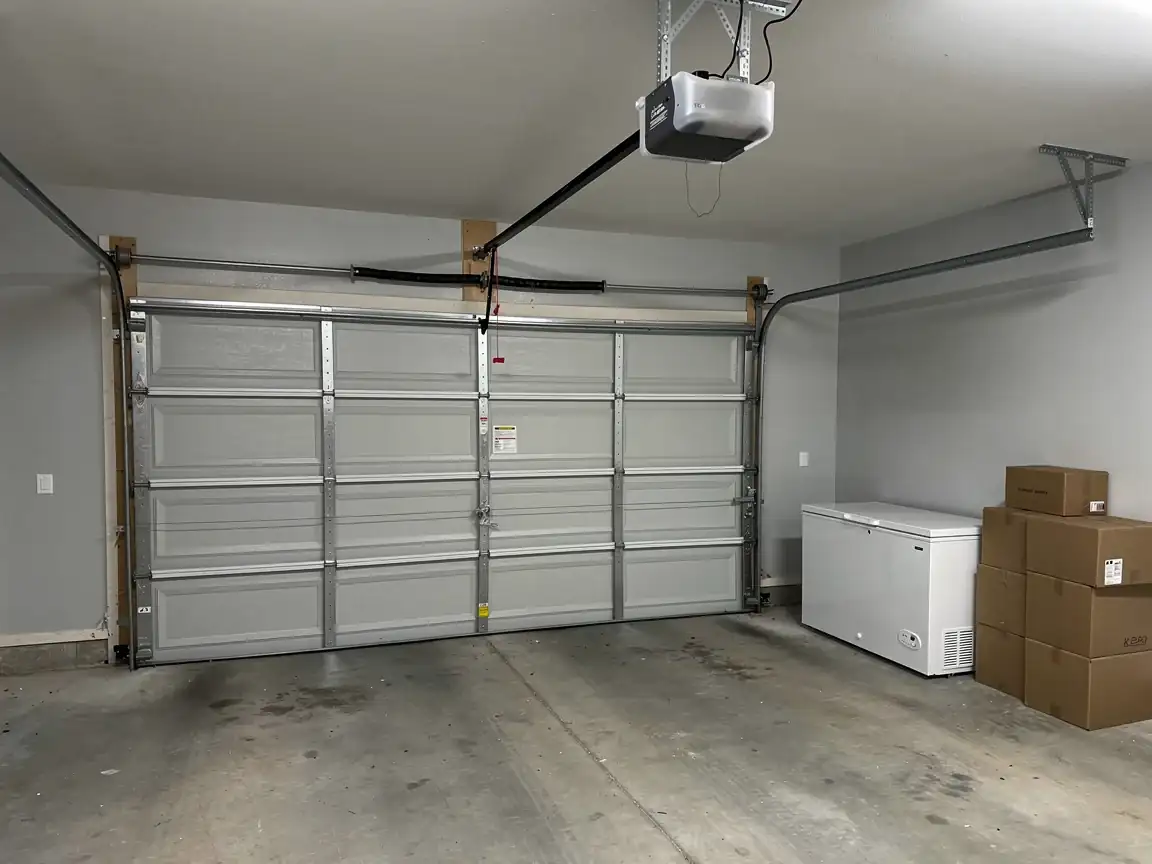
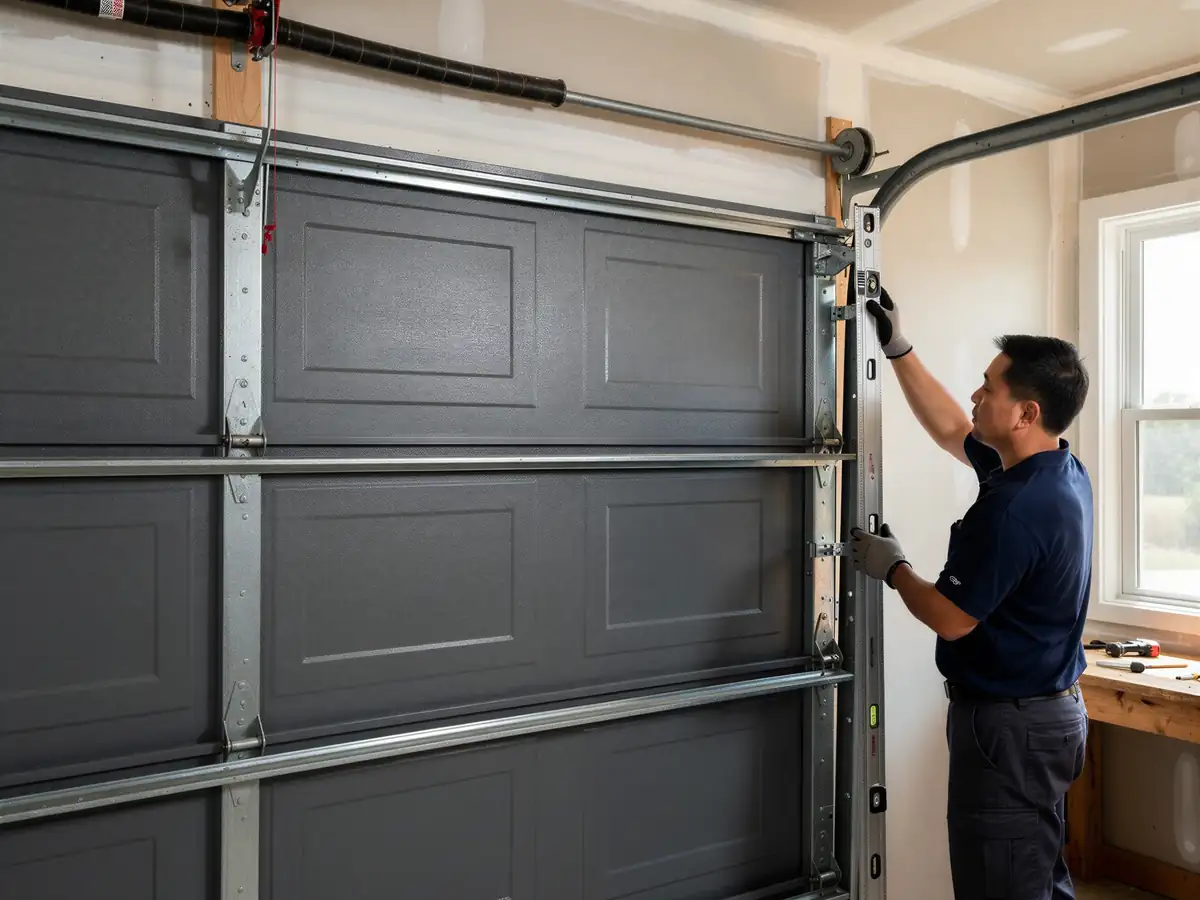
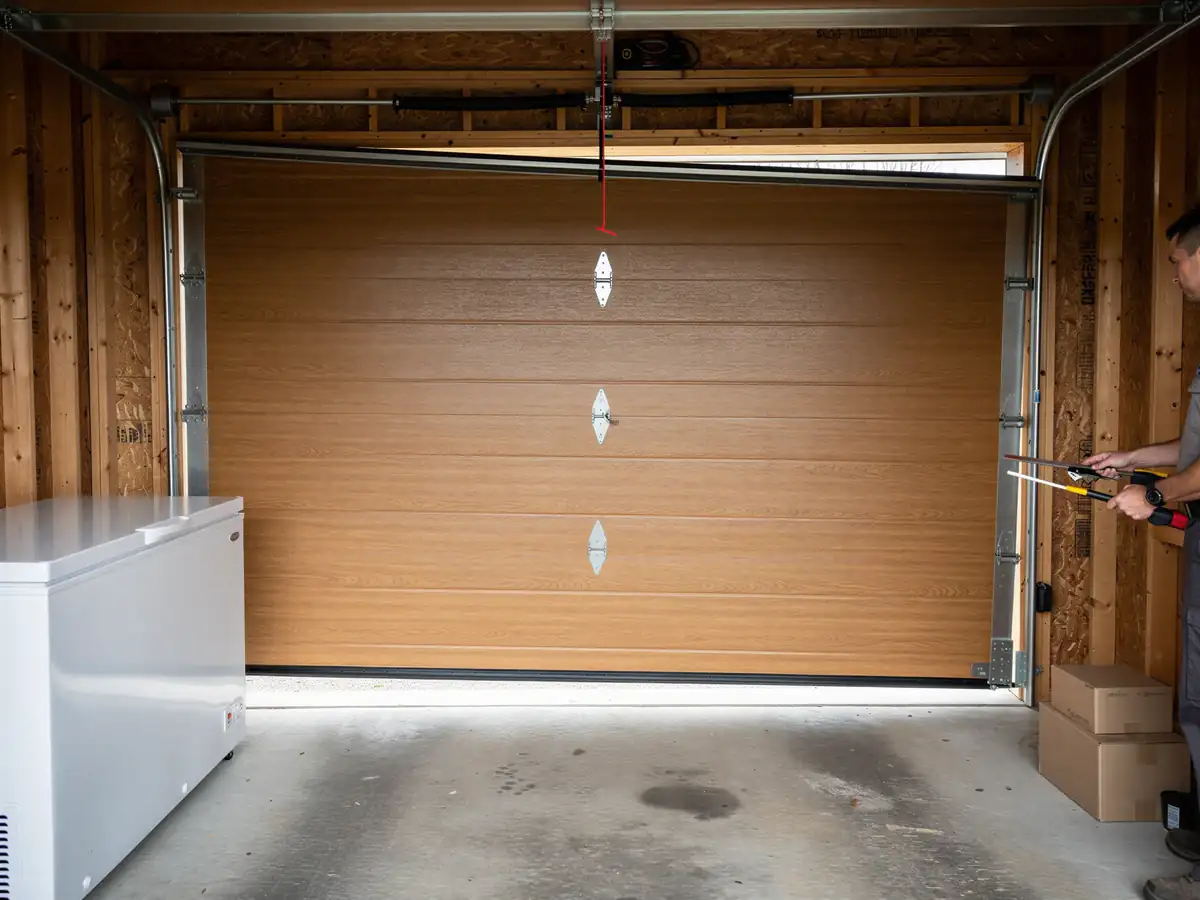
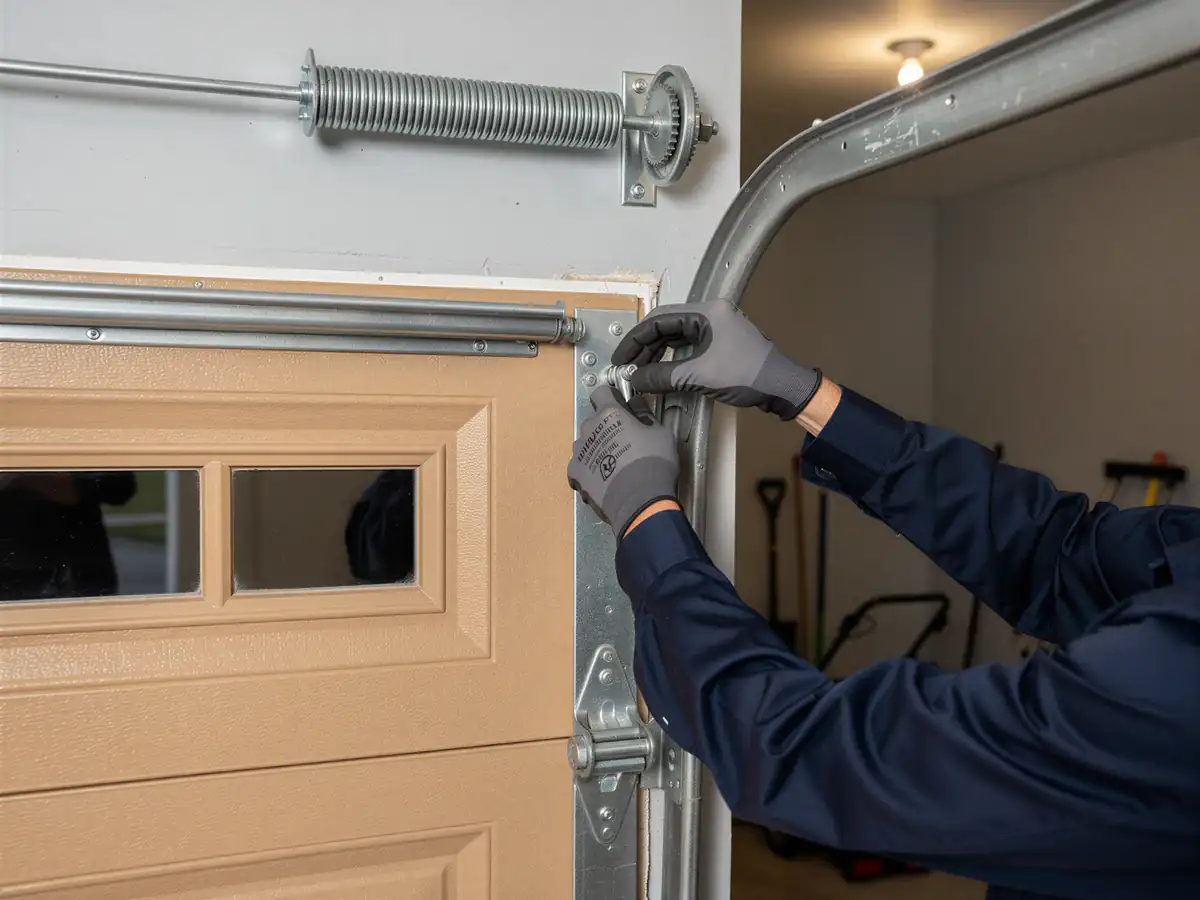
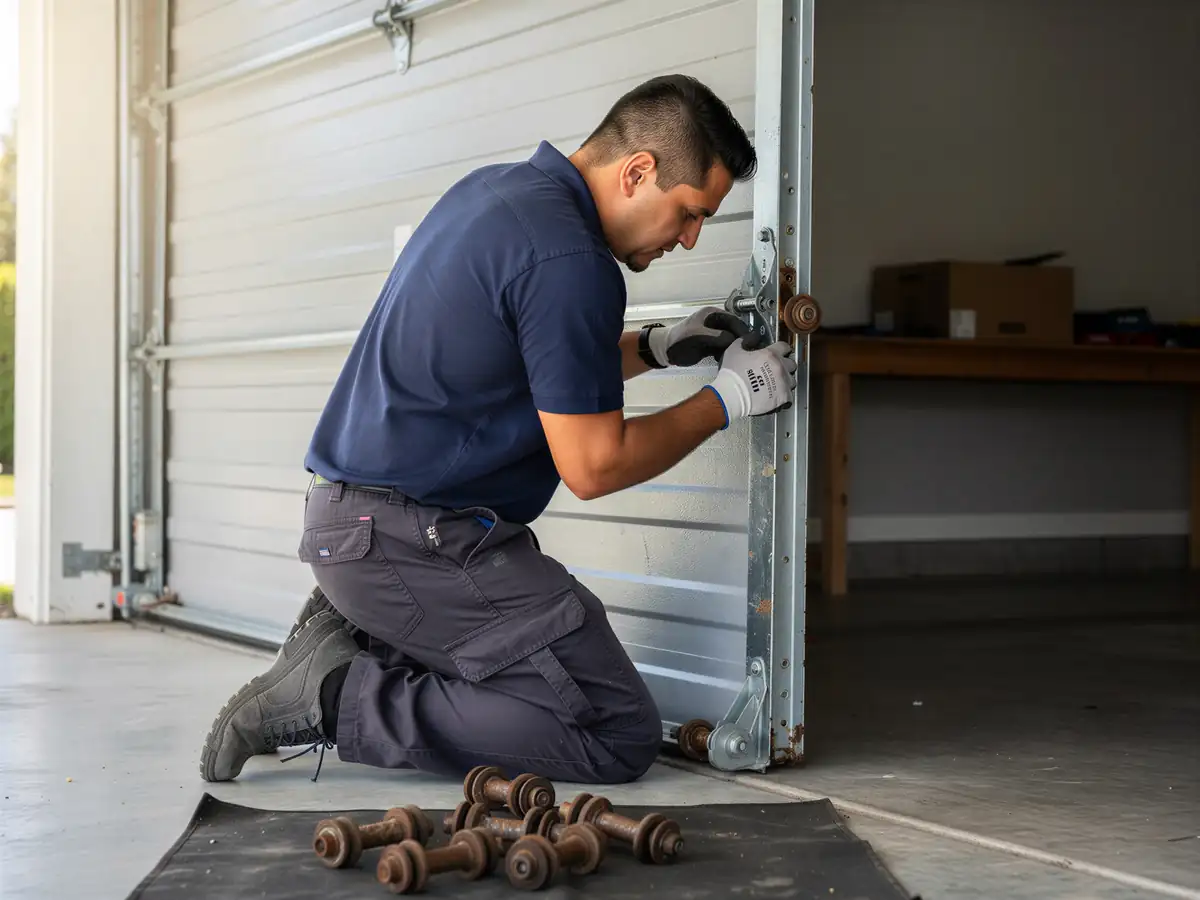
A full roller replacement means pulling each hinge, releasing the roller under light tension, swapping it, and reseating the hinge, repeated for every roller on every panel, top to bottom. On a double door that is usually 10 to 14 rollers depending on panel count. We also check the track alignment while we're in there, since a bent track will chew through a brand-new roller just as fast as it did the old one. If the track is bent badly enough, that's a separate repair, and we'll tell you before we start rather than bury it in the bill. A straightforward roller swap on a door that's otherwise in good shape is a single-visit job; a door with track damage or a seized spring on top of worn rollers takes longer and may need a second trip if we don't have the spring size on the truck.