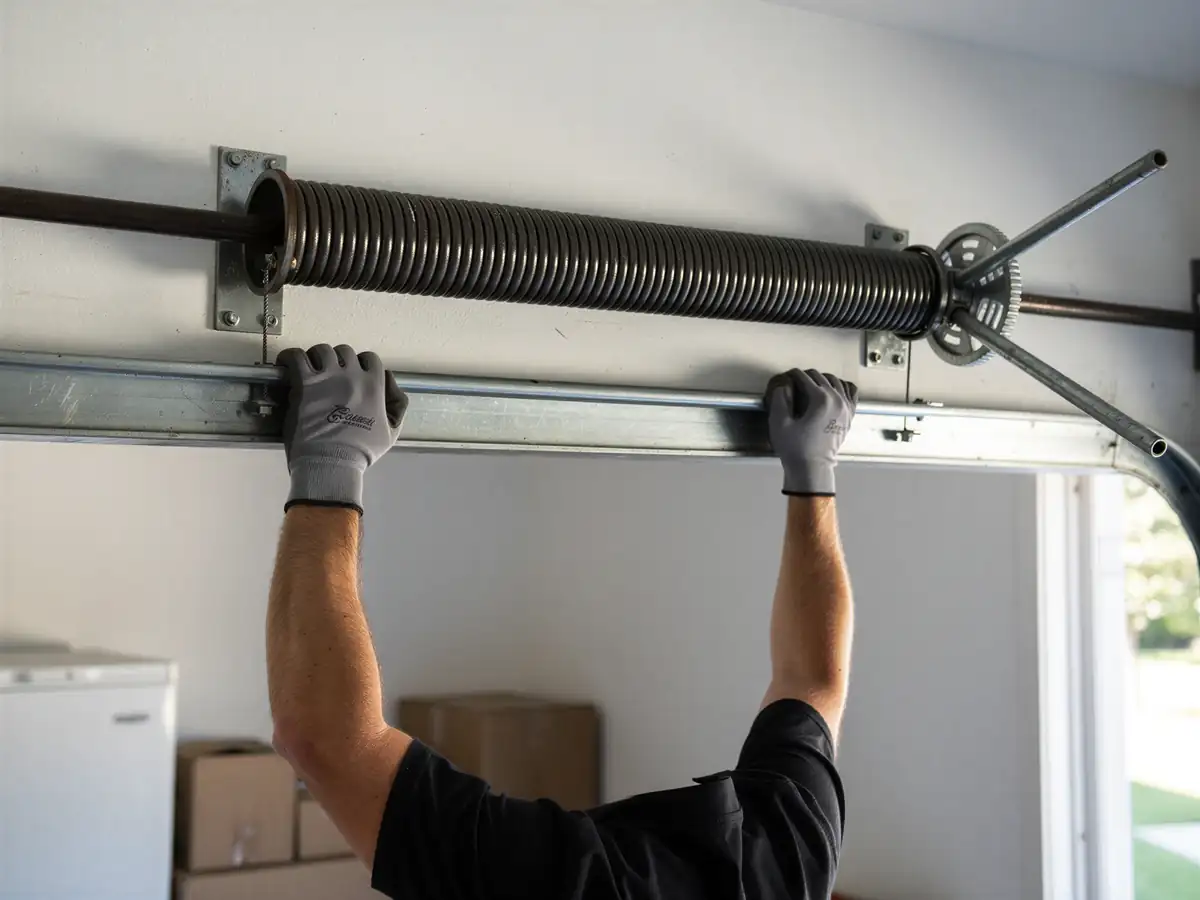
The DIY Question
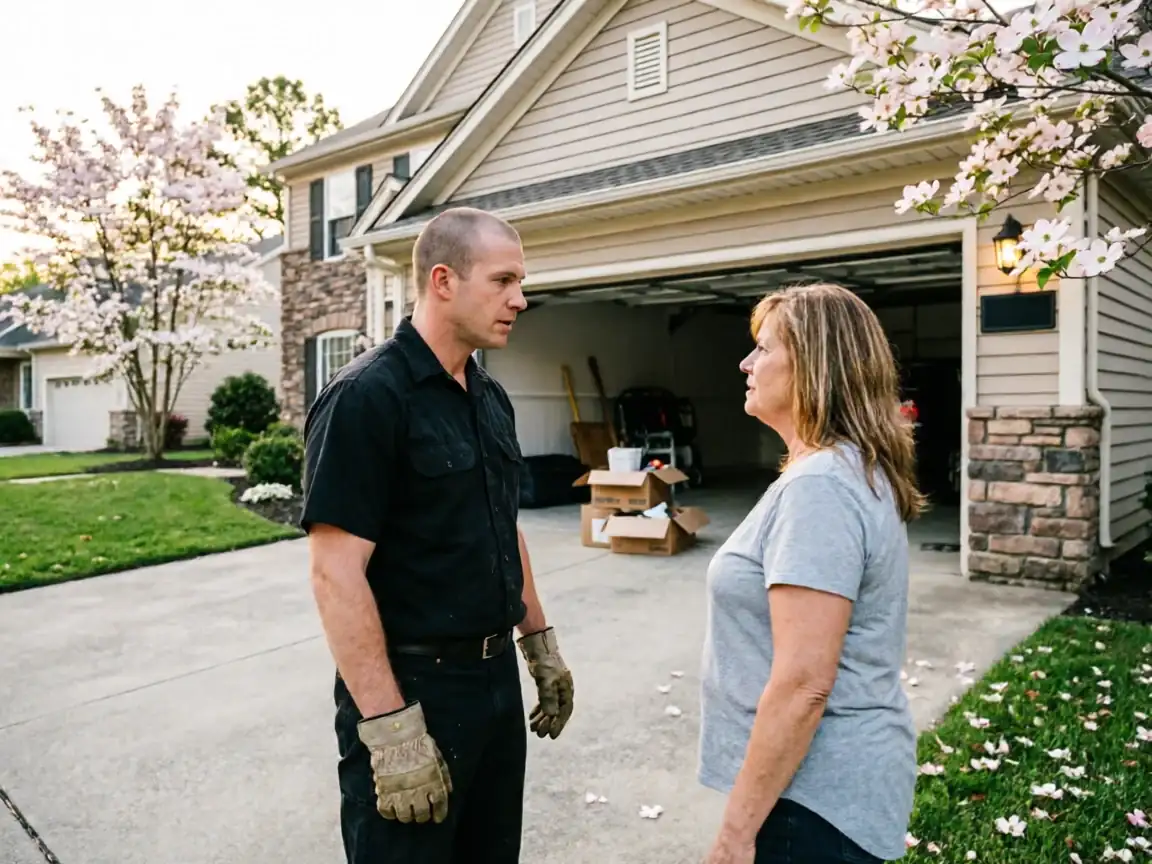
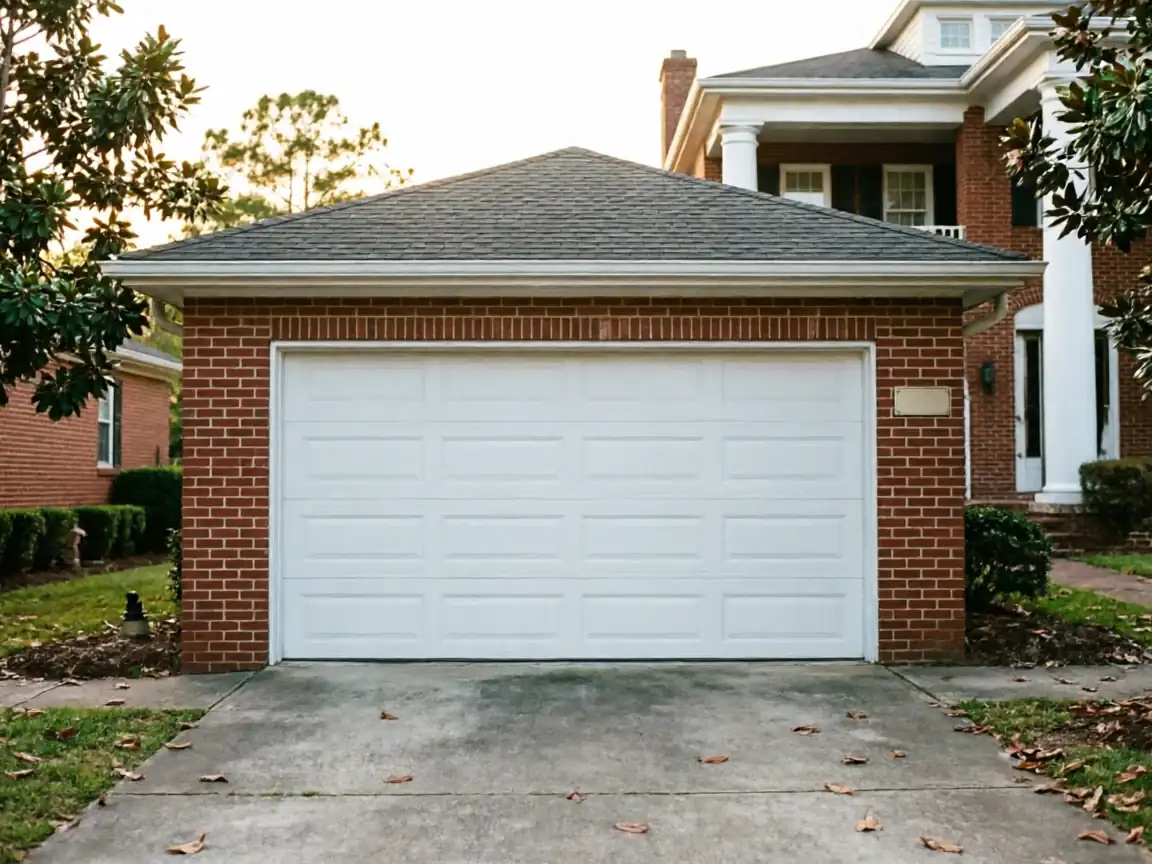
Most houses in Belmont went up around 1998, which puts a lot of doors here on standard 7-foot torsion setups built to the code and hardware specs of that era - often a single torsion spring sized for the door weight at the time, not the dual-spring setups that became more common later. A single spring under tension holds a lot of stored energy, and winding or unwinding one without the right bar and a clamp on the track is how people lose fingers or catch a door across the knuckles. We're not going to pretend this is a weekend job with a wrench from the garage. If the spring is broken and the door won't open, that's a call, not a project. Where DIY is reasonable: replacing a snapped extension spring pulley, lubricating hinges and rollers, or tightening loose hardware on the tracks. Where it isn't: touching the torsion spring itself, the winding cone, or the cable drums. We'll tell you straight if a job is small enough to skip the truck for - sometimes it is - but spring tension isn't one of those cases.
What You Are Seeing
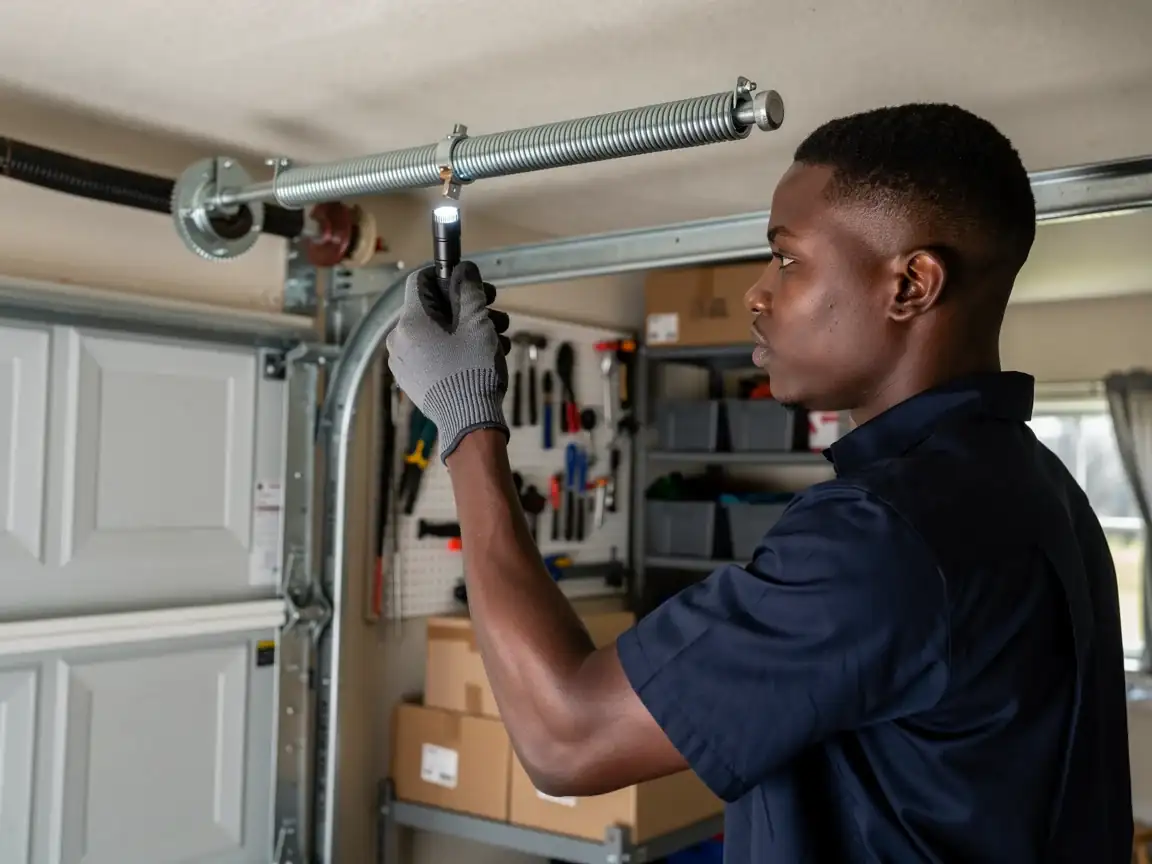
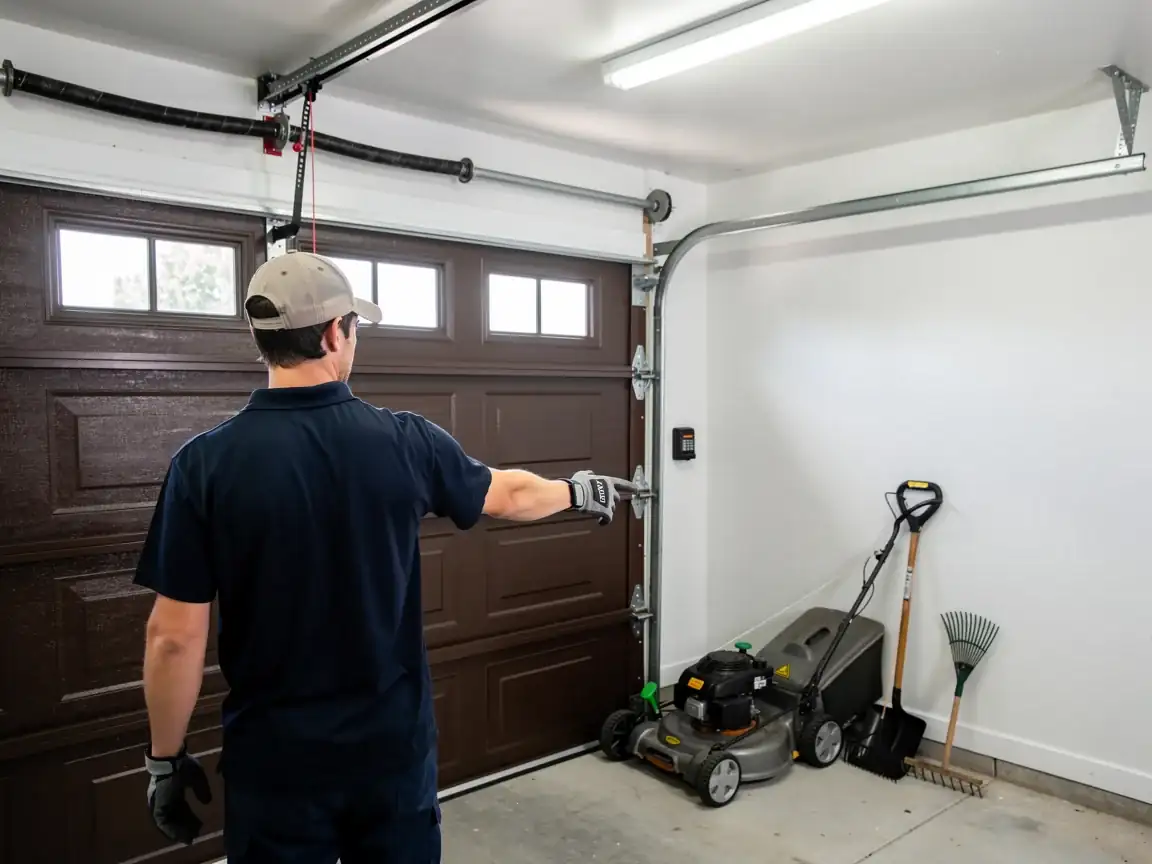
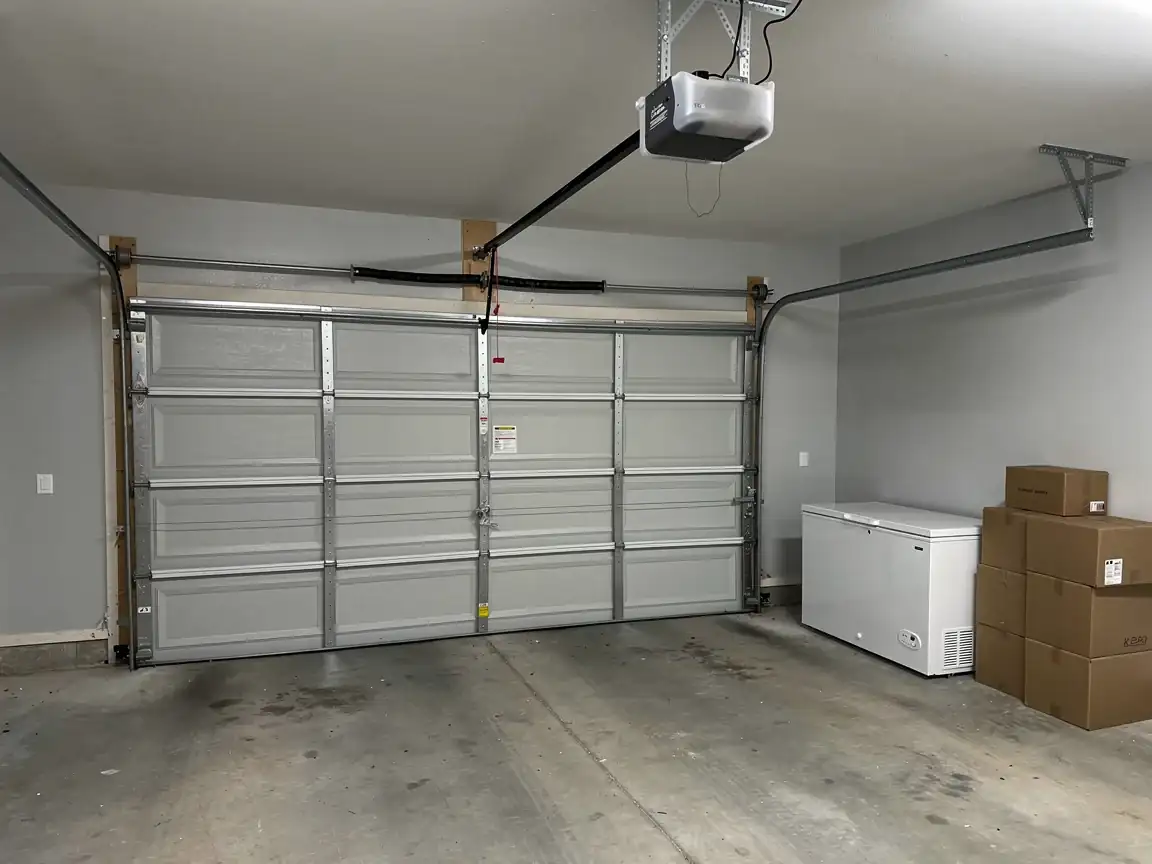
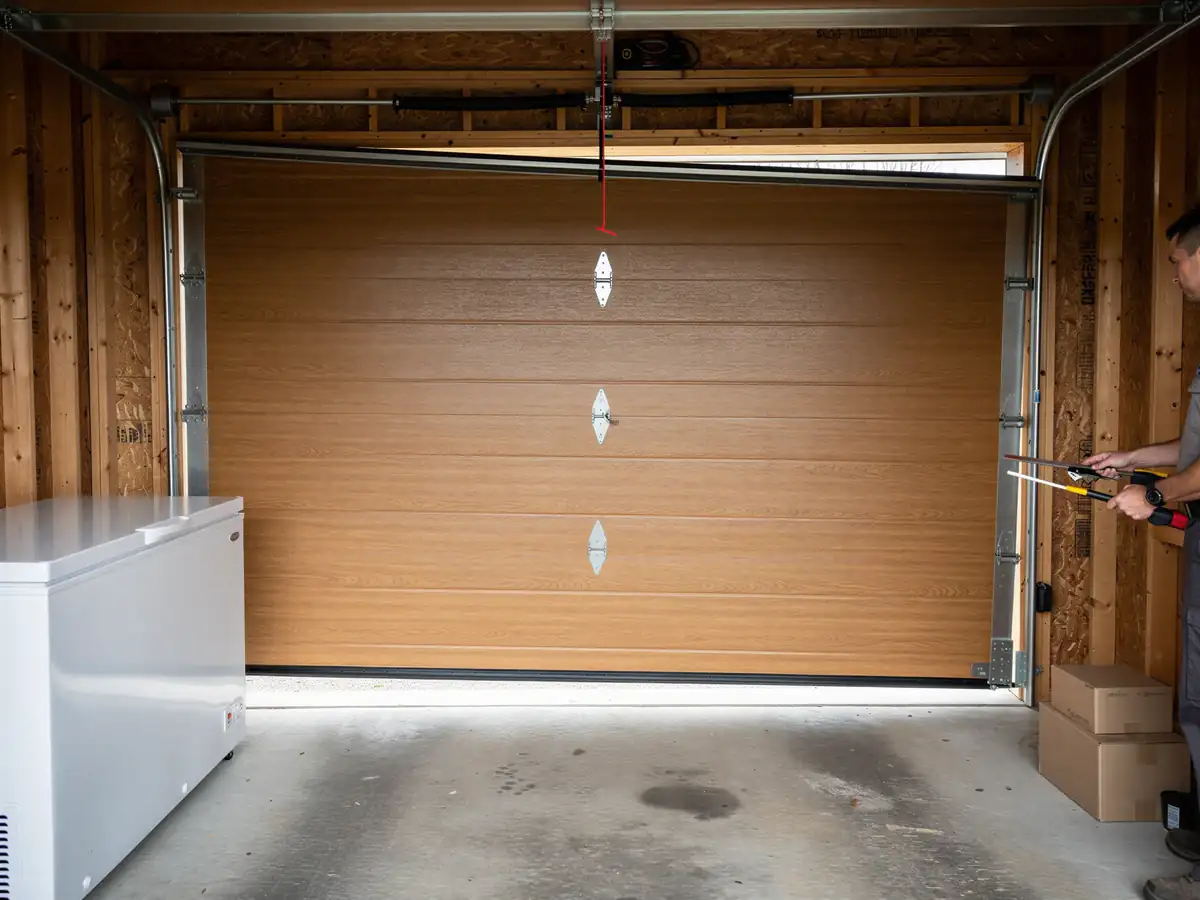
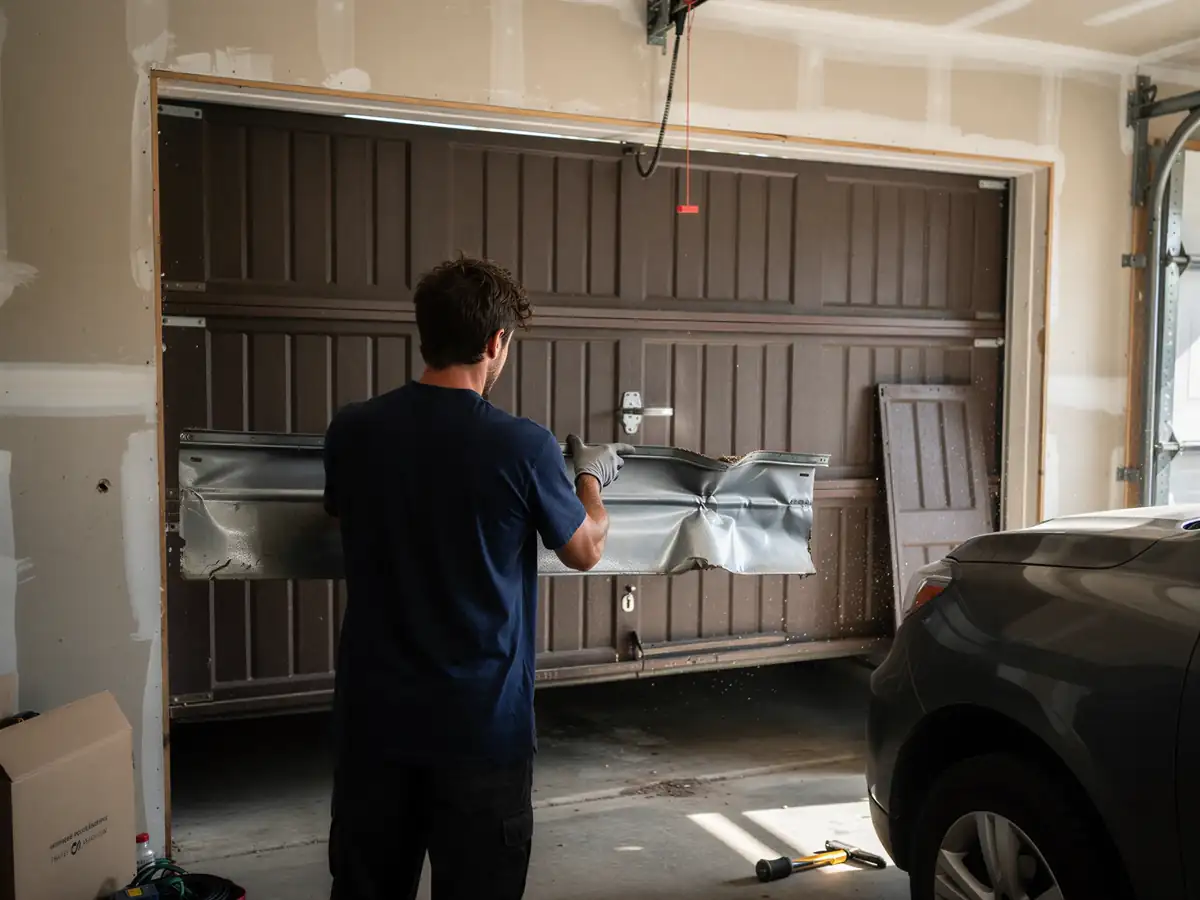
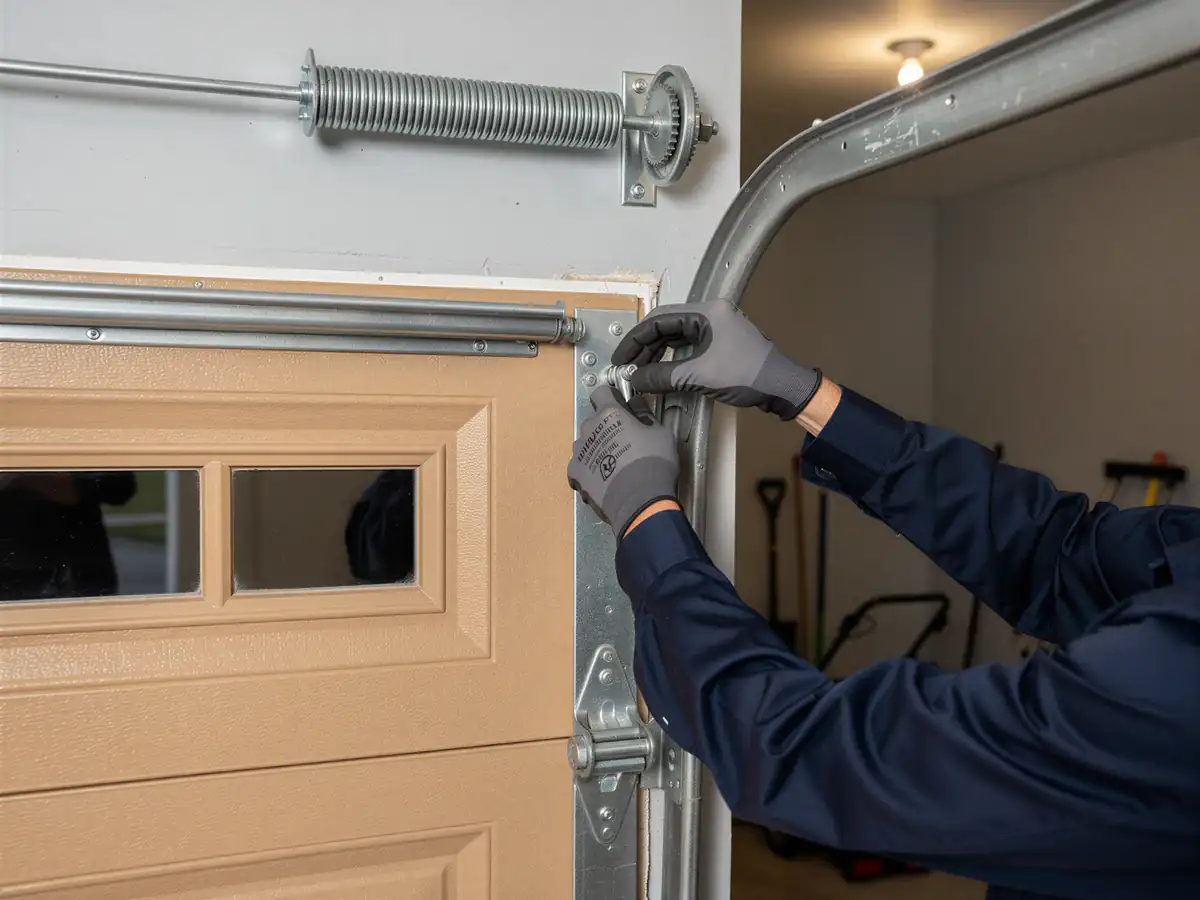
A door that won't lift, or lifts a few inches and stops, usually means the torsion spring has broken - you'll often see the gap in the coil if you look up at the bar above the door. A door that slams down fast instead of lowering under control points the same direction. On the 1998-era builds common in Belmont, that's typically a single spring on a 7-foot section door, which means the full load was riding on one spring instead of being split across two. When that one spring goes, there's nothing backing it up, and the door is dead weight on the opener - which is exactly what causes the opener gears to strip if someone tries to force it with the wall switch. Extension springs (the ones that stretch along the horizontal tracks rather than sitting on a bar overhead) show up more in older additions and detached garages. Either way, the symptom is the same: a door that suddenly feels twice as heavy as it did yesterday.
Parts We Carry
Torsion springs are wound to a specific wire size, inside diameter, and length for the door weight and the drum setup - there's no universal spring, and a wrong one either underperforms or overloads the shaft. We carry a working range of torsion spring sizes on the truck, along with standard extension springs for older setups, plus the cable, drums, and end bearings that tend to fail alongside a spring once the shaft has been under uneven load. A quick honest note: if your door is an oddball size or an older high-cycle commercial spring, that part isn't something we carry stocked, and getting it may mean a short wait rather than a same-trip fix.
What the Repair Takes
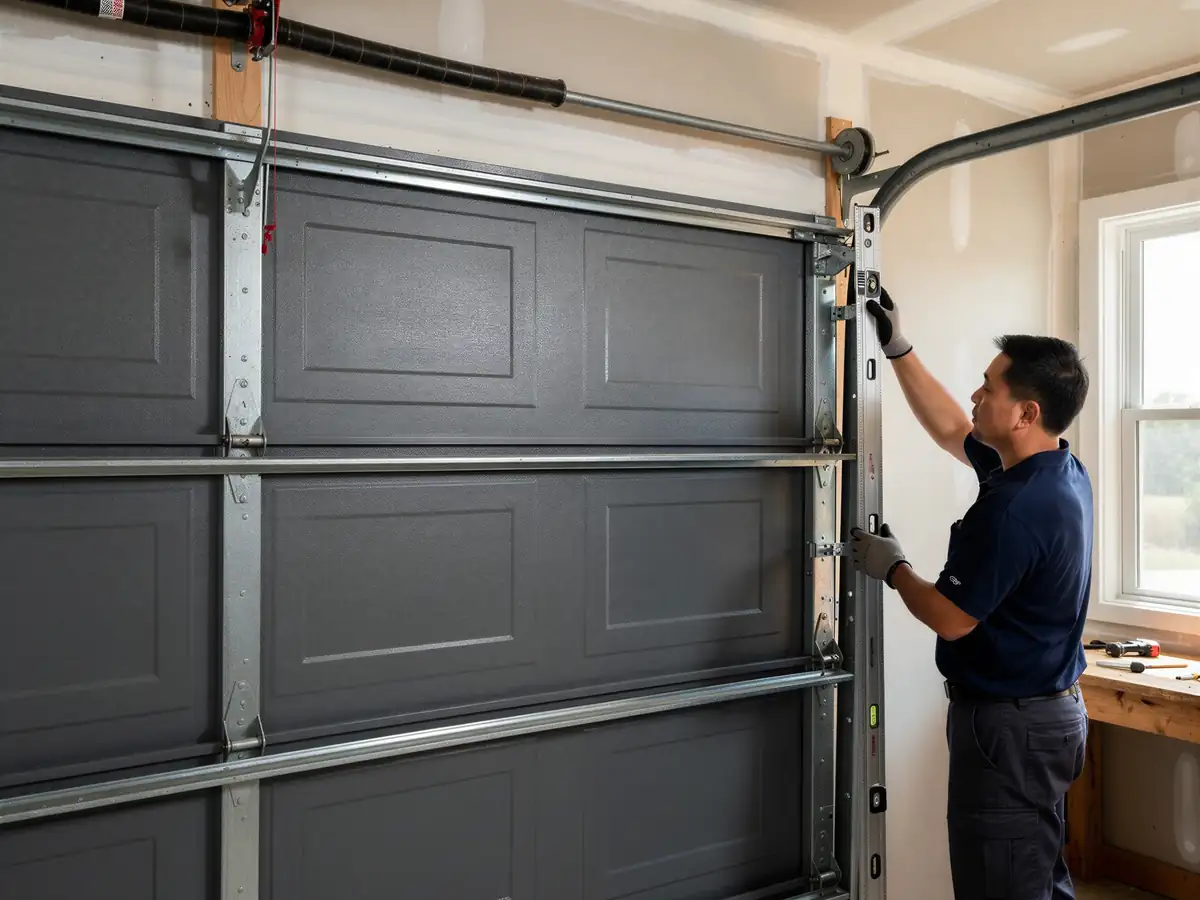
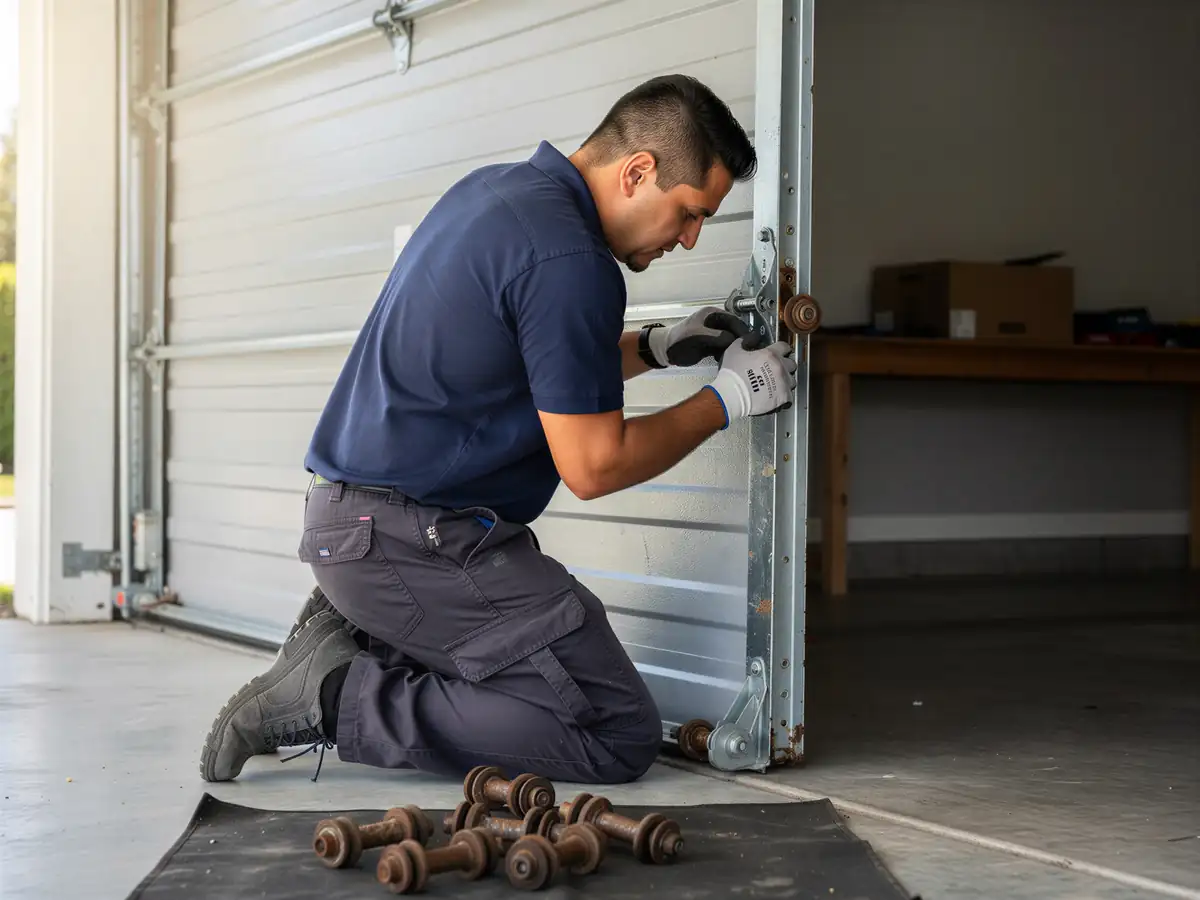
A straight torsion spring swap on a single-spring door is the more common call here given the housing stock, and it starts with releasing tension safely, pulling the old spring off the bar, and winding the replacement to the right number of turns for the door's weight and height. We check the cables and drums at the same time, since a spring failure often puts a few hundred extra pounds through those parts before anyone notices, and a worn cable that looks fine today is the next call six months out. If it's a two-spring door, we replace both, not just the broken one - the second spring has been carrying extra load since the first one let go, and it's already closer to its own failure.